
Global Map of Ganymede
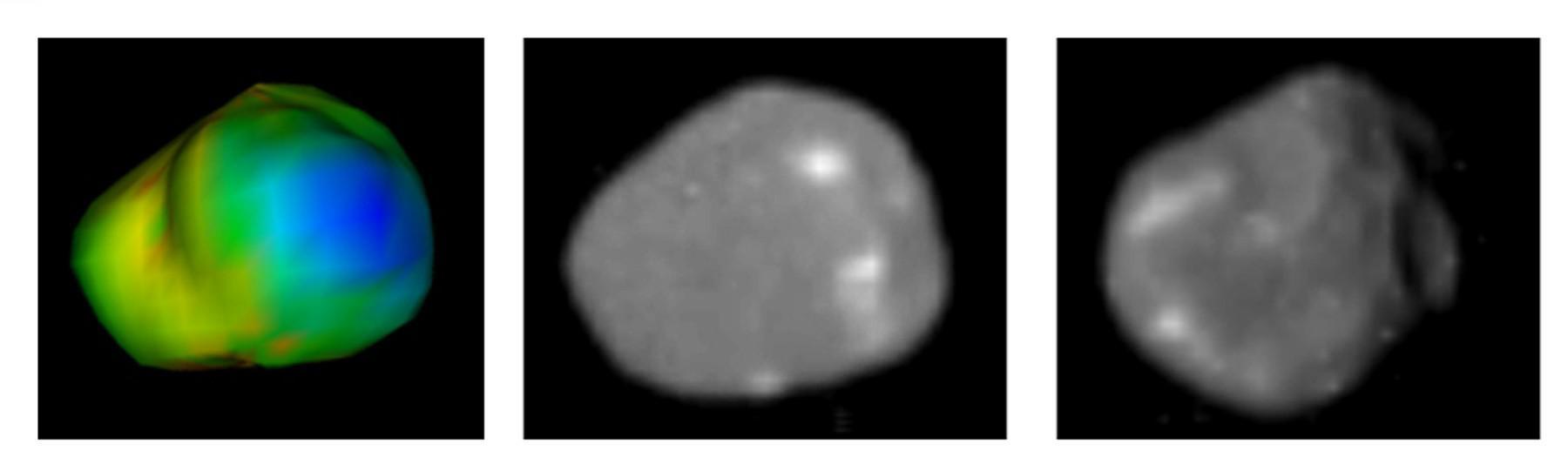
These images of Jupiter moon Amalthea were taken with NASA Galileo and Voyager spacecraft. Amalthea is almost pure water ice, hinting that it may not have formed where it now orbits.

Io in Motion
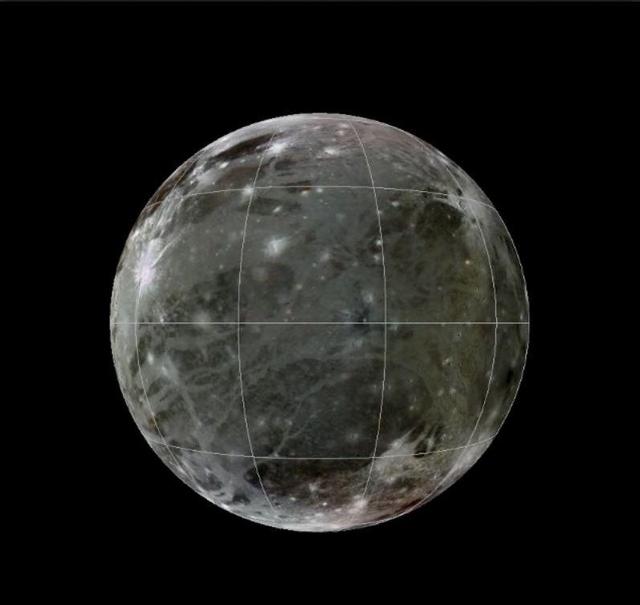
This is a frame from an animation of a rotating globe of Jupiter moon Ganymede, with a geologic map superimposed over a global color mosaic, incorporating the best available imagery from NASA Voyager 1 and 2 spacecraft, and Galileo spacecra…

This archival photo shows engineers working on vibration acoustics and pyro shock testing of NASA's Voyager on November 18, 1976. https://photojournal.jpl.nasa.gov/catalog/PIA21732
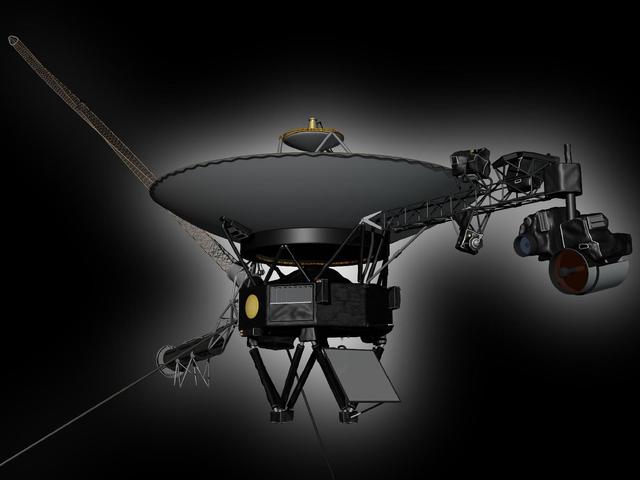
This artist rendering shows NASA Voyager spacecraft. Voyager 2 was launched on Aug. 20, 1977. Voyager 1 was launched on Sept. 5, 1977.
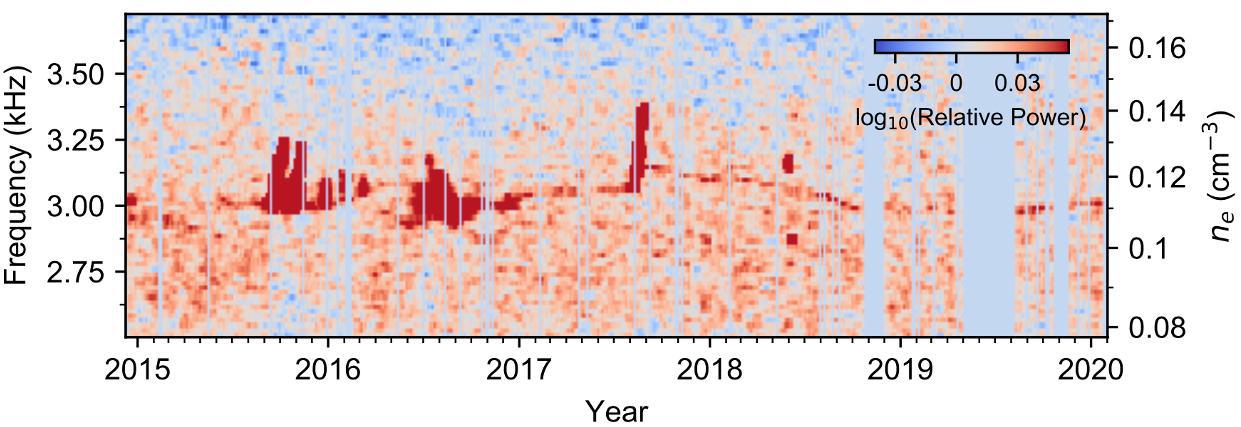
Weak but nearly continuous plasma oscillation events — visible as a thin red line in this graphic — connect stronger events in Voyager 1's Plasma Wave Subsystem data. https://photojournal.jpl.nasa.gov/catalog/PIA24572
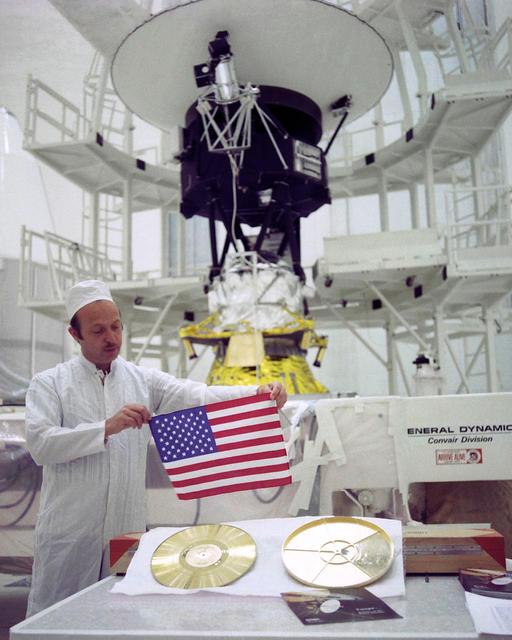
As NASA two Voyager spacecraft travel out into deep space, they carry a small American flag and a Golden Record packed with pictures and sounds -- mementos of our home planet.

Voyager violet, green and ultraviolet images of Triton were map projected into cylindrical coordinates and combines to produce this false-color terrain map. Several compositionally distinct terrain and geologic features are portrayed. At…

This image of Neptune satellite 1989N1 was obtained by NASA Voyager 2 on Aug. 25, 1989 from a range of 146,000 kilometers 91,000 miles. http://photojournal.jpl.nasa.gov/catalog/PIA00062

This photograph from Sept. 5, 1977, shows the launch of NASA Voyager 1 spacecraft from NASA Kennedy Space Center at Cape Canaveral, Fla.

Range : 35,000 miles plus. This color image of the Simpson Desert in Australia was obtained by the Galileo spacecraft at aboaut 2:30 pm PST. The color composite was made from images taken through the red, green and violet filters. The ar…

Range : 220,000 mi. (left)/350,000 mi. (right) These pictures of the Moon were taken by the Galileo spacecraft. Image on the right shows the dark Oceanus Procellarum in the upper center, with Mare Imbrium above it and the smaller circular…
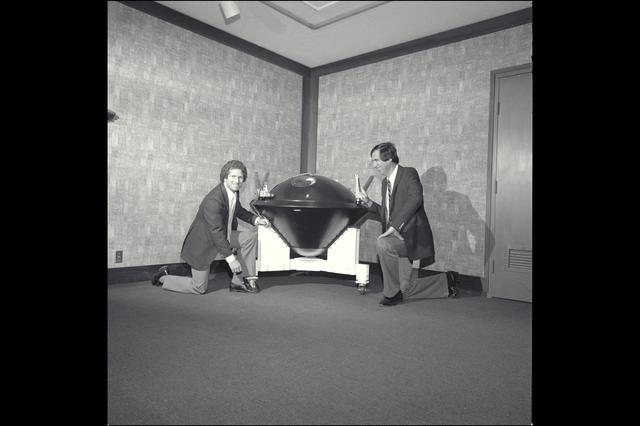
Bill Ballhaus and Nicholas Vojvodich inspect the Galileo Probe Engineering Assembly Display

Artist: Ken Hodges Composite image explaining Objective and Motivation for Galileo Probe Heat Loads: Galileo Probe descending into Jupiters Atmosphere shows heat shield separation with parachute deployed. (Ref. JPL P-19180)

Range : 50,000 miles This multispectral map of Australia, and surrounding seas was obtained by the Galileo spacecraft's Near Infrared Mapping Spectrometer shortly after closest approach. The image shows various ocean, land and atmospheric…

Europa Hemispherical Globes
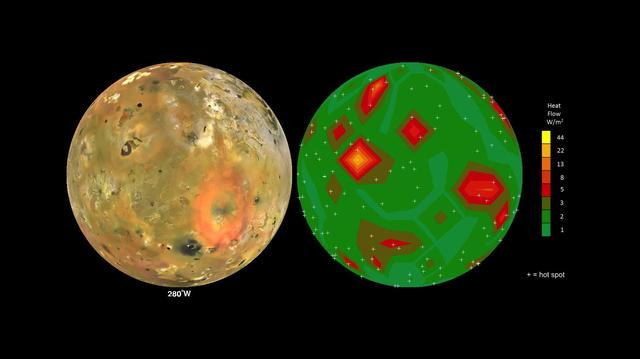
This frame from an animation shows Jupiter volcanic moon Io as seen by NASA Voyager and Galileo spacecraft (at left) and the pattern of heat flow from 242 active volcanoes (at right). The red and yellow areas are places where local heat flo…

This map composed of images NASA Galileo and Voyager missions shows the hemisphere of Europa that might be affected by plume deposits. The view is centered at -65 degrees latitude, 183 degrees longitude.

P-21738 BW Raange: 4.76 million kilometers (2.9 million miles) This Voyager 2 picture of Io was taken in ultraviolet light and shows one of the volcanic eruption plumes first photographed by Voyager 1. (the bright spot on the right limb) Th…
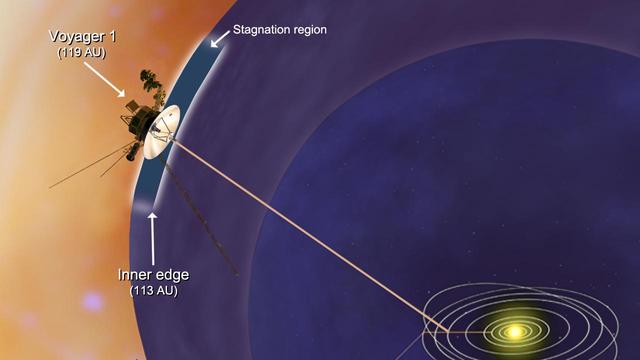
NASA Voyager 1 spacecraft has entered a new region between our solar system and interstellar space, which scientists are calling the stagnation region as depicted in this artist rendering.

This archival photo shows engineers working on NASA's Voyager 2 spacecraft on March 23, 1977. https://photojournal.jpl.nasa.gov/catalog/PIA21736
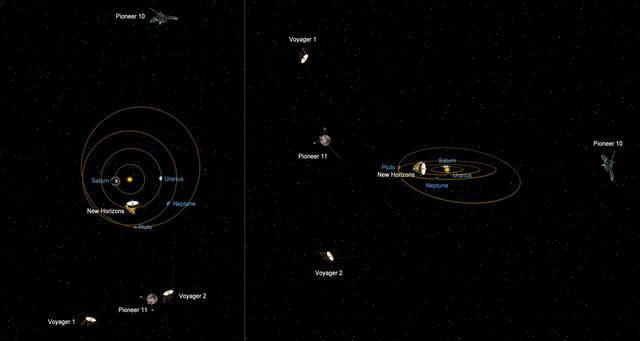
This graphic shows the relative positions of NASA most distant spacecraft in early 2011, looking at the solar system from the side. Voyager 1 is the most distant spacecraft, 10.9 billion miles away from the sun at a northward angle.
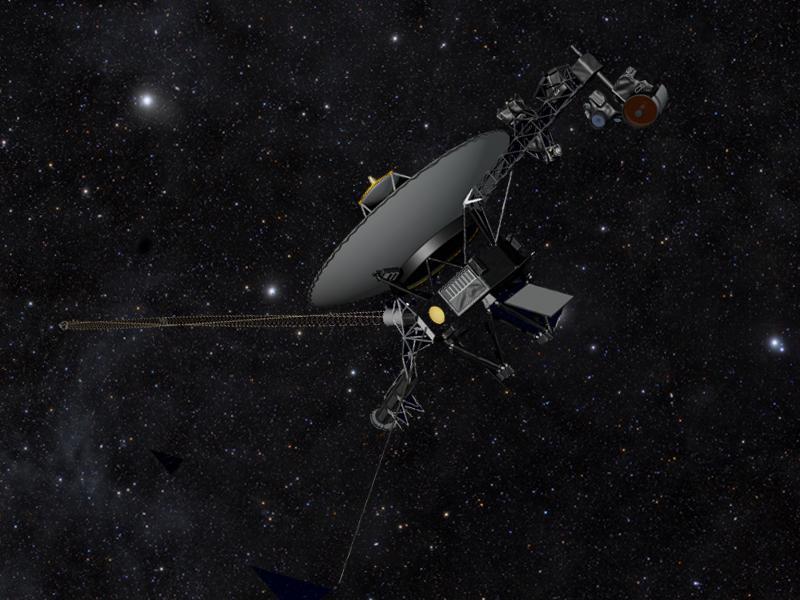
This artist concept shows NASA Voyager spacecraft against a field of stars in the darkness of space as they travel farther away from Earth, on a journey to interstellar space, and will eventually circle around the center of the Milky Way ga…

Engineers are engaged in the construction of a high gain antenna for one of the Voyager spacecraft in This archival photo taken on October 29, 1975. https://photojournal.jpl.nasa.gov/catalog/PIA21479

An engineer works on vibration acoustics and pyro shock testing for one of NASA's Voyager spacecraft on November 18, 1976. Several of the spacecraft's science instruments are visible at left. https://photojournal.jpl.nasa.gov/catalog/PIA21…

This graphic shows the NASA Voyager 1 spacecraft and the location of its low-energy charged particle instrument. A labeled close-up of the low-energy charged particle instrument appears as the inset image.

Callisto , The outermost Galilean Satellite , or Moon , of Jupiter, as taken by Voyager I . Range : About 7 Million km (5 Million miles) . Callisto, the darkest of the Galilean Satellites, still nearly twice as bright as the Earth's Moo…

Range : 350,000 miles This image of the western hemisphere of the Moon was taken through a green filter by Galileo at 9:35 am PST. In the center is the Orientale Basin, 600 miles in diameter, formed about 3.8 billion years ago by the impa…

Galileo Probe test-358 in NASA Ames Research Center12ft Pressure Wind Tunnel

Galileo Wake probe: 6x6ft w.t. testing
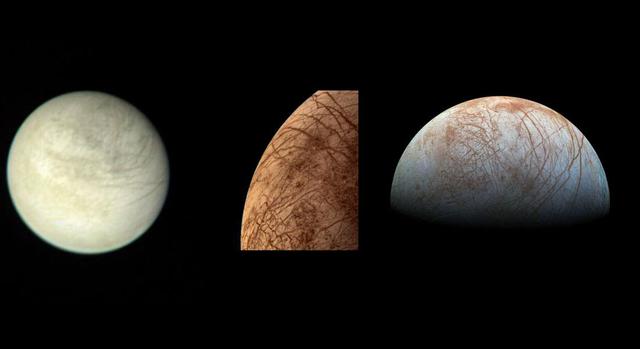
On the left is a view of Jupiter's moon Europa taken on March 2, 1979, by NASA's Voyager 1 spacecraft. In the middle is a color image of Europa taken by NASA's Voyager 2 spacecraft during its close encounter on July 9, 1979. On the right is…

Callisto Hemispherical Globes
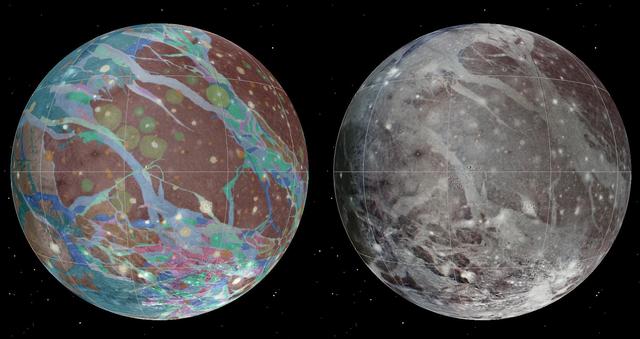
To present the best information in a single view of Jupiter moon Ganymede, a global image mosaic was assembled, incorporating the best available imagery from NASA Voyager 1 and 2 spacecraft and NASA Galileo spacecraft.
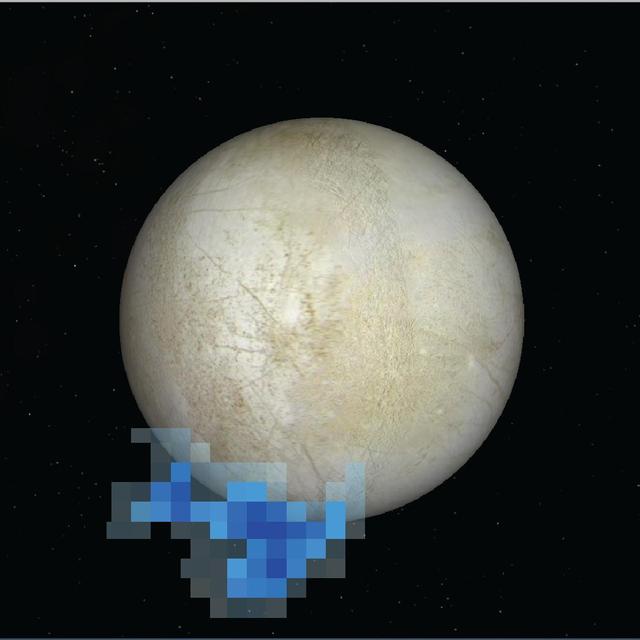
This graphic shows the location of water vapor detected over Europa south pole in observations taken by NASA Hubble Space Telescope in December 2012. This is the first strong evidence of water plumes erupting off Europa surface.
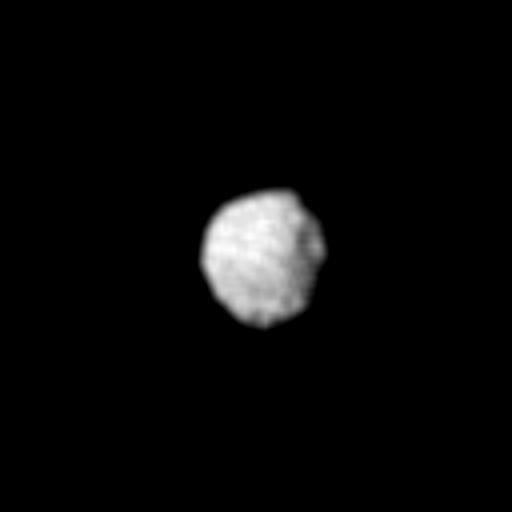
Uranus Moon - 1985U1

Voyager Saturn Mission Artwork (Mariner - Jupiter - Saturn - Uranus) show slingshot technique
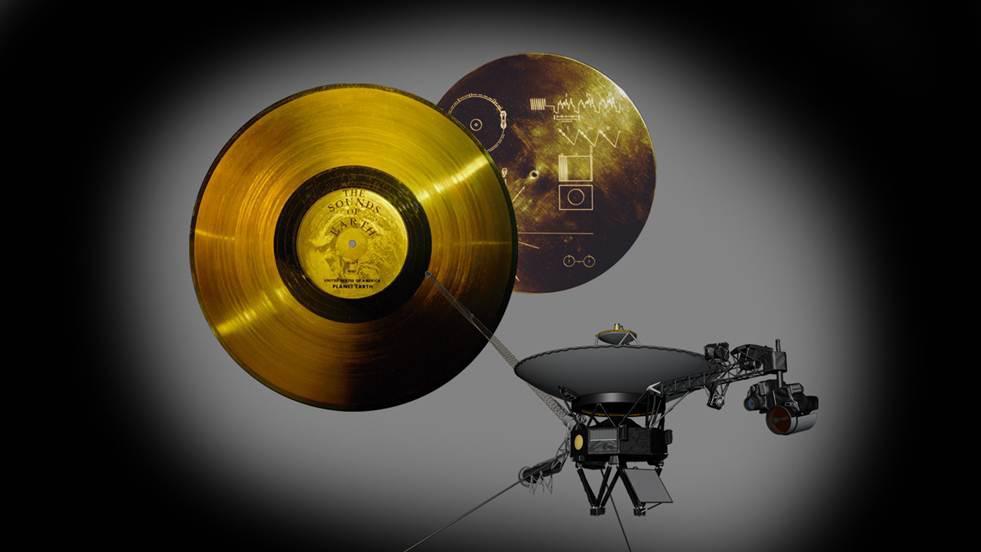
This image highlights the special cargo onboard NASA Voyager spacecraft: the Golden Record. Each of the two Voyager spacecraft launched in 1977 carry a 12-inch gold-plated phonograph record with images and sounds from Earth.
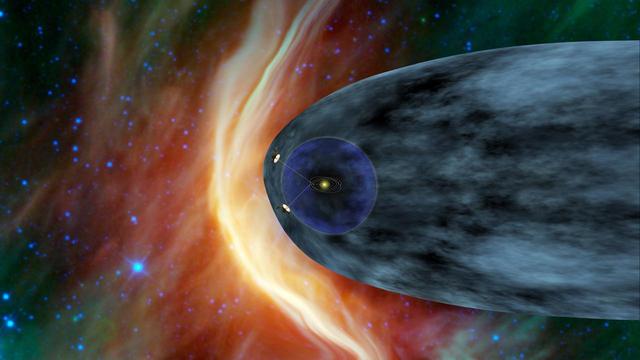
This artist concept shows NASA two Voyager spacecraft exploring a turbulent region of space known as the heliosheath, the outer shell of the bubble of charged particles around our sun. The Voyagers have been in space 33 years.
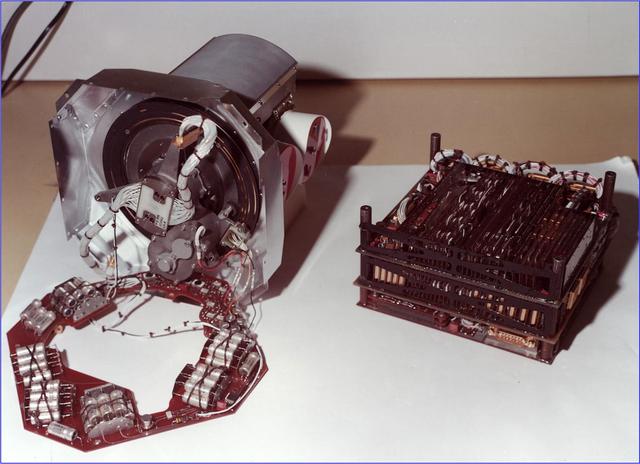
This image shows the low-energy charged particle instrument before it was installed on one of NASA Voyager spacecraft in 1977. The instrument includes a stepper motor that turns the platform on which the sensors are mounted.
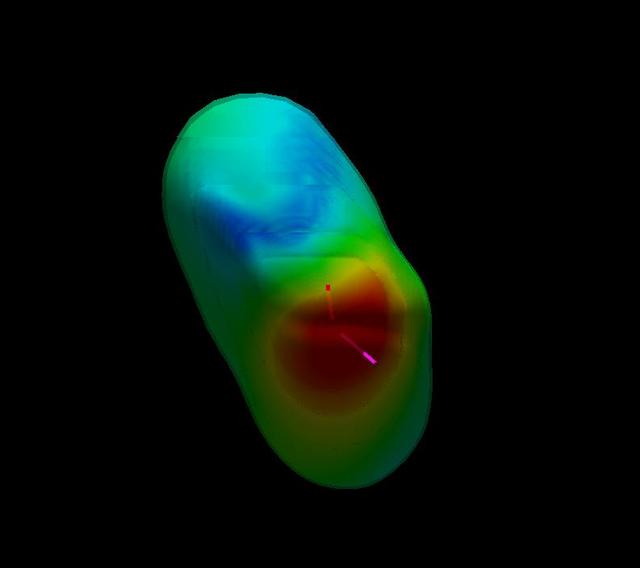
This graphic, based on data from NASA Voyager spacecraft, shows a model of what our solar system looks like to an observer outside in interstellar space, watching our solar system fly towards the observer.
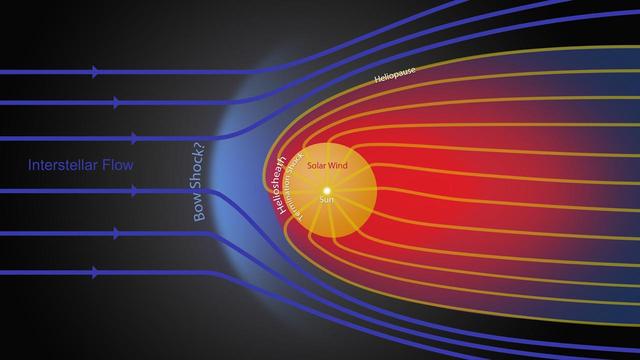
This graphic shows the different streams of charged particles inside the bubble around our sun and outside, in the unexplored territory of interstellar space. The heliosheath, where NASA two Voyager spacecraft are now traveling, is shown in…

This archival photo shows the system test configuration for Voyager on October 1, 1976. The spacecraft's 10-sided bus is visible behind the catwalk railing in the foreground. The boom that holds several of the spacecraft's science instrumen…

Range : 1.7 million miles This colorized picture of Venus was taken about 6 days after Galileo's closest approach to the planet. It has been colorized to a bluish hue to emphasize subtle contrasts in the cloud markings and to indicate tha…

This color picture of the limb of the Earth, looking north past Antarctica, is a mosaic of 11 images taken during a ten-minute period near 5:45 p.m. PST Dec. 8, 1990, by Galileo's imaging system. Red, green and violet filters were used. T…

Artist rendering of NASA Galileo spacecraft flying past Jupiter moon Io. Galileo made multiple close approaches to the volcanically active moon during its time at Jupiter. http://photojournal.jpl.nasa.gov/catalog/PIA18176

Range : 1.4 to 2 million miles These are enhanced versions of four views of Venus taken by Galileo's Solid State Imaging System. The pictures in the top row were taken about 4 and 5 days after closest approach, and those in the bottom row…

ref # P-37330 Range : 1.3 million miles This color image of the Earth was obtained by the Galileo spacecraft at about 6:10 am PST. The color composite used images taken through the red, green and violet filters. South America is near the…