Range :  1.7 million miles This colorized picture of Venus was taken about 6 days after Galileo's closest approach to the planet.  It has been colorized to a bluish hue to emphasize subtle contrasts in the cloud markings and to indicate tha…
ARC-1990-AC91-2004
Range :  350,000 miles This image of the western hemisphere of the Moon was taken through a green filter by Galileo at 9:35 am PST.  In the center is the Orientale Basin, 600 miles in diameter, formed about 3.8 billion years ago by the impa…
ARC-1990-A91-2007
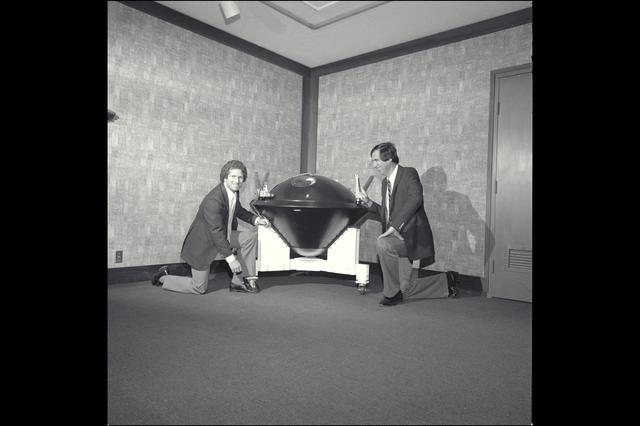
Bill Ballhaus and Nicholas Vojvodich inspect the Galileo Probe Engineering Assembly Display
ARC-1982-A82-0129-8
Artist: Ken Hodges Composite image explaining Objective and Motivation for Galileo Probe Heat Loads: Galileo Probe descending into Jupiters Atmosphere shows heat shield separation with parachute deployed.   (Ref. JPL P-19180)
ARC-1981-AC81-0174
Range :  50,000 miles This multispectral map of Australia, and surrounding seas was obtained by the Galileo spacecraft's Near Infrared Mapping Spectrometer shortly after closest approach.  The image shows various ocean, land and atmospheric…
ARC-1990-AC91-2010
This color picture of Antarctica is one part of a mosaic of pictures covering the entire polar continent taken during the hours following Galileo's historic first encounter with its home planet.  The view shows the Ross Ice Shelf to the rig…
ARC-1990-AC91-2006
Range :  1 million miles (1.63 million km) This image of the planet Venus was taken by NASA's Galileo spacecraft shortly befor 10pm PST when the space craft was directly above Venus' equator.  This is the 66th of more than 80 Venus images G…
ARC-1990-A91-2000
This image is the first full picture showing both asteroid 243 Ida and its newly discovered moon to be transmitted to Earth from NASA's Galileo spacecraft--the first conclusive evidence that natural satellites of asteroids exist.  Ida is th…
ARC-1994-A91-2018
Galileo probe heating. Tests at the Ames Hypervolicity Free-Flight Facility (HFF)
ARC-1979-AC79-0892
Range :  60,000 miles This image is a false-color version of a near- infrared map of lower-level clouds on the night side of Venus, obtained by the Near Infrared Mapping Spectrometer aboard Galileo.  Taken at an infrared wavelength of 2.3 m…
ARC-1990-AC91-2005
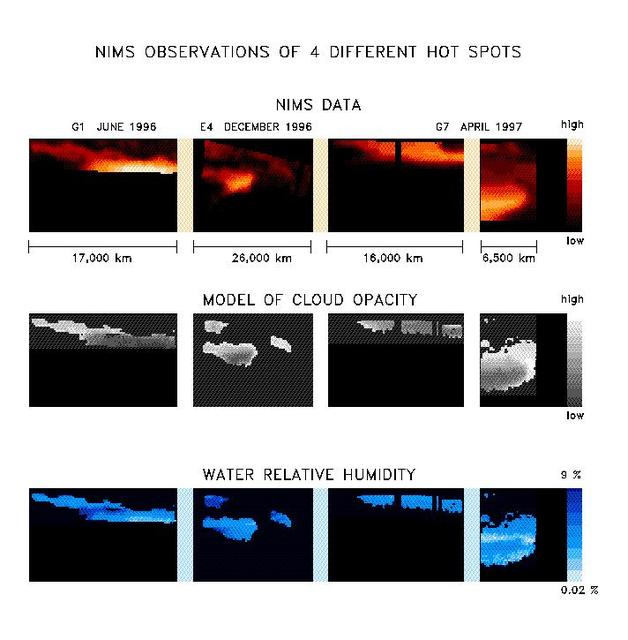
Io Degassing from sub- and anti-Jupiter Regions
Time Series of Jupiter Aurora
Changes on Io between Voyager 1 and Galileo Second Orbit Around an Unnamed Vent North of Prometheus
Jupiter Equatorial Region in a Methane Band Time Set 3
This false-color mosaic of the central part of the Andes mountains of South America 70 degrees w. longitude, 19 degrees s. latitude is made up of 42 images acquired by NASA’s Galileo spacecraft from an altitude of about 25,000 kilometers 15…
Earth - False Color Mosaic of the Andes
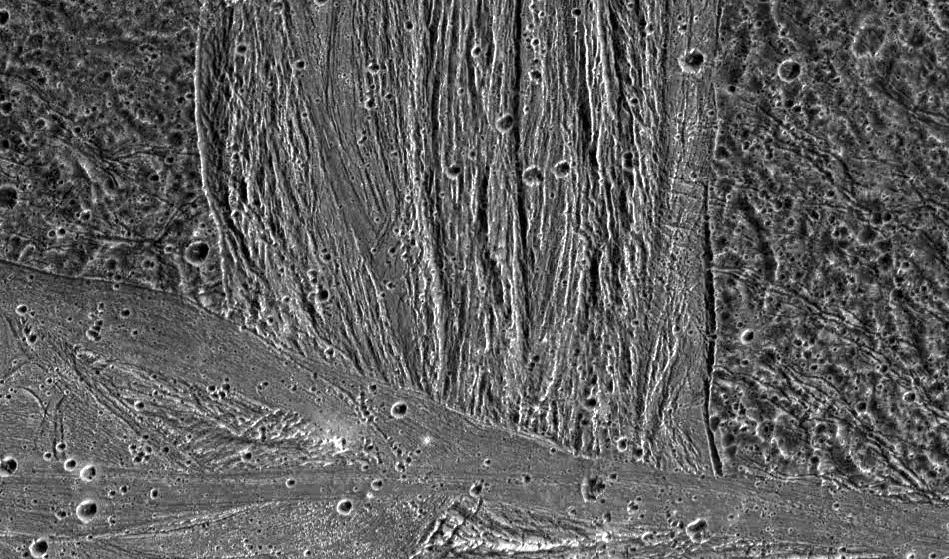
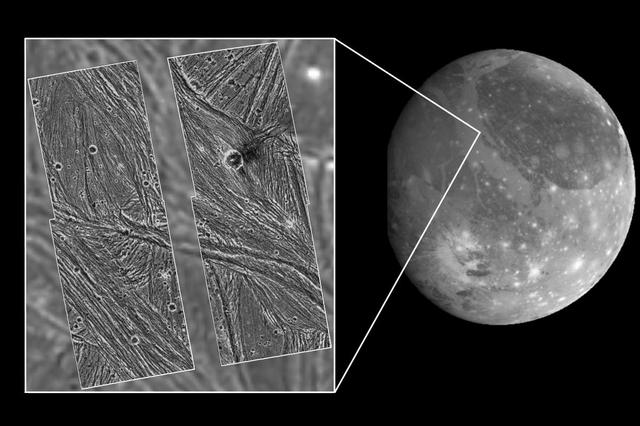
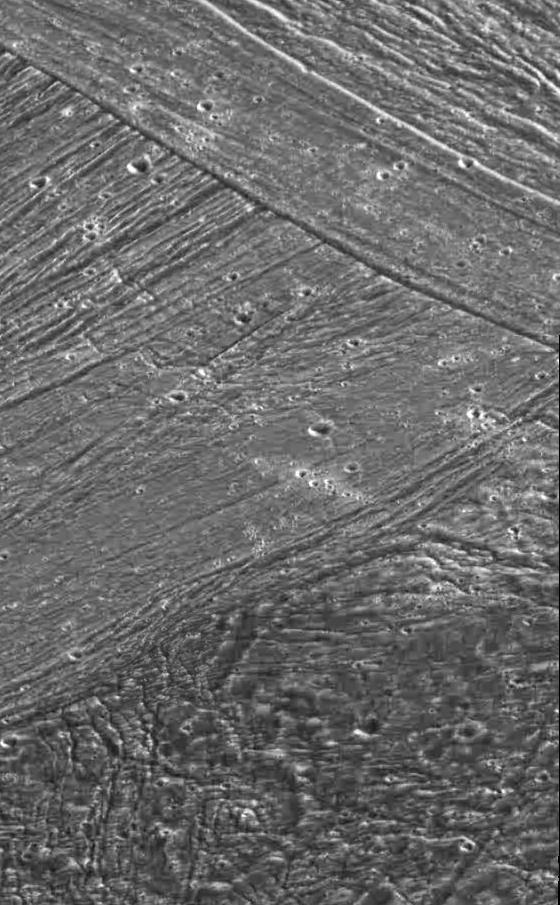
Swaths of Grooved Terrain on Ganymede
Range :  35,000 miles plus. This color image of the Simpson Desert in Australia was obtained by the Galileo spacecraft at aboaut 2:30 pm PST.  The color composite was made from images taken through the red, green and violet filters.  The ar…
ARC-1990-AC91-2009
Range :  1.4 to 2 million miles These are enhanced versions of four views of Venus taken by Galileo's Solid State Imaging System.  The pictures in the top row were taken about 4 and 5 days after closest approach, and those in the bottom row…
ARC-1990-A91-2013
ref # P-37330 Range :  1.3 million miles This color image of the Earth was obtained by the Galileo spacecraft at about 6:10 am PST.  The color composite used images taken through the red, green and violet filters.  South America is near the…
ARC-1990-AC91-2008
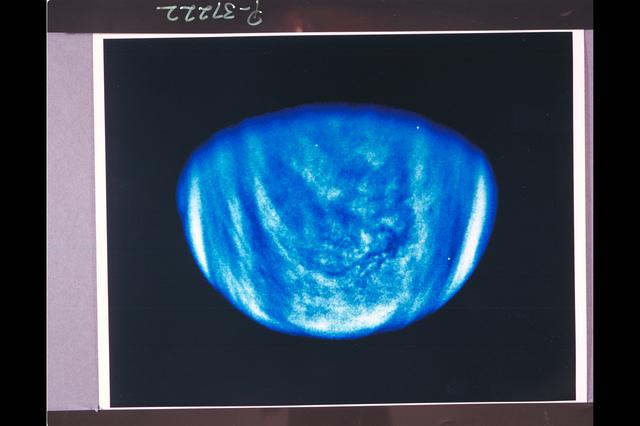
Range :  1.7 million miles This photo of Venus was taken by the Galileo spacecraft's Solid State Imaging System.  A high-pass spatial filter has been applied in order to emphasize the smaller-scale cloud features, and the rendition has been…
ARC-1990-AC91-2014
Galileo probe wind tunnel model assembly
ARC-1982-A82-0582-4
Galileo Wake probe: 6x6ft w.t. testing
ARC-1983-AC83-0188-3
Galileo Probe Descent module and deceleration module aeroshell (heat shield)
ARC-1984-AC84-0228-3
Range :  60,000 miles These images are two versions of a near-infrafed map of lower-level clouds on the night side of Venus, obtained by the Near Infrared Mapping Spectrometer aboard the Galileo spacecraft.The map shows the turbulent, cloud…
ARC-1990-A91-2002
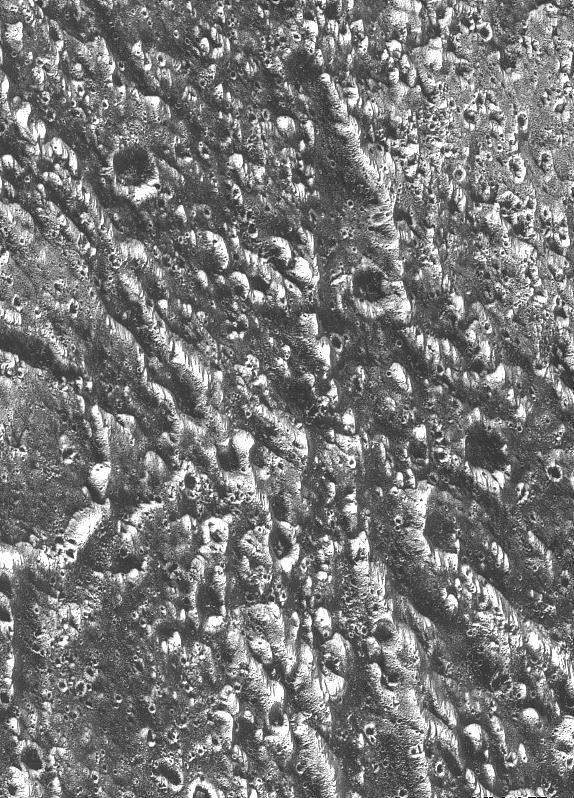
Ancient impact craters shown in this image of Jupiter moon Ganymede taken by NASA Galileo spacecraft testify to the great age of the terrain, dating back several billion years.  http://photojournal.jpl.nasa.gov/catalog/PIA00279
Ganymede - Ancient Impact Craters in Galileo Regio
Ganymede Uruk Sulcus High Resolution Mosaic Shown in Context
Galileo Takes a Close-up Look at Prometheus
Blocks in the Europan Crust Provide More Evidence of Subterranean Ocean
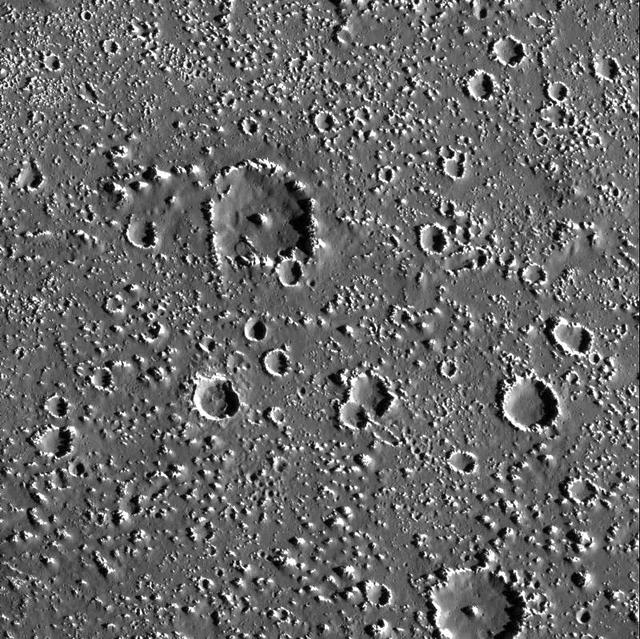
So few Small Craters on Callisto
Jupiter Equatorial Region in a Methane Band Time Set 1
This picture of asteroid 951 Gaspra is a mosaic of two images taken by NASA's Galileo spacecraft from a range of 5,300 kilometers 3,300 miles, some 10 minutes before closest approach on October 29, 1991.  http://photojournal.jpl.nasa.gov/ca…
Highest Resolution Gaspra Mosaic
This color picture of the limb of the Earth, looking north past Antarctica, is a mosaic of 11 images taken during a ten-minute period near 5:45 p.m. PST Dec. 8, 1990, by Galileo's imaging system.  Red, green and violet filters were used.  T…
ARC-1990-AC91-2017
Artist rendering of NASA Galileo spacecraft flying past Jupiter moon Io. Galileo made multiple close approaches to the volcanically active moon during its time at Jupiter.  http://photojournal.jpl.nasa.gov/catalog/PIA18176
Galileo Over Io Artist Concept
Range :  220,000 mi. (left)/350,000 mi. (right) These pictures of the Moon were taken by the Galileo spacecraft.  Image on the right shows the dark Oceanus Procellarum in the upper center, with Mare Imbrium above it and the smaller circular…
ARC-1990-A91-2011
Galileo Probe test-358 in NASA Ames Research Center12ft Pressure Wind Tunnel
ARC-1981-AC81-0483-1
Galileo Wake probe: 6x6ft w.t. testing
ARC-1983-AC83-0188-7
Range :  60,000 miles These images are two versions of a near-infrafed map of lower-level clouds on the night side of Venus, obtained by the Near Infrared Mapping Spectrometer aboard the Galileo spacecraft.The map shows the turbulent, cloud…
ARC-1990-A91-2001
Range :  350,000 miles (JPL Ref: P-37329) This image of the western hemisphere of the Moon was taken through a green filter by Galileo at 9:35 am PST.  In the center is the Orientale Basin, 600 miles in diameter, formed about 3.8 billion ye…
ARC-1990-AC91-2016
This image of the crescent moon was obtained by the Galileo Solid-State Imaging System, taken at 5 am PST as the spacecraft neared Earth.  The image was taken through a green filter and shows the western part of the lunar near side.  The sm…
ARC-1990-A91-2015
Range :  1.4 to 2 million miles This series of pictures shows four views of the planet Venus obtained by Galileo's Solid State Imaging System.The pictures in the top row were taken about 4 & 5 days after closest approach; those in the botto…
ARC-1995-A91-2003
White walls and scaffolding had become a common sight in the High Bay 1 clean room in JPL's Spacecraft Assembly Facility by the time the Galileo orbiter was being built. This photo from Nov. 1, 1984 shows that gowning requirements had also…
Galileo in High Bay 1
Painting o fthe Galileo spacecraft at the Jet Propulsion Laboratory for a vacuum test
ARC-2000-92-HC-139
Ganymede Nippur Sulcus
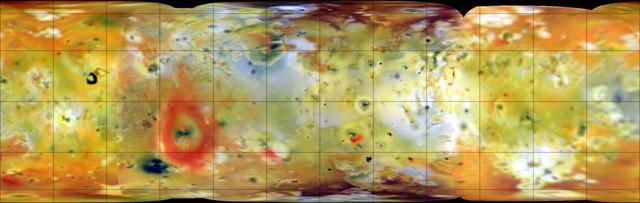
Color Global Mosaic of Io
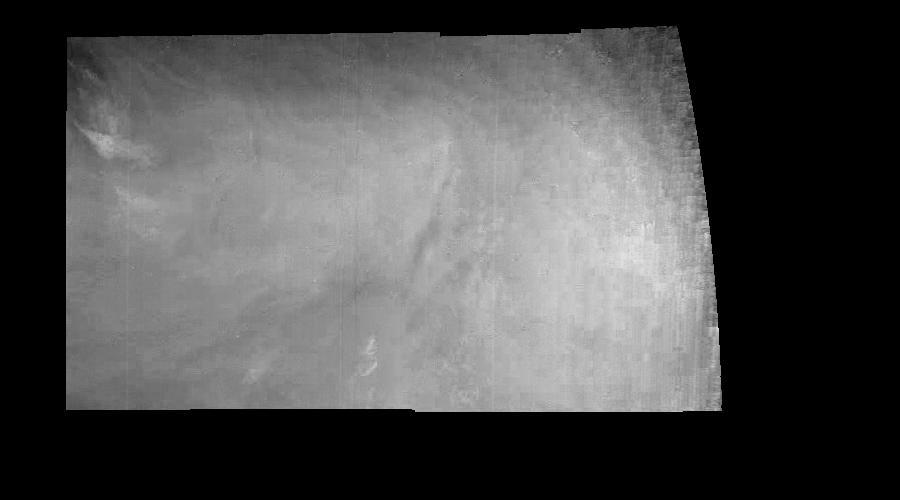
Winds Near Jupiter Belt-Zone Boundary
The Tyre multi-ring Structure on Europa
With the NIMS instrument high quality observations are being obtained from all parts of Jupiter. The images in the upper panel are taken at a wavelength of 4.8 microns. At this wavelength thermal radiation from about 100 km deep below the v…
NIMS Observes the Structure and Composition of Jupiter Clouds
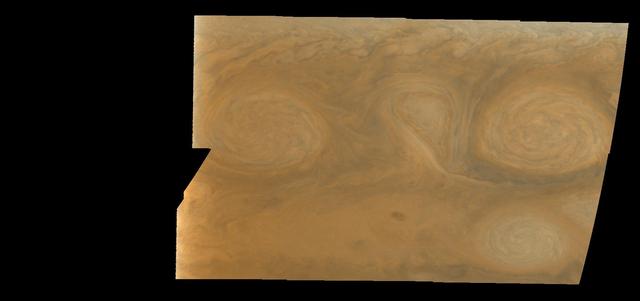
These images, taken on February 19, 1997 by NASA Galileo orbiter, show two of the three long-lived White Ovals that formed to the south of the Jupiter Great Red Spot.
Jupiter Long-lived White Ovals in True Color Time Set 2