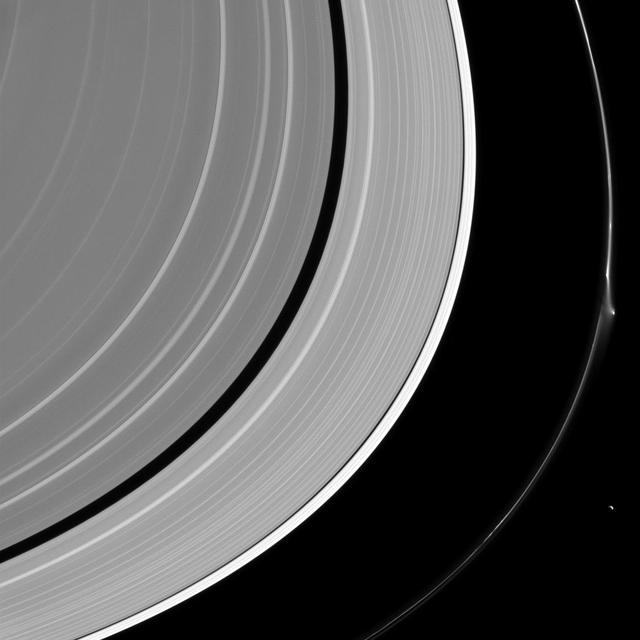
A bright disruption in Saturn's narrow F ring suggests it may have been disturbed recently. This feature was mostly likely not caused by Pandora (50 miles or 81 kilometers across) which lurks nearby, at lower right. More likely, it was crea…
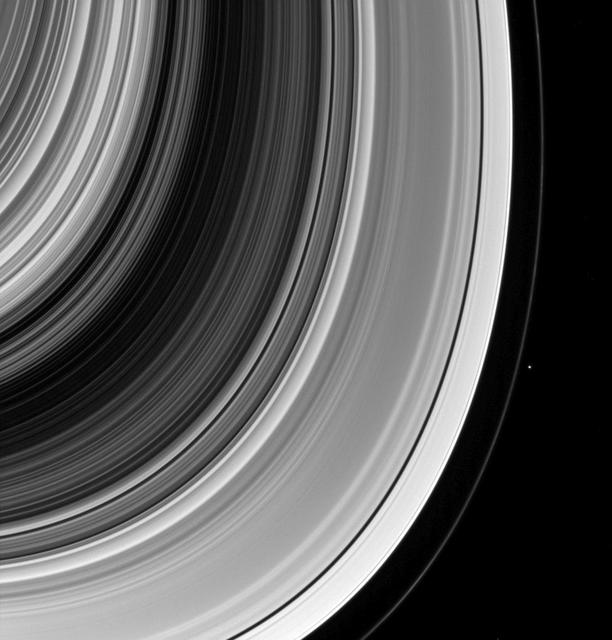
The F ring shepherd Pandora is captured here by NASA Cassini spacecraft along with other well-known examples of Saturn moons shaping the rings. From the narrow F ring, to the gaps in the A ring, to the Cassini Division, Saturn's rings are a…
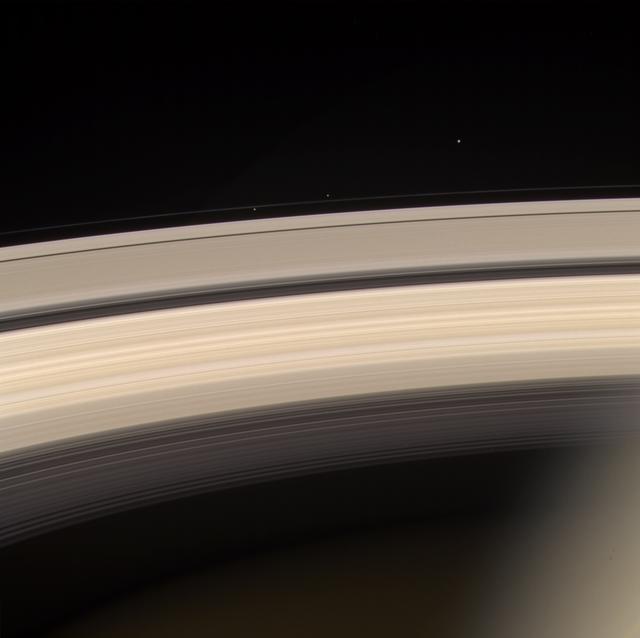
Saturn and its rings are prominently shown in this color image, along with three of Saturn's smaller moons. From left to right, they are Prometheus, Pandora and Janus. Prometheus and Pandora are often called the "F ring shepherds" as they…
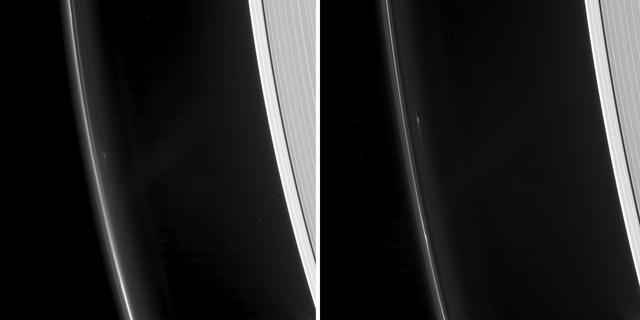
As NASA's Cassini spacecraft continues its weekly ring-grazing orbits, diving just past the outside of Saturn F ring, it is tracking several small, persistent objects there. These images show two such objects that Cassini originally detect…
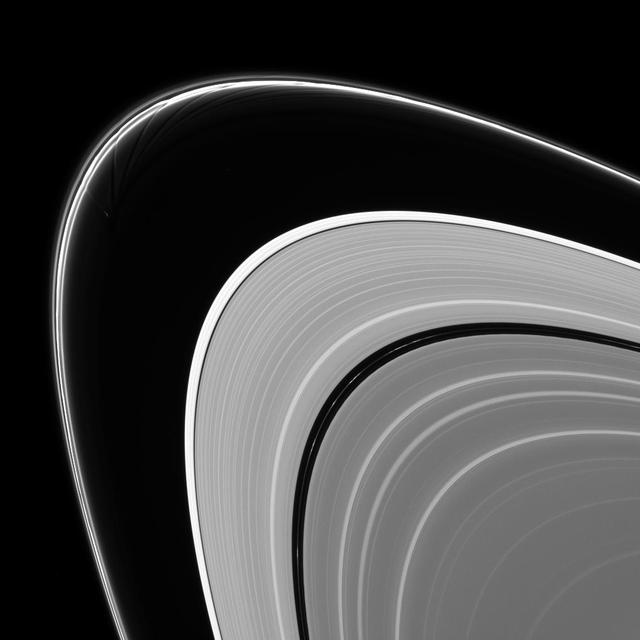
Prometheus is caught in the act of creating gores and streamers in the F ring. Scientists believe that Prometheus and its partner-moon Pandora are responsible for much of the structure in the F ring as shown by NASA Cassini spacecraft. The…
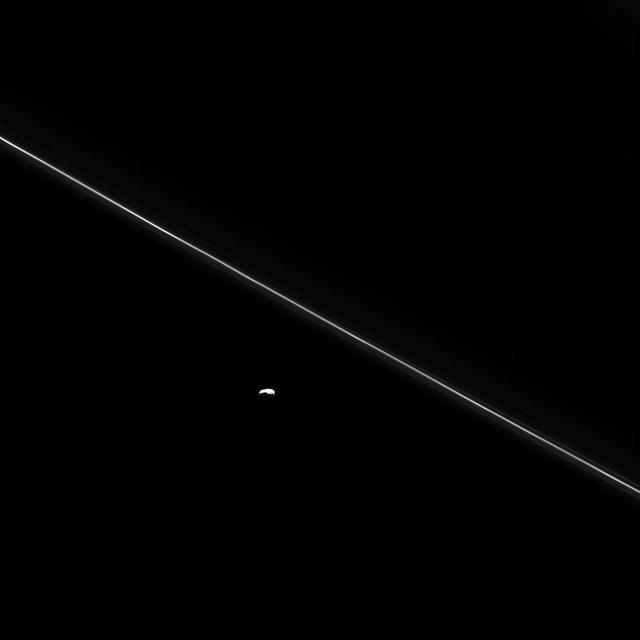
As Cassini hurtled toward its fatal encounter with Saturn, the spacecraft turned to catch this final look at Saturn's moon Pandora next to the thin line of the F ring. Over the course of its mission, Cassini helped scientists understand th…
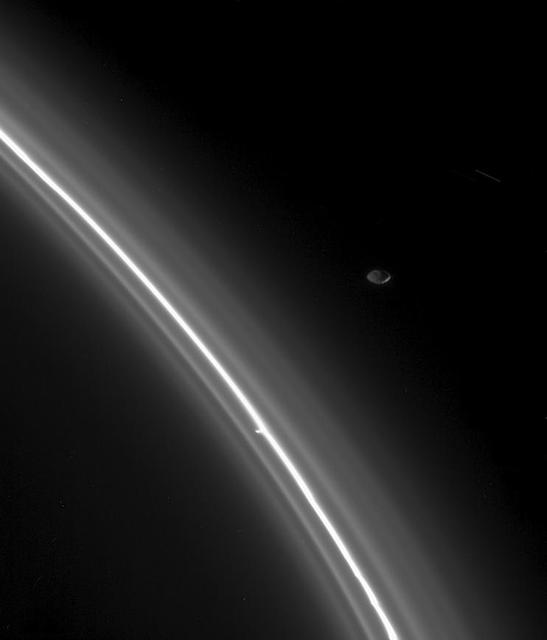
From just outside the faint edge of Saturn's F ring, the moon Pandora keeps watch over her fine-grained flock. The outer flanks of the F ring region are populated by ice particles approaching the size of the particles comprising smoke. As a…
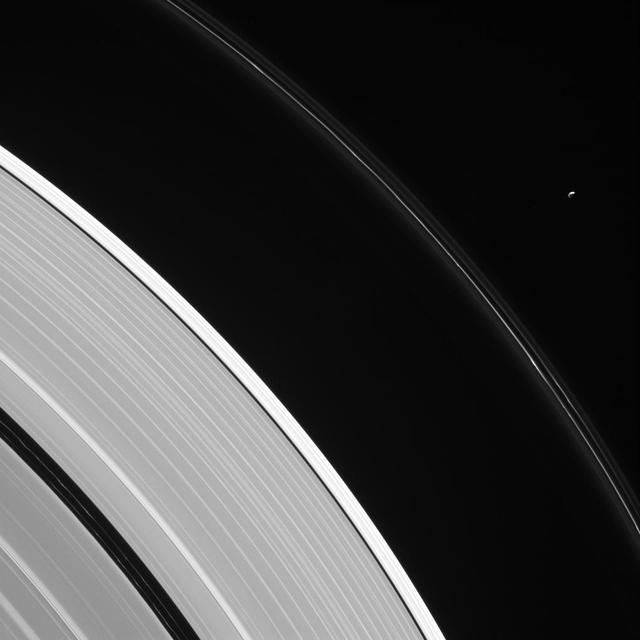
Pandora is seen here, in isolation beside Saturn's kinked and constantly changing F ring. Pandora (near upper right) is 50 miles (81 kilometers) wide. The moon has an elongated, potato-like shape (see PIA07632). Two faint ringlets are vis…