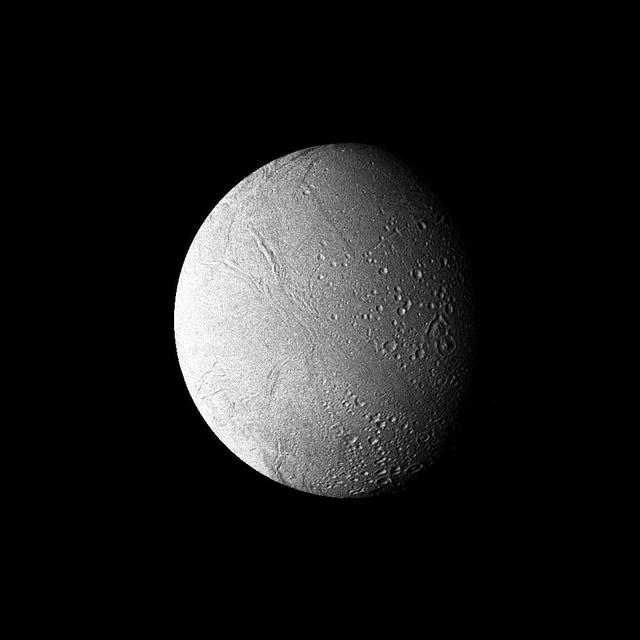
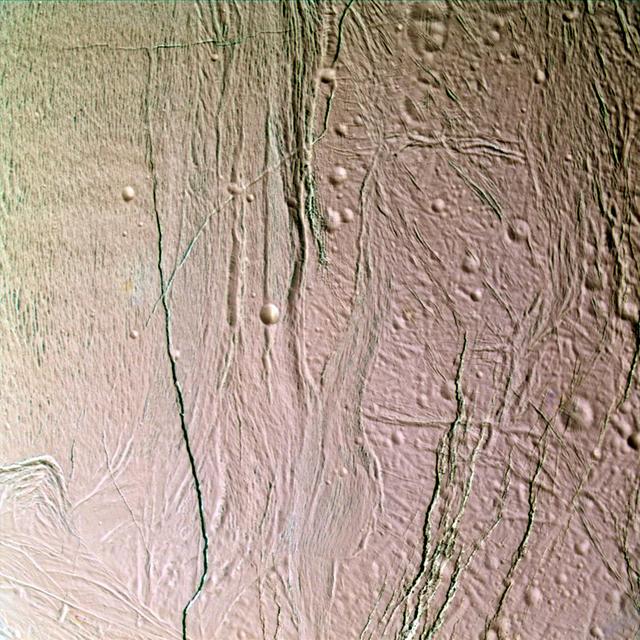
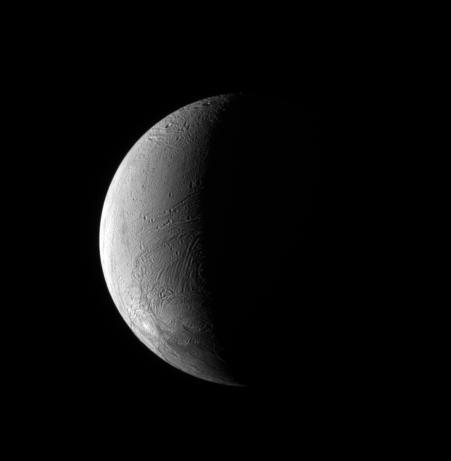
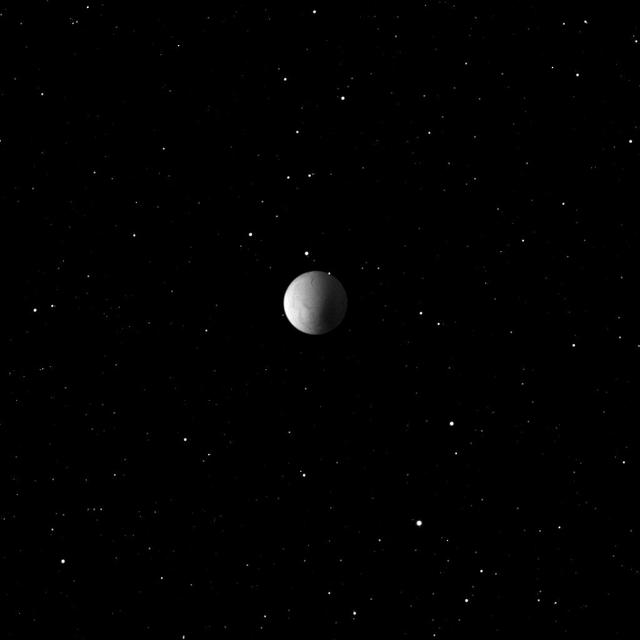
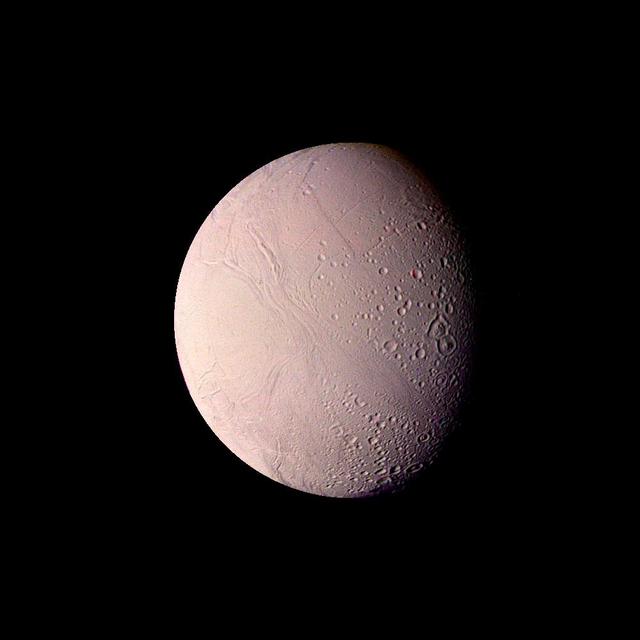
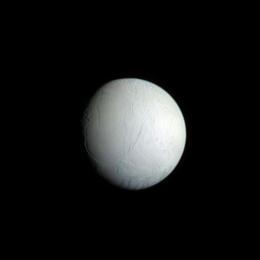
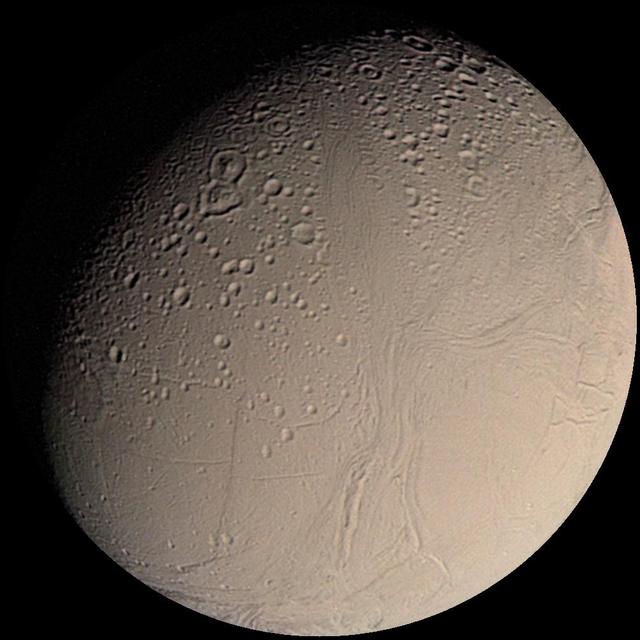
Voyager 2 Color Image of Enceladus, Almost Full Disk  http://photojournal.jpl.nasa.gov/catalog/PIA00347
Voyager 2 Color Image of Enceladus, Almost Full Disk
Saturn - High-resolution Filtered Image of Enceladus
The Southern Hemisphere of Enceladus
Stripes and Heat Map Side-by-Side
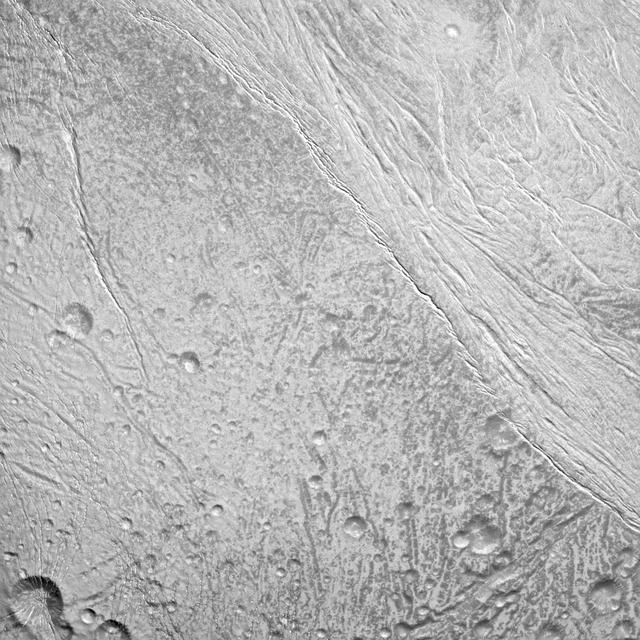
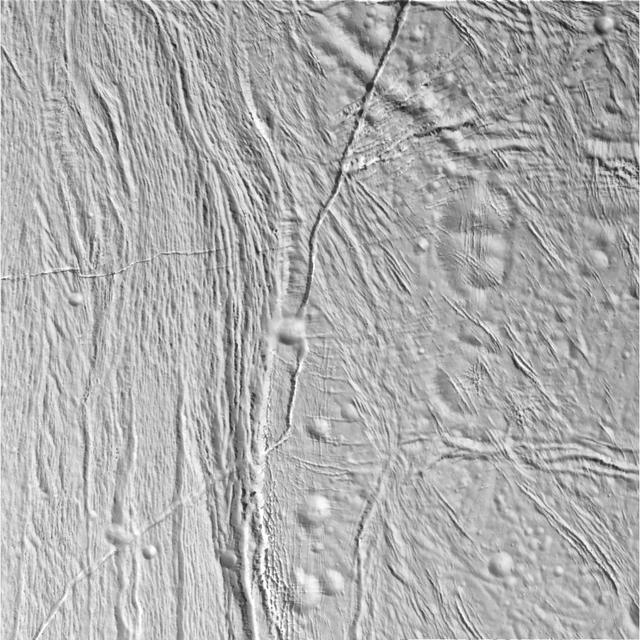
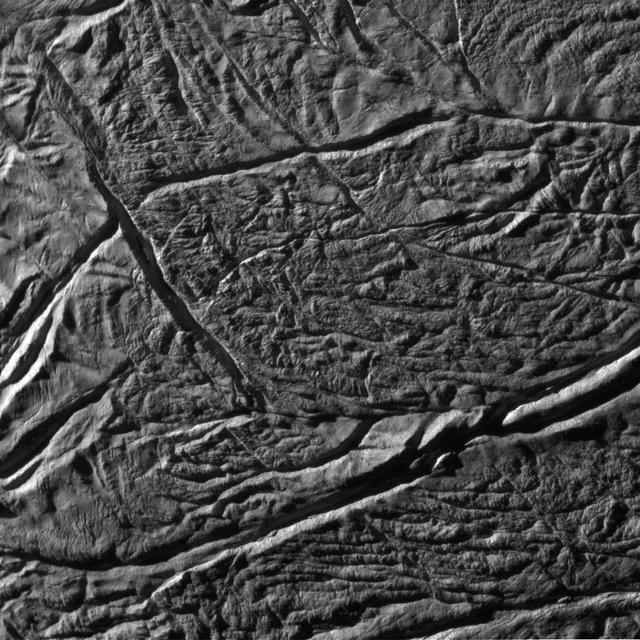
Few large craters are to be found in the wrinkled terrain of Enceladus, where the surface has been reworked by geologic processes presumably resulting from the moon inner warmth
Moon With a Warm Heart
Baghdad and Cairo Sulci on Enceladus
Enceladus shows off its tortured south polar terrain, which is crosscut by the roughly parallel furrows and ridges called sulci, or informally, tiger
Arabian Sulci
Enceladus Rev 91 Flyby - Skeet Shoot 1-4 Mosaic
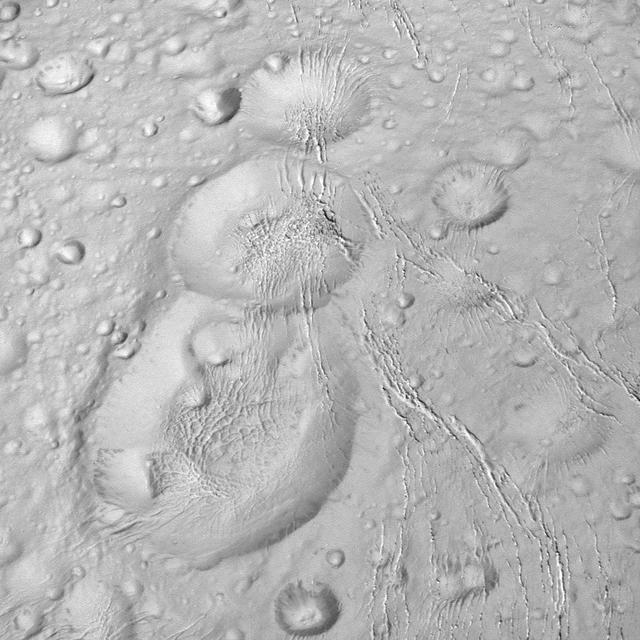
NASA's Cassini spacecraft spied this tight trio of craters as it approached Saturn's icy moon Enceladus for a close flyby on Oct. 14, 2015. The craters, located at high northern latitudes, are sliced through by thin fractures -- part of a n…
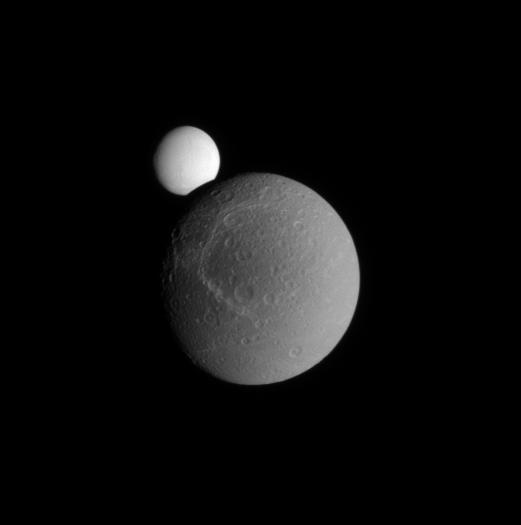
Saturnian Snowman
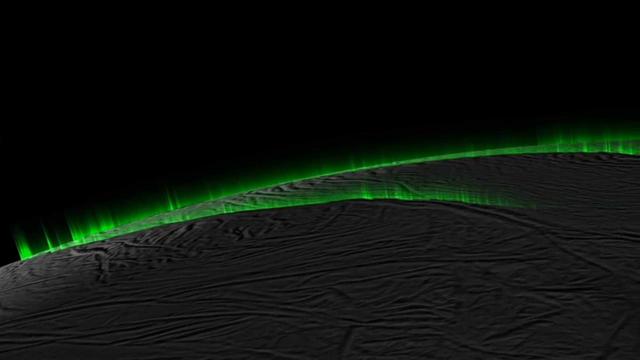
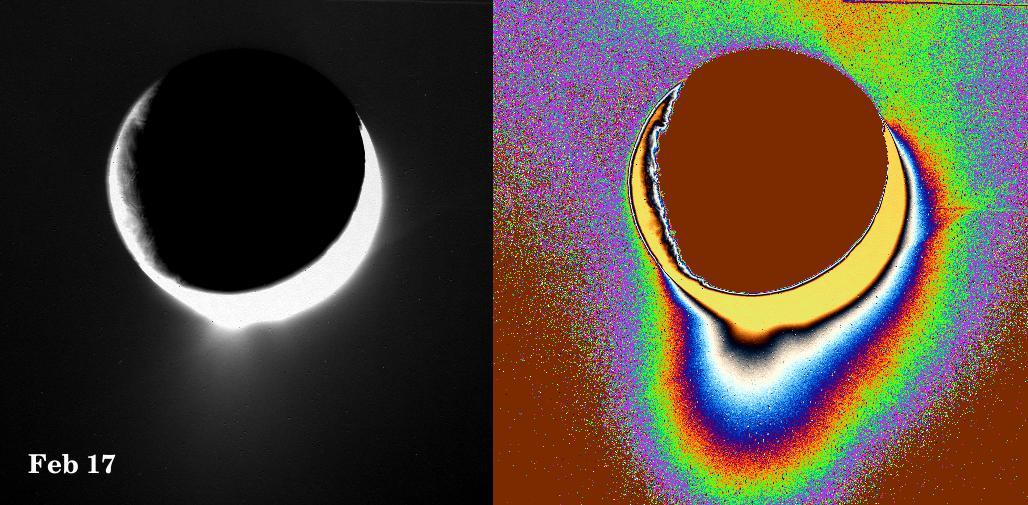
This simulation, which begins and ends with a real image from NASA Cassini spacecraft, demonstrates how the appearance of discrete jets could be an optical illusion that varies based on viewing geometry.
Icy Curtain Eruptions on Enceladus Create an Illusion of Discrete Jets Simulation
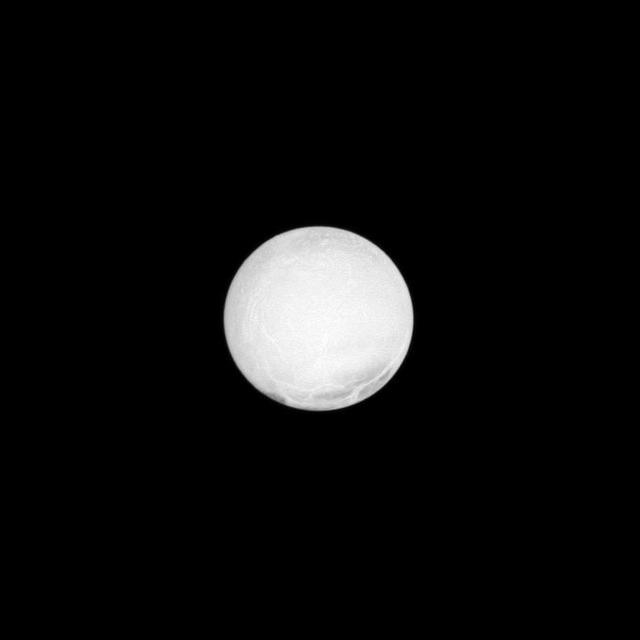
The highly reflective surface of Saturn moon Enceladus is almost completely illuminated in this NASA Cassini spacecraft image taken at a low phase angle.
Enceladus at Low Phase
Map of Enceladus - December 2008
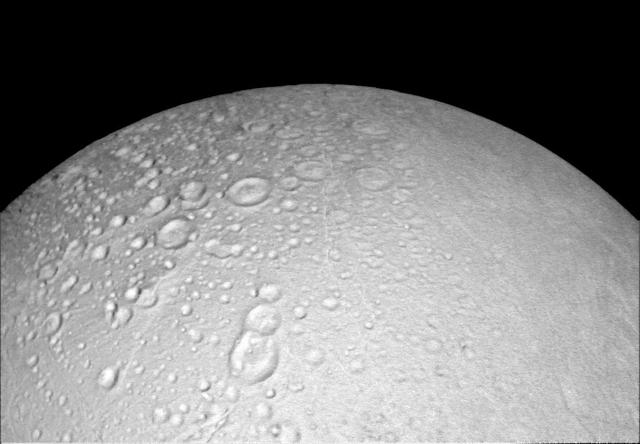
This view from NASA's Cassini spacecraft shows battered terrain around the north pole of Saturn's icy moon Enceladus. Craters crowd and overlap each other, each one recording an impact in the moon's distant past.  The moon's north pole lies…
Craters Crowd the North
Shear Heating on Enceladus
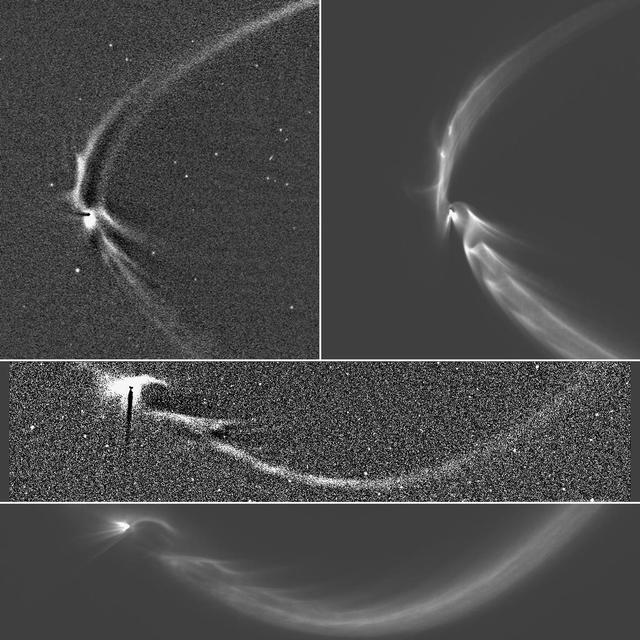
This collage of NASA Cassini spacecraft images and computer simulations shows how long, sinuous features from Enceladus can be modeled by tracing the trajectories of tiny, icy grains ejected from the moon south polar geysers.
Simulations of the Tendrils
Surface of Enceladus
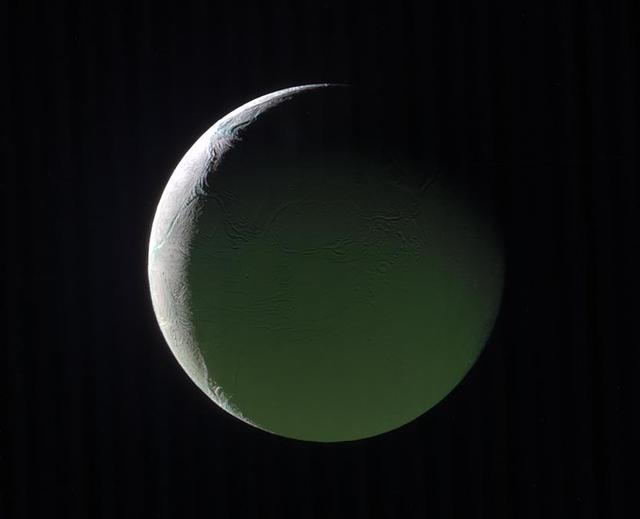
The brightly lit limb of a crescent Enceladus looks ethereal against the blackness of space. The rest of the moon, lit by light reflected from Saturn, presents a ghostly appearance.  Enceladus (313 miles or 504 kilometers across) is back-li…
Phantom Limb
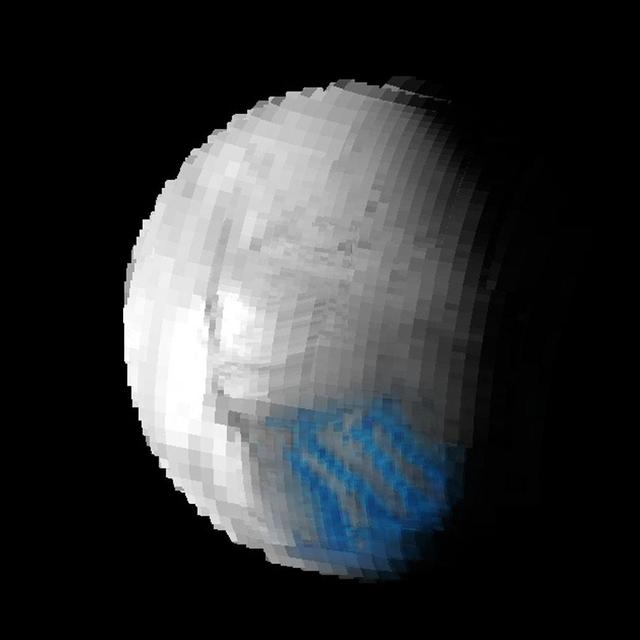
This visual and infrared mapping spectrometer image captured by NASA Cassini spacecraft of Saturn moon Enceladus, shows the dark cracks at the south pole dubbed tiger stripes for their distinct stripe-like appearance.
Tiger Stripes are Cubs
Sideways Shadow
Sideways Shadow
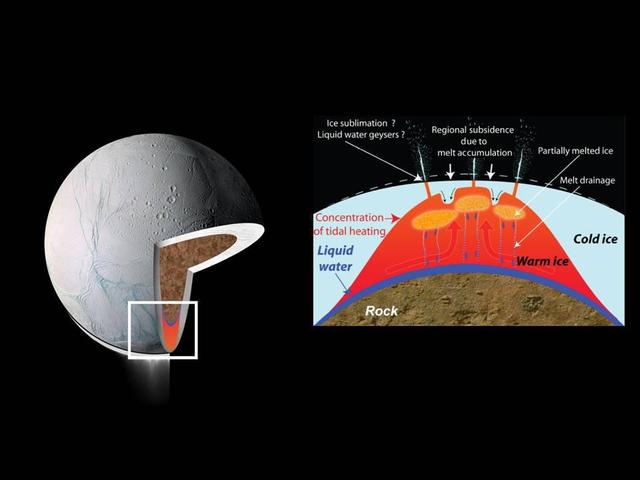
This artist rendering shows a cross-section of the ice shell immediately beneath one of Enceladus geyser-active fractures, illustrating the physical and thermal structure and the processes ongoing below and at the surface.
What Lies Beneath: Close Up View Artist Concept
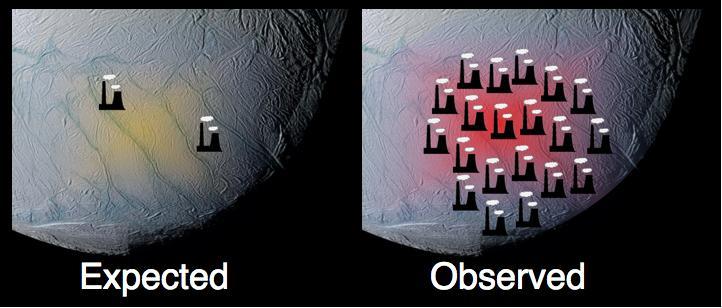
This graphic, using data from NASA Cassini spacecraft, shows how the south polar terrain of Saturn moon Enceladus emits much more power than scientists had originally predicted.
Enceladus the Powerhouse
This image shows an updated map of Saturn icy moon Enceladus, generated by NASA Cassini imaging team. The map incorporates new images taken in 2008, with better image processing techniques.
Map of Enceladus October 2009
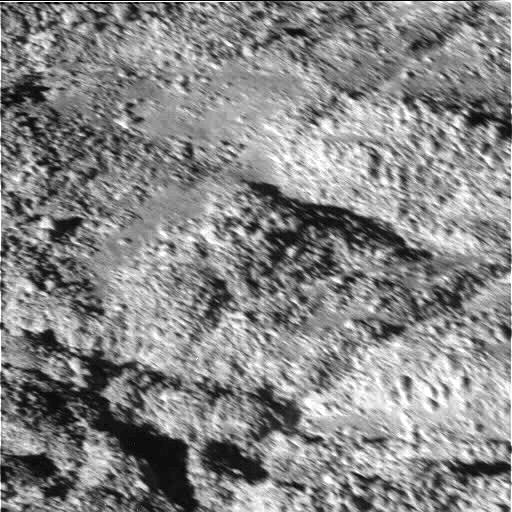
The tortured southern polar terrain of Enceladus appears strewn with great boulders of ice in this fantastic view, one of the highest resolution images obtained so far by Cassini of any world.  Some smearing of the image due to spacecraft m…
Boulder-Strewn Surface -- Narrow Angle Camera View
Deep Color
Deep Color
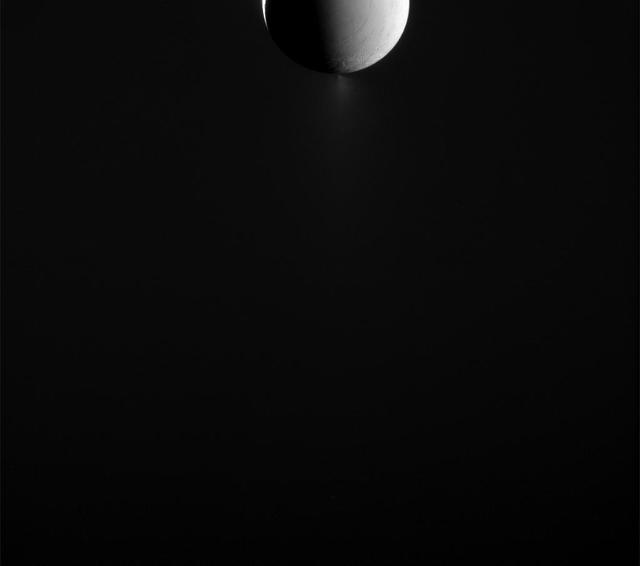
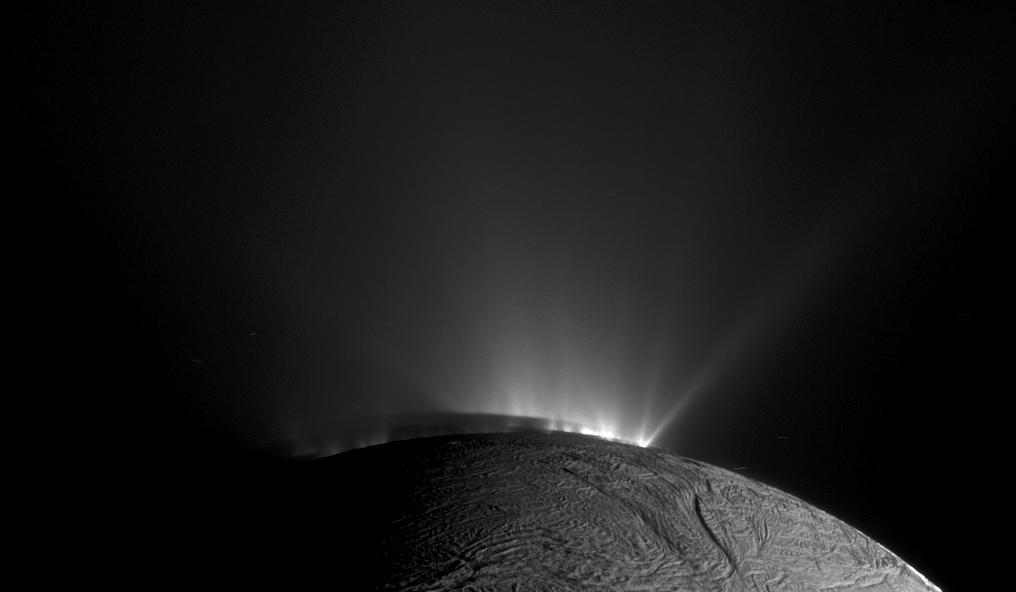
Small water ice particles fly from fissures in the south polar region of Saturn moon Enceladus in this image taken during the Aug. 13, 2010, flyby of the moon by NASA Cassini spacecraft.
Looming Enceladus
Spray Above Enceladus III
Crescent Enceladus
Crescent Enceladus
NASA Cassini spacecraft surveys the surface of Saturn moon Enceladus in this image, which shows newly created terrain in the upper right meeting older, cratered terrain in the lower left.
Scanning Enceladus Surface
Starry Night
Starry Night
Plumewatch
Plumewatch
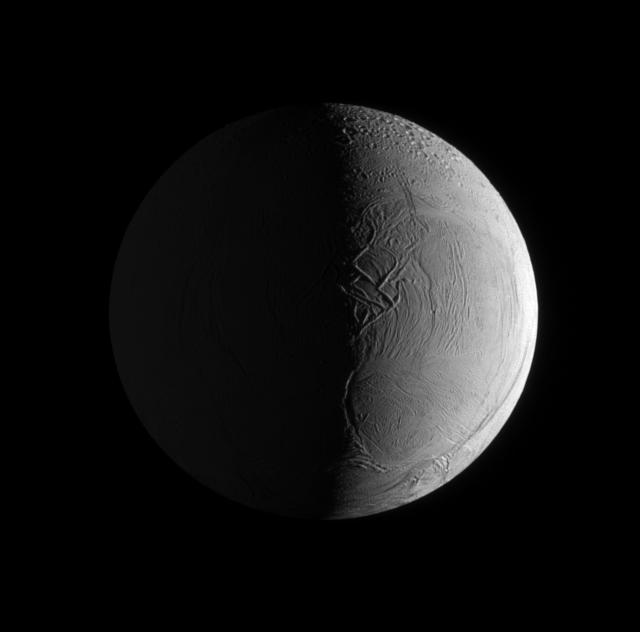
Enceladus looks as though it is half lit by sunlight in this view from NASA's Cassini spacecraft, but looks can be deceiving. The area on the right, where surface features can be made out, are actually illuminated by light reflected off of…
Dark Side of the Moon: Enceladus
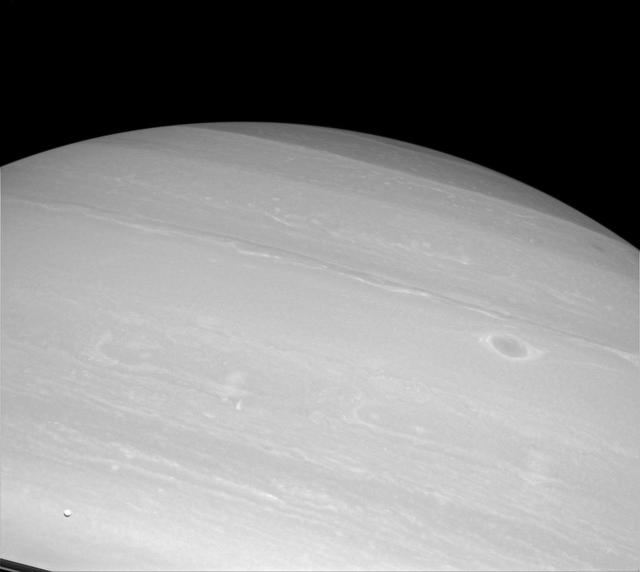
Enceladus (visible in the lower-left corner of the image) is but a speck before enormous Saturn, but even a small moon can generate big waves of excitement throughout the scientific community. Enceladus, only 313 miles (504 kilometers) acro…
Mighty Little Dot
The Saturnian Moon Enceladus
Saturn - Enceladus from a Distance of 119,000 kilometers 74,000 miles
On this polar stereographic map of Enceladus south polar terrain, all 100 geysers have been plotted whose source locations have been determined in NASA Cassini imaging survey of the moon geyser basin.
Surveyor Map of Enceladus Geyser Basin
Ancient Terrain on Enceladus
Transition on Enceladus
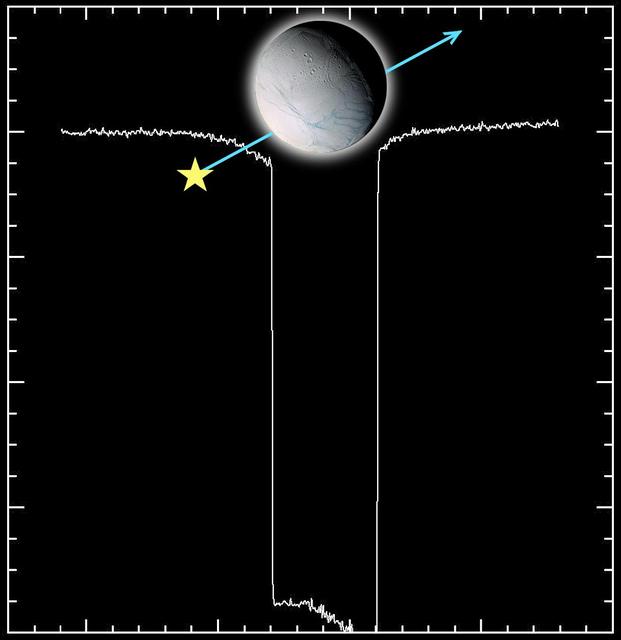
Enceladus Atmosphere -- Star Struck
Peak Water Density
Peak Water Density
Two sources of light illuminate the textured surface of the moon Enceladus in this image taken by NASA Cassini spacecraft narrow angle camera.
Twice-Lit Moon
Icy Oasis
Icy Oasis
Occulting Enceladus
Occulting Enceladus
Enceladus Rev 91 Flyby - Skeet Shoot #9
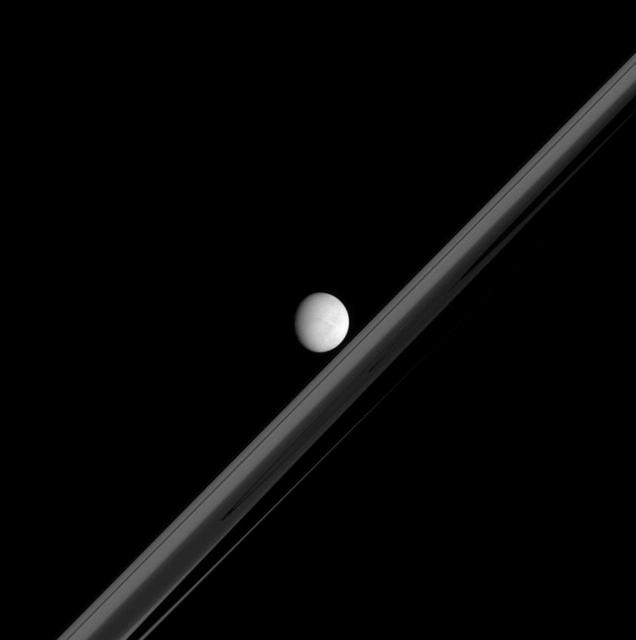
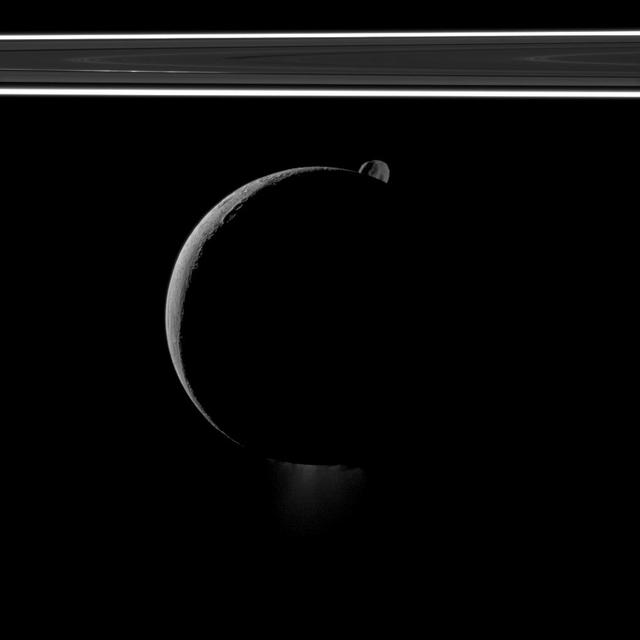
During a flyby of Saturn moon Enceladus on Oct. 1, 2011, NASA Cassini spacecraft snapped this portrait of the moon joined by its sibling Epimetheus and the planet rings.
Hiding Little Brother
This image from NASA Cassini spacecraft, one of those acquired in the survey conducted by the Cassini imaging science team of the geyser basin at the south pole of Enceladus, was taken as Cassini was looking across the moon south pole.
Encroaching Shadow
Map of Enceladus
Map of Enceladus
NASA Cassini spacecraft watches over the northern latitudes of Saturn geologically active moon Enceladus while the planet rings peek through in the distance in this snapshot.
Northern Reaches
These drawings depict explanations for the source of intense heat that has been measured coming from Enceladus south polar region. These models predict that water could exist in a deep layer as an ocean or sea and also near the surface.
Melted Ice