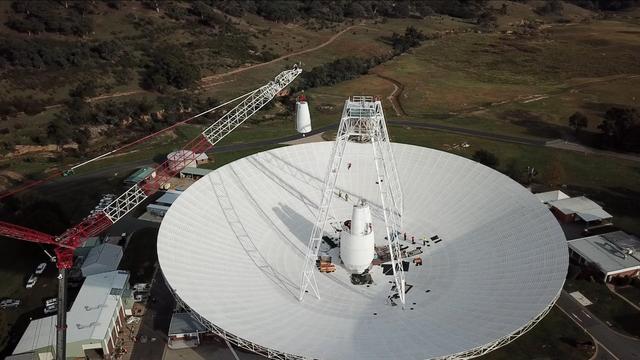
The antenna of the Deep Space Network's Deep Space Station 43 (DSS-43) in Canberra, Australia, spans 70 meters (230 foot) and stands 73 meters (239 foot), dwarfing workers as they perform upgrades on the central cone that contains sensitive…
A crane lowers the 112-foot-wide (34-meter-wide) steel framework for the Deep Space Station 23 (DSS-23) reflector dish into position on Dec. 18, 2024, at the Deep Space Network's Goldstone Space Communications Complex near Barstow, Californ…
Suzanne Dodd, the director for the Interplanetary Network Directorate at NASA's Jet Propulsion Laboratory in Southern California, addresses an audience at the Deep Space Network's Canberra complex on March 19, 2025. That day marked 60 years…
Deep Space Station 13 (DSS-13) at NASA's Goldstone Deep Space Communications Complex near Barstow, California – part of the agency's Deep Space Network – is a 34-meter (112-foot) experimental antenna that has been retrofitted with an optica…
This series of radar images obtained by the Goldstone Solar System Radar near Barstow, California, on Aug. 18, 2024, shows the asteroid 2024 JV33 shortly before its close approach with Earth. The images were captured when the asteroid was a…
This series of radar images obtained by the Deep Space Network's Goldstone Solar System Radar near Barstow, California, on Sept. 16, 2024, shows the near-Earth asteroid 2024 ON a day before its close approach with our planet. The asteroid p…
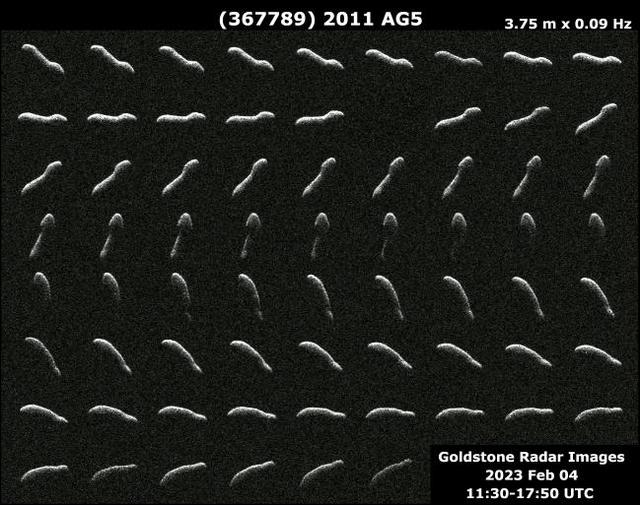
This collage represents NASA radar observations of near-Earth asteroid 2011 AG5 on Feb. 4, 2023, one day after its close approach to Earth brought it about 1.1 million miles (1.8 million kilometers, or a little under five times the di…
Asteroid 1997 QK1 is shown to be an elongated, peanut-shaped near-Earth object in this series of 28 radar images obtained by the Deep Space Network's Goldstone Solar System Radar on Aug. 21, 2025. The asteroid is about 660 feet (200 meters)…
This series of seven radar observations by the Deep Space Network's Goldstone Solar System Radar shows the asteroid 2011 UL21 during its close approach with Earth from 4.1 million miles (6.6 million kilometers) away – about 17 times the dis…
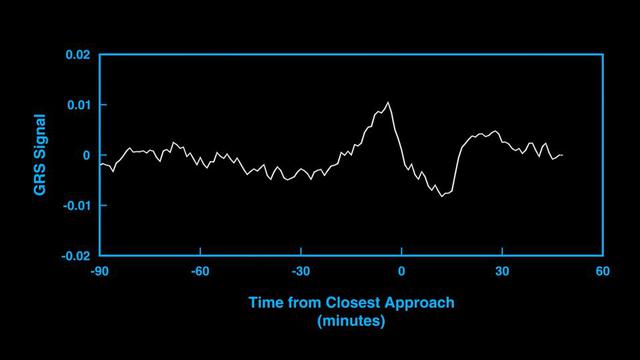
This animation and audio represent the subtle gravitational signal acquired by an antenna of NASA's Deep Space Network as the agency's Juno spacecraft performed a close flyby of Jupiter's Great Red Spot in July 2019. The changes in the sign…
On Feb. 11, 2020, NASA, JPL, military and local officials broke ground in Goldstone, California, for a new antenna in the agency's Deep Space Network, which communicates with all its deep space missions. When completed in 2 ½ years, th…
Workers at NASA Deep Space Network Goldstone Deep Space Communications Complex prepare a support leg that would help raise a portion of the giant Mars antenna.
The giant, 70-meter-wide antenna at NASA Deep Space Network complex in Goldstone, Calif., tracks a spacecraft on Nov. 17, 2009. This antenna, officially known as Deep Space Station 14, is also nicknamed the Mars antenna.
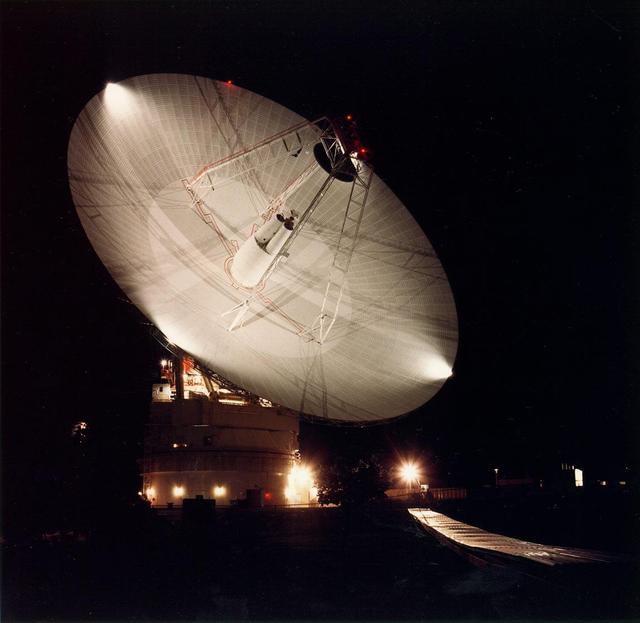
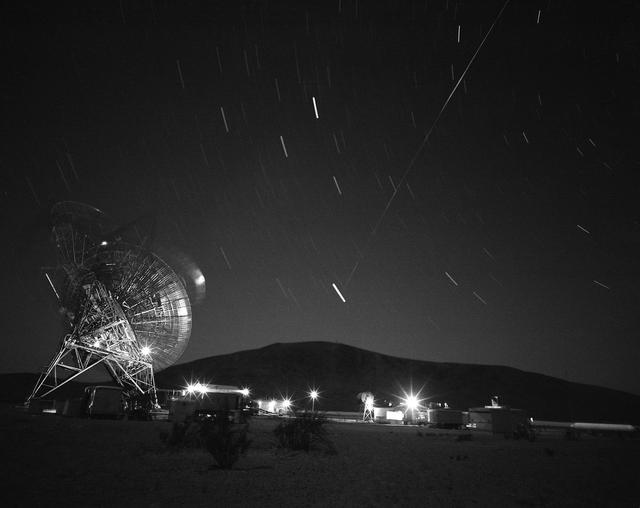
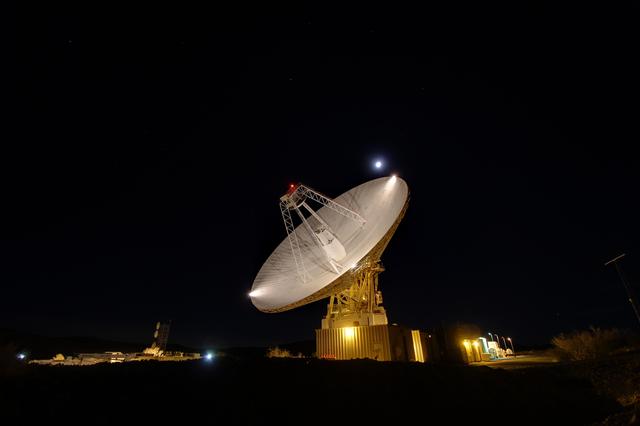
Night shot of the 70m antenna at Goldstone, California. The parabolic dish is 70m 230 ft. in diameter. The Goldstone Deep Space Communications Complex, located in the Mojave Desert in California, is one of three complexes which comprise NAS…
The 230-foot 70-meter DSS-14 antenna at Goldstone, Ca. obtained these radar images of asteroid 2015 TB145 on Oct. 31, 2015. Asteroid 2015 TB145 is depicted in eight individual radar images collected on Oct. 31, 2015 between 5:55 a.m. PDT (…
Deep Space Station 56, or DSS-56, is a powerful 34-meter-wide (112-foot-wide) antenna that was added to the Deep Space Network's Madrid Deep Space Communications Complex in Spain in early 2021 after beginning construction in 2017. Deep Spac…
Deep Space Station 53, or DSS-53, is a new 34-meter (111-foot) beam waveguide antenna that went online in February 2022 at NASA's Deep Space Network's ground station in Madrid. DSS-53 is the fourth of six antennas being added to expand the…
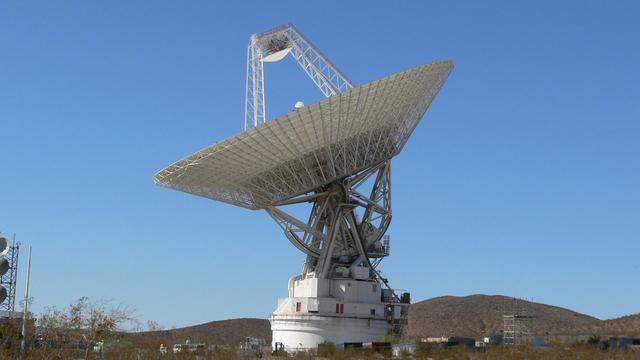
DSS43 is a 70-meter-wide (230-feet-wide) radio antenna at the Deep Space Network's Canberra facility in Australia. It is the only antenna that can send commands to the Voyager 2 spacecraft. https://photojournal.jpl.nasa.gov/catalog/PIA2368…
In a historic first, all six radio frequency antennas at the Madrid Deep Space Communication Complex – part of NASA's Deep Space Network (DSN) – carried out a test to receive data from the agency's Voyager 1 spacecraft at the same time on…
These images and animation represent NASA radar observations of 4660 Nereus on Dec. 10, 2021, before the asteroid's close approach on Dec. 11, when it came within 2.5 million miles (4 million kilometers) of Earth. Using the 70-meter radio a…
This mosaic shows NASA's radar observations in one-minute increments of asteroid 2024 MK, a 500-foot-wide (150-meter-wide) near-Earth object, made June 30, 2024, a day after it passed our planet from a distance of only 184,00 miles (295,000…
This series of 41 radar images obtained by the Deep Space Network's Goldstone Solar System Radar on July 28, 2025, shows the near-Earth asteroid 2025 OW as it made its close approach with our planet. The asteroid safely passed at about 400,…
Between Aug. 20 and 24, near-Earth asteroid (NEA) 2016 AJ193 drifted past Earth at a distance of 2.1 million miles (about 3.4 million kilometers), creating an opportunity for planetary radar to image its surface for the first time since its…
This archival image was released as part of a gallery comparing JPL’s past and present, commemorating the 80th anniversary of NASA’s Jet Propulsion Laboratory on Oct. 31, 2016. This photograph shows the first pass of Echo 1, NASA's fir…
This collage and animation represent NASA radar observations of near-Earth asteroid 7335 1989 JA on May 26, 2022, one day before it made its closest approach with Earth. The potentially hazardous asteroid came within 2.5 million miles (4 mi…
Late night in the desert: Goldstone 230-foot 70-meter antenna tracks spacecraft day and night. This photograph was taken on Jan. 11, 2012. The Goldstone Deep Space Communications Complex is located in the Mojave Desert in California, USA.
Workers in Goldstone, Calif., guide a new runner segment into the hydrostatic bearing assembly of a giant, 70-meter-wide 230-foot-wide antenna that is a critical part of NASA Deep Space Network.
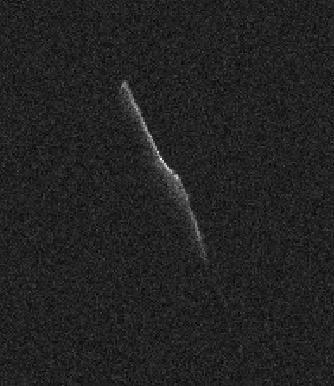
The elongated asteroid in this radar image, named 2003 SD220, will safely fly past Earth on Thursday, Dec. 24, 2015, at a distance of 6.8 million miles (11 million kilometers). The image was taken on Dec. 22 by scientists using NASA's 230-f…
On May 3, 2010, workers at NASA Deep Space Network Goldstone Deep Space Communications Complex removed one of the large steel pads that help the giant Mars antenna rotate sideways.
In a delicate operation, a 400-ton crane lifts the new X-band cone into the 70-meter (230-foot) Deep Space Network's Deep Space Station 43 (DSS-43) dish in Canberra, Australia. The new cone houses upgraded receiver and transmitter equipment…
A crane lowers a four-legged support structure called a quadripod onto the steel framework of the Deep Space Station 23 (DSS-23) reflector dish on Dec. 18, 2024. The reflector framework was bolted into place earlier in the day, and the quad…
In the early morning of Dec. 18, 2024, a crane looms over the 112-foot-wide (34-meter-wide) steel framework for Deep Space Station 23 (DSS-23) reflector dish, which will soon be lowered into position on the antenna's base structure.…
Deep Space Station 53, or DSS-53, is a new 34-meter (111-foot) beam waveguide antenna that went online in February 2022 at the Madrid ground station of NASA's Deep Space Network (DSN). DSS-53 is the fourth of six antennas being added to ex…
Located in Canberra, Australia, the Deep Space Network's Deep Space Station 43 spans 70 meters (230 feet), making it the largest steerable parabolic antenna in the Southern Hemisphere. Since March 2020, it has been undergoing upgrades — exp…
This sunset photo shows Deep Space Station 14 (DSS-14), the 230-foot-wide (70-meter) antenna at the Goldstone Deep Space Communications Complex near Barstow, California, part of NASA's Deep Space Network. The network's three complexes aroun…
This artist's concept shows what Deep Space Station-23, a new antenna dish at the Deep Space Network's complex in Goldstone, California, will look like when complete in several years. DSS-23 will communicate with NASA's deep space missions…
This figure represents the 1,000th near-Earth asteroid (NEA) to be detected by planetary radar since 1968. Being only 65 to 100 feet (20 to 30 meters) wide, asteroid 2021 PJ1 was too small to be imaged in any detail, but the powerful 70-met…
This collage represents a selection of NASA radar observations of near-Earth asteroid 2006 HV5 on April 25, 2023, less than one day before its close approach with our planet at a distance of about 1.5 million miles (2.4 million kilometers,…
Antenna dishes at NASA's Deep Space Network complex in Goldstone, California, photographed on Feb. 11, 2020. https://photojournal.jpl.nasa.gov/catalog/PIA23214
This collage represents a selection of planetary radar observations of asteroid 2008 OS7 that were made the day before its close approach with our planet on Feb. 2, 2024. The stadium-size near-Earth object passed at a distance of about 1.8…
A worker at NASA Deep Space Network Goldstone Deep Space Communications Complex radios to his colleagues that 12 jacks are ready to lift the upper section of the giant Mars antenna.
As part of a major refurbishment for the giant Mars antenna at NASA Deep Space Network Goldstone Deep Space Communications Complex, a stringer box is lowered into place.
This composite image depicts the moon rugged south polar region in two lights. The color image is the highest resolution topography map to date of the moon south pole.
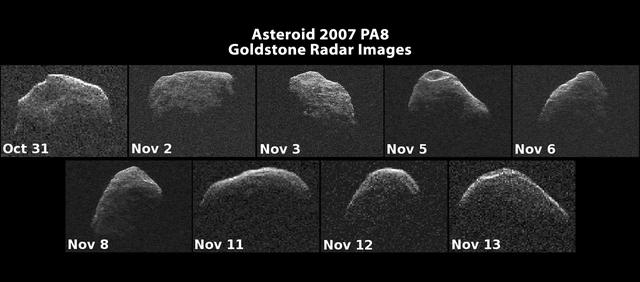
Images of asteroid 2007 PA8 have been generated with data collected by NASA Goldstone Solar System Radar. The images of 2007 PA8 reveal possible craters, boulders, an irregular, asymmetric shape, and very slow rotation.
Goldstone 230-foot 70-m antenna tracks under a full moon. The Goldstone Deep Space Communications Complex is located in the Mojave Desert in California, USA.
Gravity measurements by NASA Cassini spacecraft and Deep Space Network suggest that Saturn moon Enceladus, which has jets of water vapor and ice gushing from its south pole, also harbors a large interior ocean beneath an ice shell.