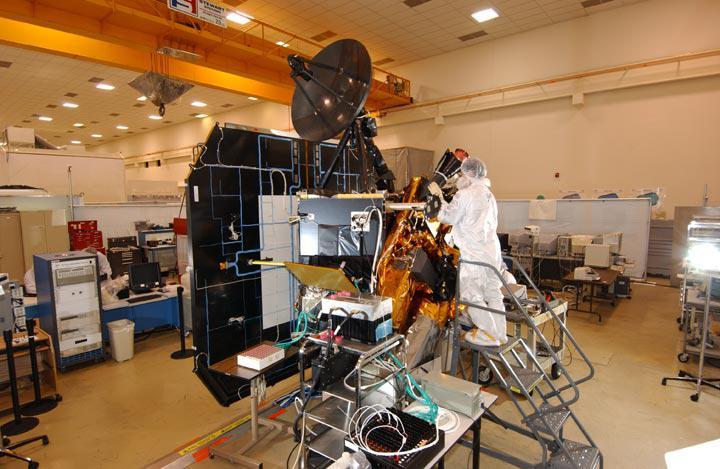
This image shows NASA Deep Impact spacecraft being built at Ball Aerospace & Technologies Corporation, Boulder, Colo. on July 2, 2005. The spacecraft impactor was released from Deep Impact flyby spacecraft.
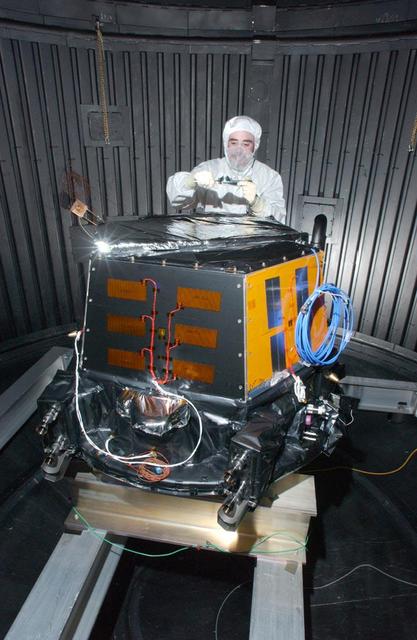
This image shows NASA Deep Impact spacecraft being built at Ball Aerospace & Technologies Corporation, Boulder, Colo. On July 2, 2005. The impactor S-band antenna is the rectangle-shaped object seen on the top of the impactor.
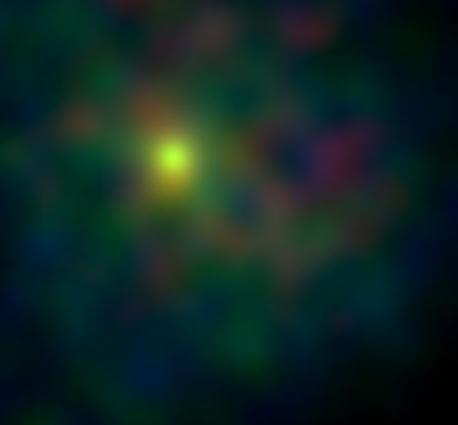
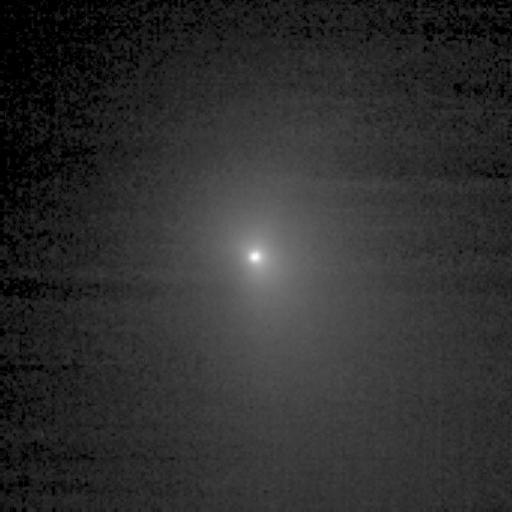
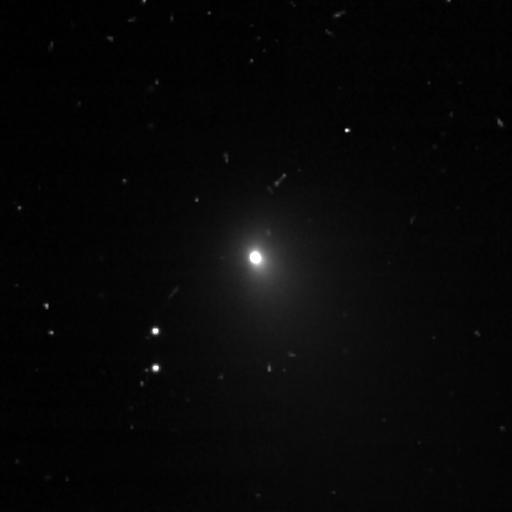
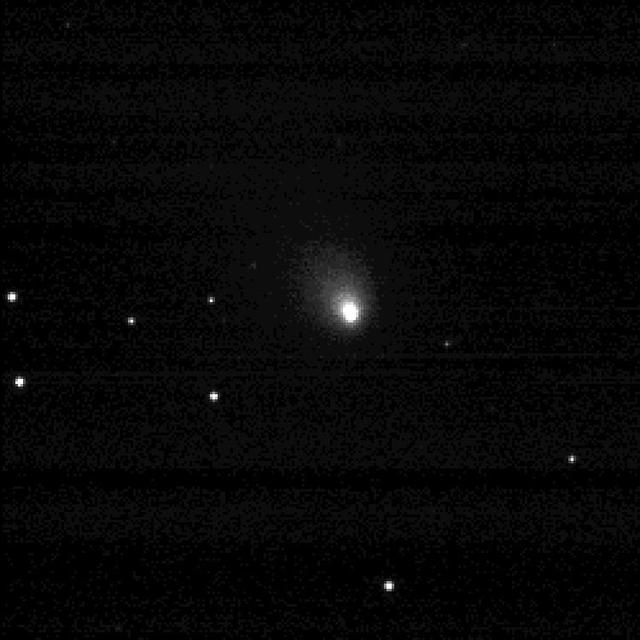
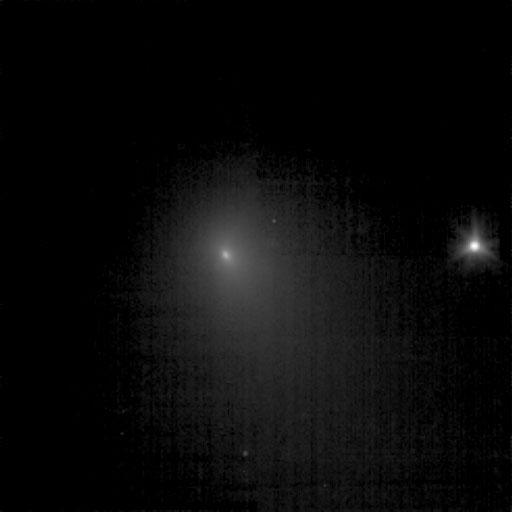
This false-color image shows comet Tempel 1 as seen by NASA Chandra X-ray Observatory on June 30, 2005, Universal Time. The comet was bright and condensed.
Deep Space Station 56, or DSS-56, is a powerful 34-meter-wide (112-foot-wide) antenna that was added to the Deep Space Network's Madrid Deep Space Communications Complex in Spain in early 2021 after beginning construction in 2017. Deep Spac…
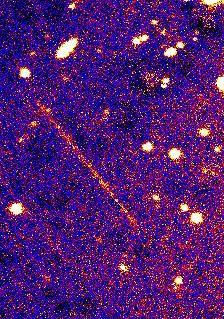
The high speed of NASA Deep Impact spacecraft causes it to appear as a long streak across the sky in the constellation Virgo during the 10-minute exposure time of this photograph taken by Mr. Palomar 200-inch telescope.
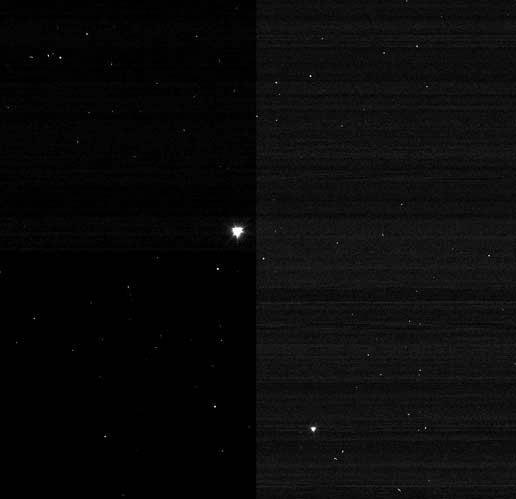
This image of NASA Deep Impact impactor probe was taken by the mission mother ship, or flyby spacecraft, after the two separated at 11:07 p.m. Pacific time, July 2 2:07 a.m. Eastern time, July 3, 2005.
This Tempel 1 image was built up from scaling images from NASA Deep Impact to 5 meters/pixel and aligned to fixed points. Each image at closer range replaced equivalent locations observed at a greater distance.
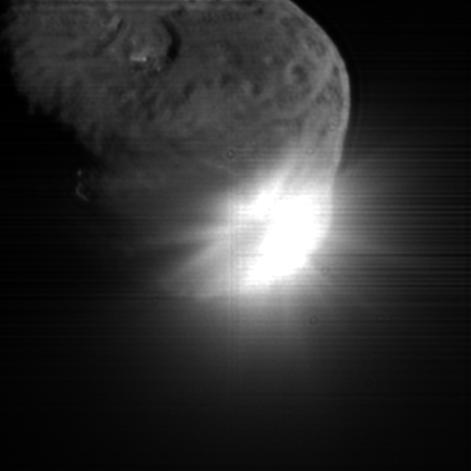
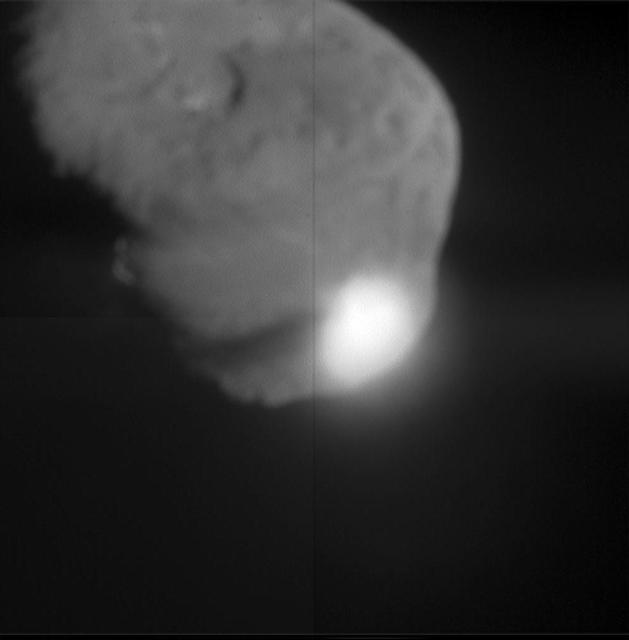
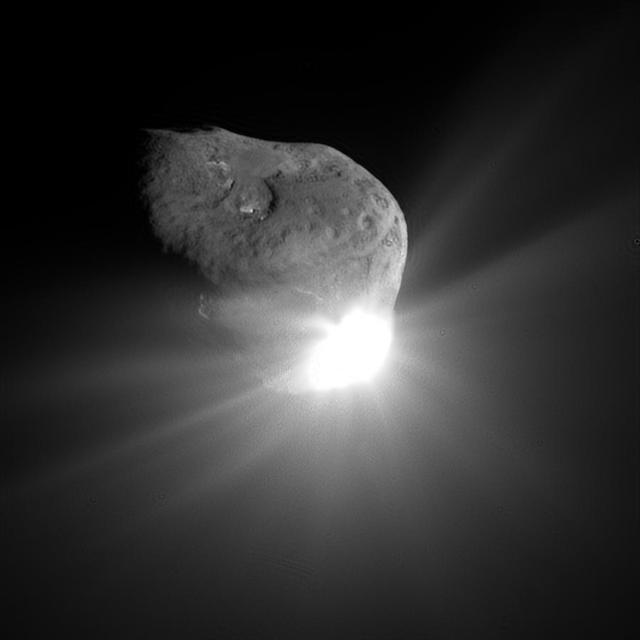
This image shows the initial ejecta that resulted when NASA Deep Impact probe collided with comet Tempel 1 at 10:52 p.m. Pacific time, July 3 1:52 a.m. Eastern time, July 4, 2005.
NASA Deep Impact flyby spacecraft took this image after it turned around to capture last shots of a receding comet Tempel 1. Earlier, the mission probe had smashed into the surface of Tempel 1.
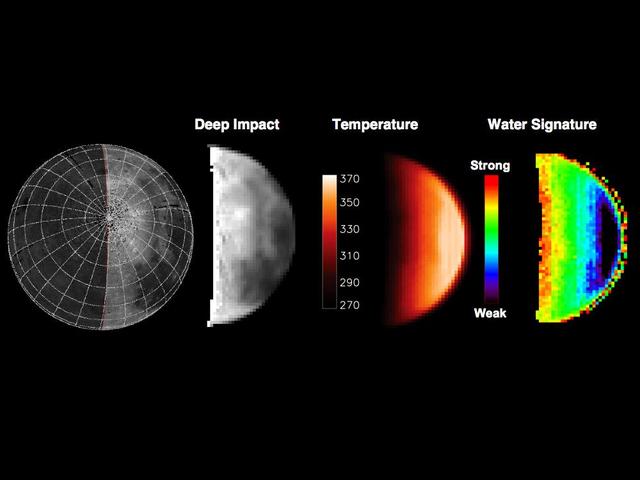
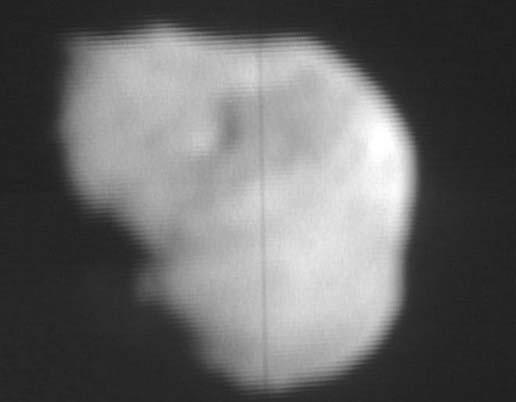
One of the two pictures of Tempel 1 (see also PIA02101) taken by Deep Impact's medium-resolution camera is shown next to data of the comet taken by the spacecraft's infrared spectrometer. This instrument breaks apart light like a prism to r…
This image shows comet Tempel 1 as seen through the clear filter of the medium resolution imager camera on NASA Deep Impact. It was taken on June 27, 2005.
This frame from a movie shows NASA Deep Impact impactor probe approaching comet Tempel 1. It is made up of images taken by the probe impactor targeting sensor in 2005.
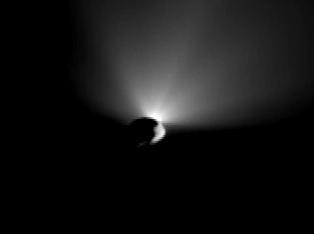
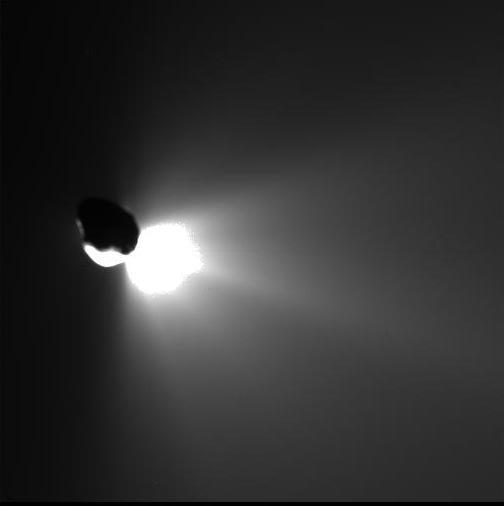
This image shows the view from NASA Deep Impact flyby spacecraft as it turned back to look at comet Tempel 1. Fifty minutes earlier, the spacecraft probe was run over by the comet.
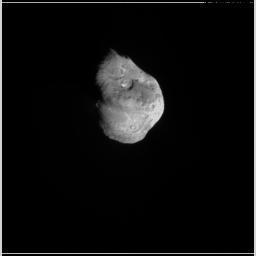
This image shows comet Tempel 1 sixty seconds before it ran over NASA Deep Impact probe at 10:52 p.m. Pacific time, July 3 1:52 a.m. Eastern time, July 4., 2005.
This image is a compilation of four images that were taken on June 13, 2005 by NASA Deep Impact. The spacecraft is 18,675,137.9 kilometers 11,604,190 miles away from comet Tempel 1.
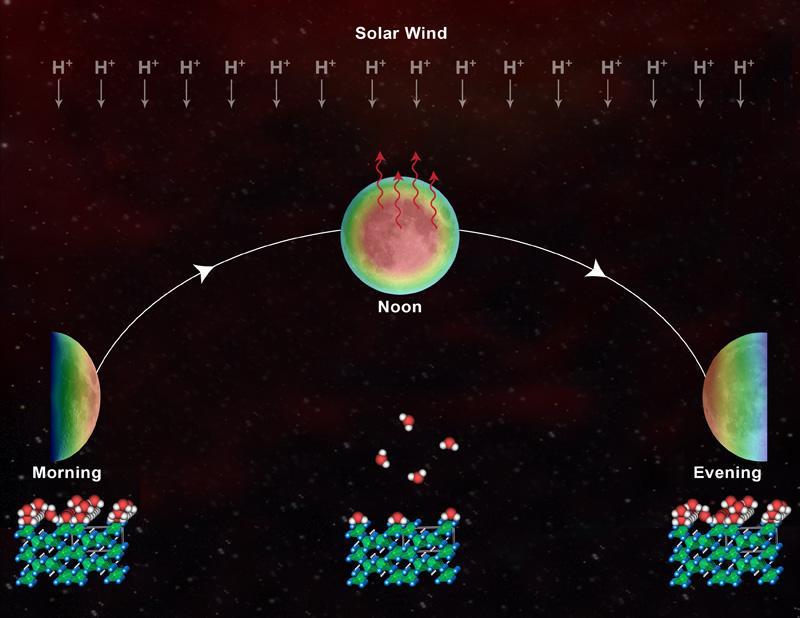
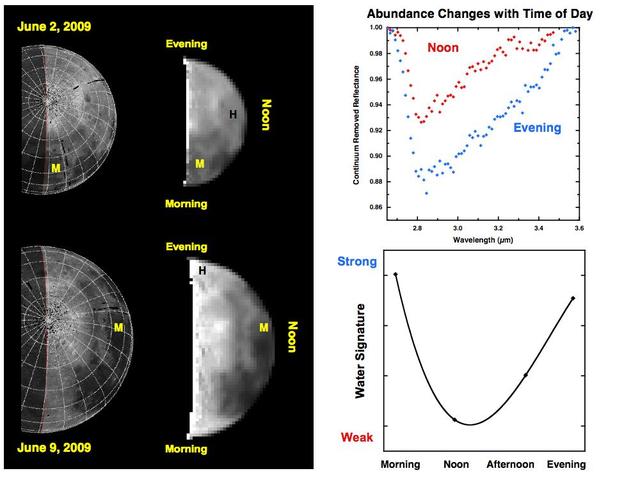
A schematic shows the daytime cycle of hydration, loss and rehydration on the lunar surface. This theory is based on data from NASA Deep Impact mission.
An artist’s rendering displays a configuration of the lunar-orbiting Gateway space station’s modules and visiting spacecraft. The core elements of Gateway consist of the Habitation and Logistics Outpost (HALO) element, the Power and Propuls…
This image shows the initial ejecta that resulted when NASA Deep Impact probe collided with comet Tempel 1 on July 3, 2005. It was taken by the spacecraft high-resolution camera 13 seconds after impact.
This image shows comet Tempel 1 approximately 5 minutes before NASA Deep Impact probe smashed into its surface. It was taken by the probe impactor targeting sensor.
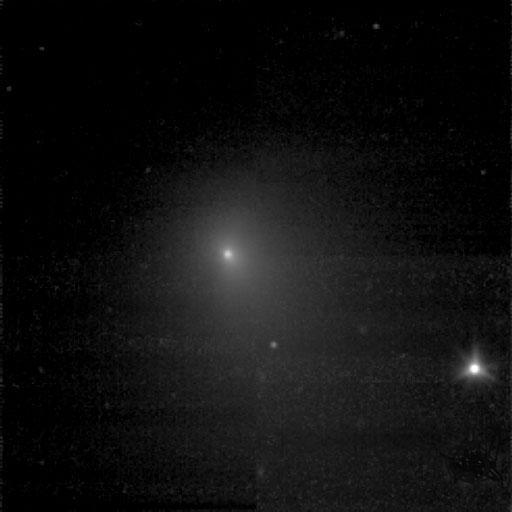
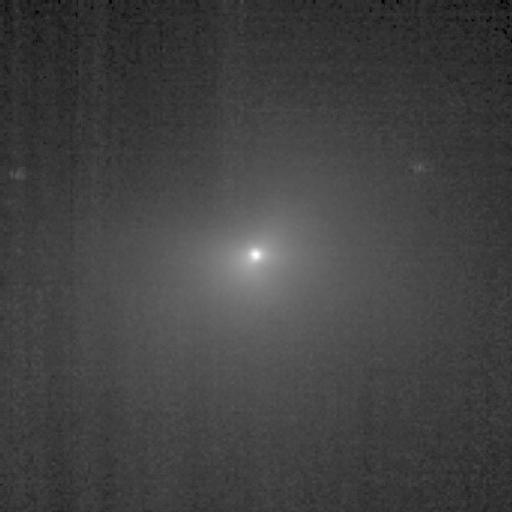
This image shows comet Tempel 1 as seen through the clear filter of the medium resolution imager camera on NASA Deep Impact. It was taken on June 30, 2005.
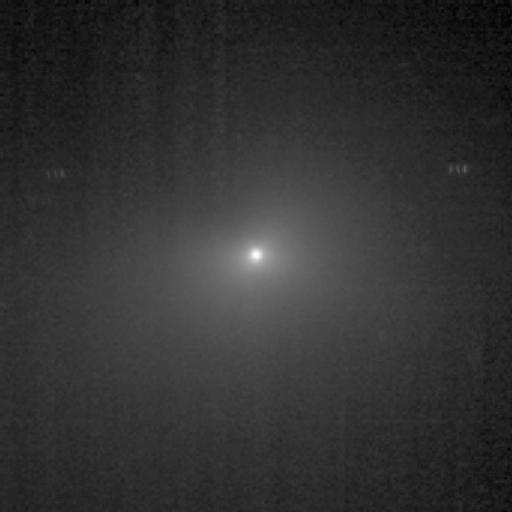
This image shows comet Tempel 1 as seen through the clear filter of the medium resolution imager camera on NASA Deep Impact. It was taken on July 1, 2005.
These artist concepts illustrate Tempel 1 shape, reflectivity, rotation rate and surface temperature, based on information from NASA Hubble Space Telescope and Spitzer Space Telescope.
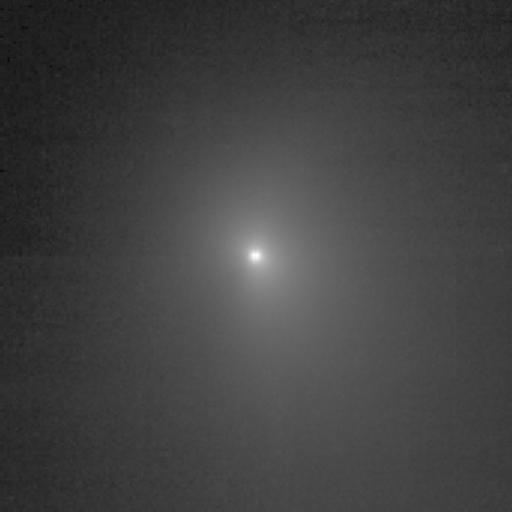
This frame from an animation series of images of comet C/2012 S1 ISON was taken by the Medium-Resolution Imager of NASA Deep Impact spacecraft over a 36-hour period on Jan. 17 and 18, 2013.
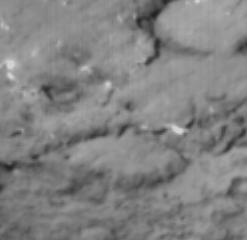
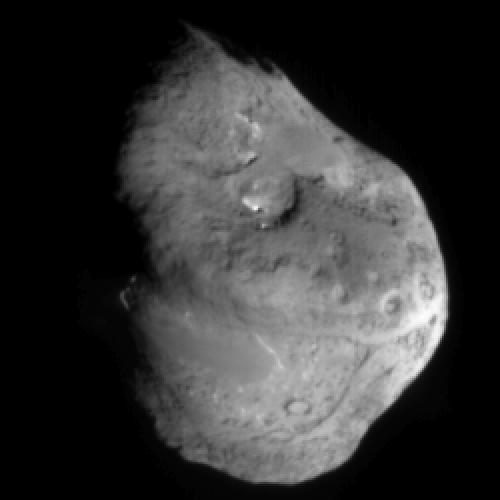
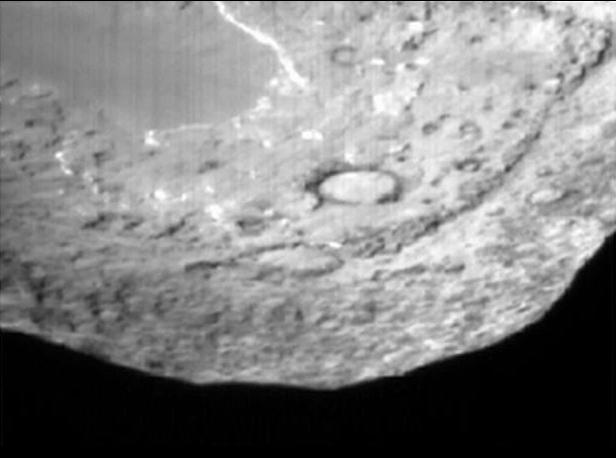
This image of the surface of comet Tempel 1 was taken about 20 seconds before NASA Deep Impact probe crashed into the comet on July 3, 2005. This particular region contains the impact site.
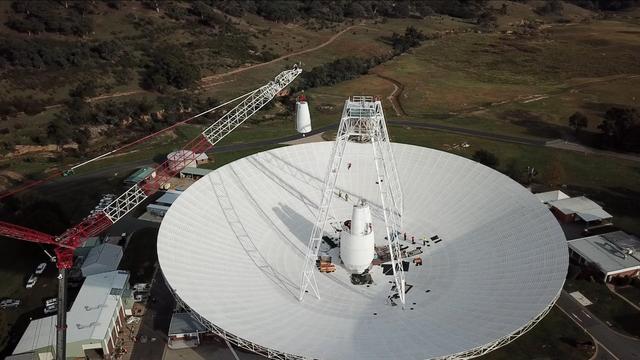
A crane lowers the 112-foot-wide (34-meter-wide) steel framework for the Deep Space Station 23 (DSS-23) reflector dish into position on Dec. 18, 2024, at the Deep Space Network's Goldstone Space Communications Complex near Barstow, Californ…
Deep Space Station 53, or DSS-53, is a new 34-meter (111-foot) beam waveguide antenna that went online in February 2022 at NASA's Deep Space Network's ground station in Madrid. DSS-53 is the fourth of six antennas being added to expand the…
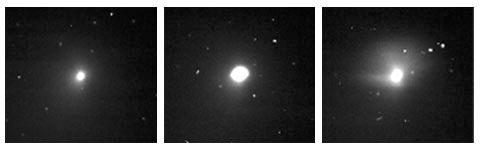
These images shows comet Tempel 1 as seen through the clear filter of the medium resolution imager camera on NASA Deep Impact. The images were acquired between June 22 and June 24, 2005.
Suzanne Dodd, the director for the Interplanetary Network Directorate at NASA's Jet Propulsion Laboratory in Southern California, addresses an audience at the Deep Space Network's Canberra complex on March 19, 2025. That day marked 60 years…
This image shows comet Tempel 1 as seen through the clear filter of the medium resolution imager camera on NASA Deep Impact. It was taken on June 25, 2005.
An artist’s rendering displays a configuration of the lunar-orbiting Gateway space station’s modules and visiting spacecraft. The core elements of Gateway consist of the Habitation and Logistics Outpost (HALO) element, the Power and Propuls…
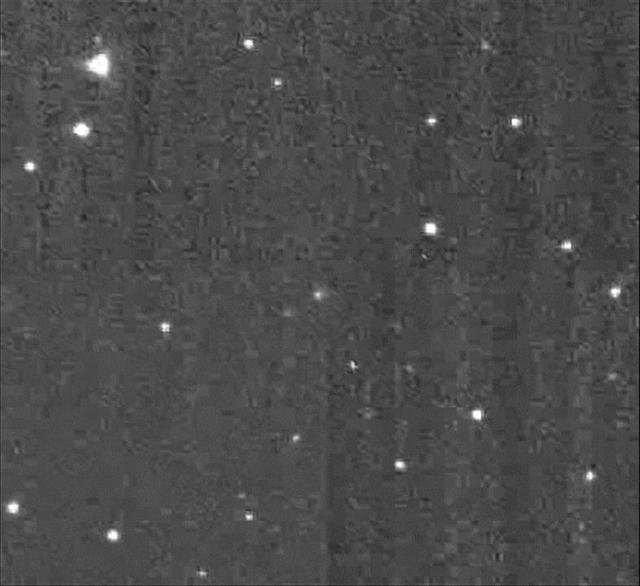
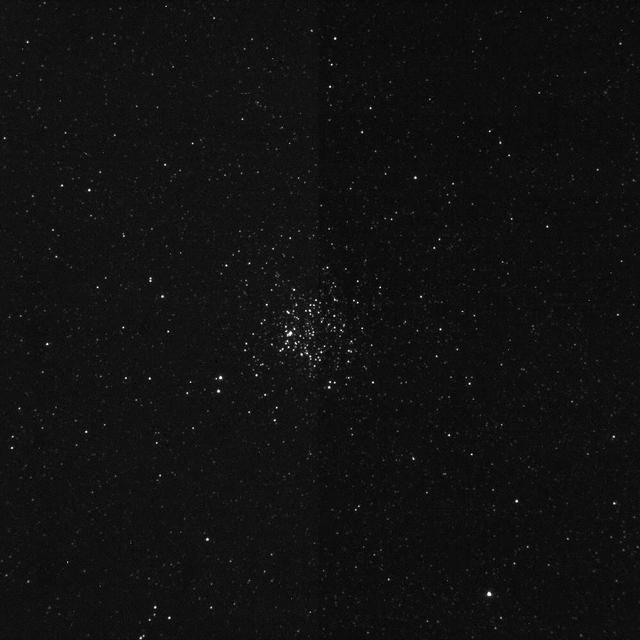
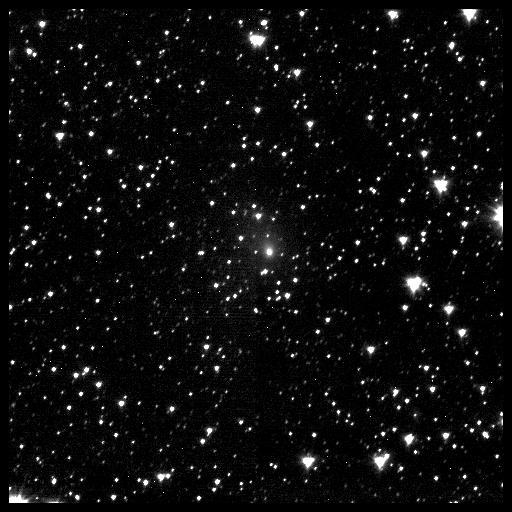
On April 7, 2005, NASA Deep Impact spacecraft Impactor Target Sensor camera recorded this image of M11, the Wild Duck cluster, a galactic open cluster located 6 thousand light years away.
The antenna of the Deep Space Network's Deep Space Station 43 (DSS-43) in Canberra, Australia, spans 70 meters (230 foot) and stands 73 meters (239 foot), dwarfing workers as they perform upgrades on the central cone that contains sensitive…
In a delicate operation, a 400-ton crane lifts the new X-band cone into the 70-meter (230-foot) Deep Space Network's Deep Space Station 43 (DSS-43) dish in Canberra, Australia. The new cone houses upgraded receiver and transmitter equipment…
When NASA Deep Impact probe collided with Tempel 1, a bright, small flash was created, which rapidly expanded above the surface of the comet. This flash lasted for more than a second.
Taken on April 25, 2005, sixty-nine days before it gets up-close-and-personal with a comet, NASA Deep Impact spacecraft successfully photographed its quarry, comet Tempel 1, at a distance of 39.7 million miles.
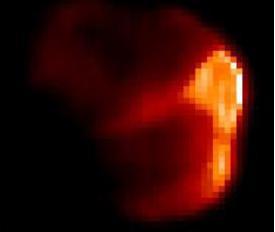
This image composite shows comet Tempel 1 in infrared light . The infrared picture highlights the warm, or sunlit, side of the comet, where NASA Deep Impact probe later hit.
A crane lowers a four-legged support structure called a quadripod onto the steel framework of the Deep Space Station 23 (DSS-23) reflector dish on Dec. 18, 2024. The reflector framework was bolted into place earlier in the day, and the quad…
This image shows NASA Deep Impact impactor probe approaching comet Tempel 1. It is made up of images taken by the probe impactor targeting sensor on July 4, 2005. Animation available at the Photojournal.
In the early morning of Dec. 18, 2024, a crane looms over the 112-foot-wide (34-meter-wide) steel framework for Deep Space Station 23 (DSS-23) reflector dish, which will soon be lowered into position on the antenna's base structure.…
DSS43 is a 70-meter-wide (230-feet-wide) radio antenna at the Deep Space Network's Canberra facility in Australia. It is the only antenna that can send commands to the Voyager 2 spacecraft. https://photojournal.jpl.nasa.gov/catalog/PIA2368…