The Gravity Recovery and Climate Experiment Follow-On (GRACE-FO) twin satellites, attached to turntable fixtures, at the Astrotech Space Operations processing facility at Vandenberg Air Force Base, California.  GRACE-FO will extend GRACE's…
GRACE-FO Satellites in a Clean Room at Vandenberg Air Force Base
One of the two Gravity Recovery and Climate Experiment Follow-On (GRACE-FO) satellites and its turntable fixture at the Astrotech Space Operations processing facility at Vandenberg Air Force Base, California.  GRACE-FO will extend GRACE's l…
GRACE-FO Satellites in a Clean Room at Vandenberg Air Force Base
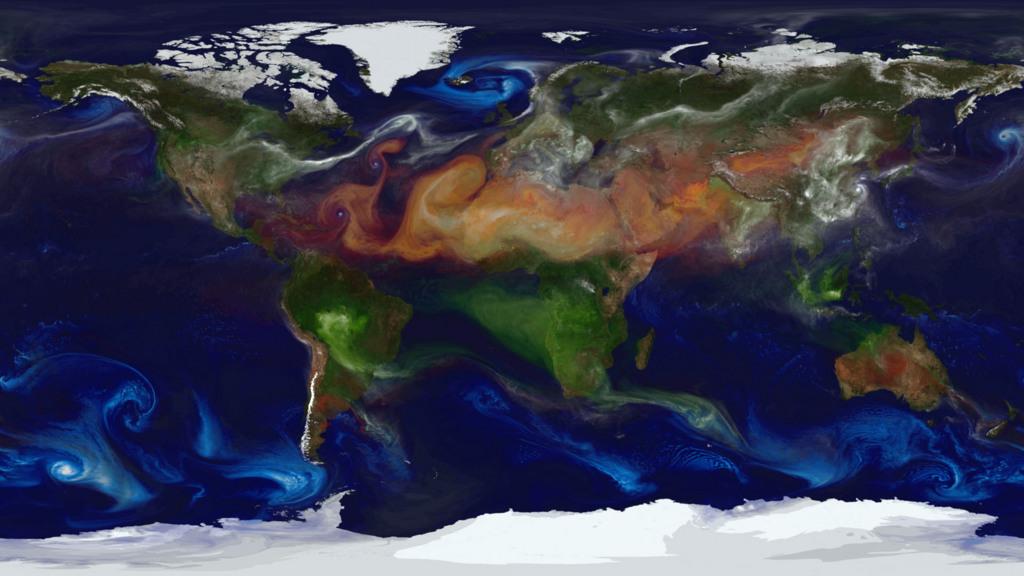
NASA models and supercomputing have created a colorful new view of aerosol movement.  Satellites, balloon-borne instruments and ground-based devices make 30 million observations of the atmosphere each day. Yet these measurements still give…
Paint by Particle
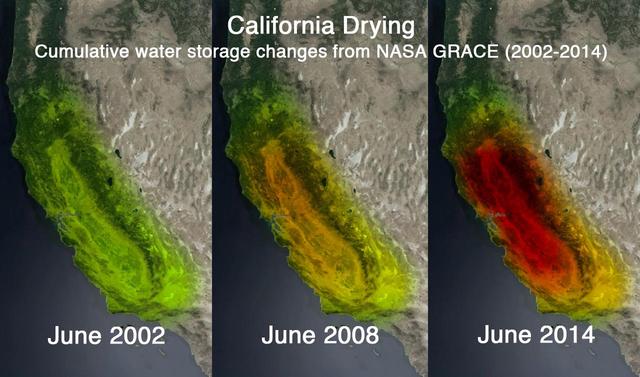
This trio of images depicts satellite observations of declining water storage in California as seen by NASA Gravity Recovery and Climate Experiment satellites in June 2002 left, June 2008 center and June 2014 right.
NASA GRACE Sees a Drying California
Cumulative total freshwater losses in South America from 2002 to 2015 (in inches) observed by NASA's Gravity Recovery and Climate Experiment (GRACE) mission. Total water refers to all of the snow, surface water, soil water and groundwater c…
Cumulative Total South America Freshwater Losses as Seen by NASA GRACE, 2002-15
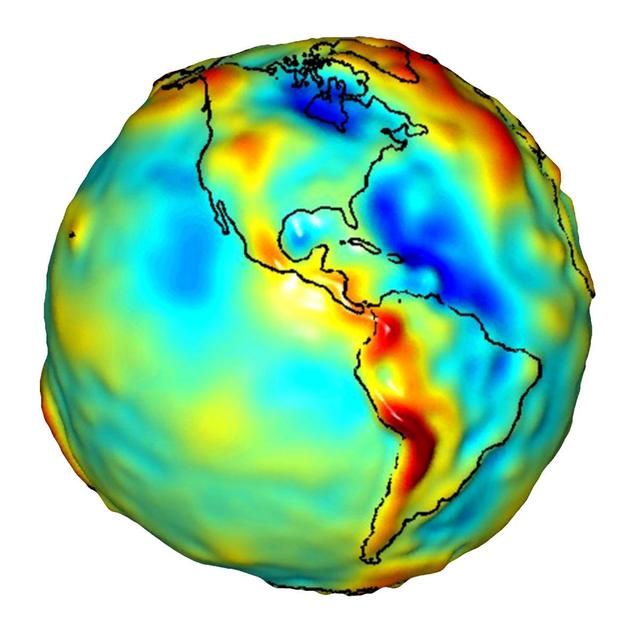
Gravity is the force that is responsible for the weight of an object and is determined by how the material that makes up the Earth is distributed throughout the Earth.
New Views of Earth Gravity Field from GRACE
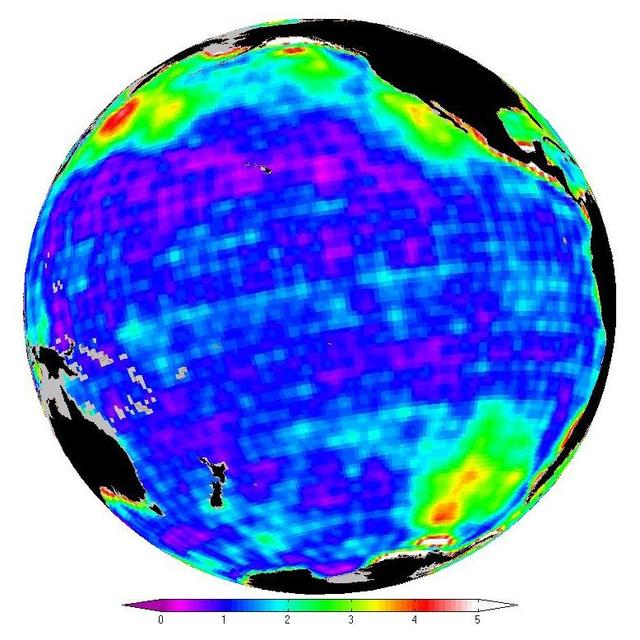
This map shows changes in ocean bottom pressure measured by NASA Gravity Recovery and Climate Experiment.
New Look at Gravity Data Sheds Light on Ocean and Climate
Senior Earth Scientist Dr. Compton Tucker talks about the new climate siumulation facility.  Credit: NASA/Goddard Space Flight Center
News Interviews: NASA Center for Climate Simulation Debuts
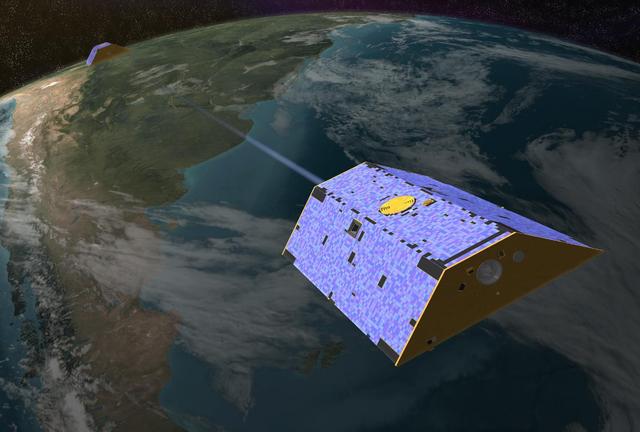
Artist concept of the Gravity Recovery and Climate Experiment GRACE from December 2002.  http://photojournal.jpl.nasa.gov/catalog/PIA04236
Artist Concept of Gravity Recovery and Climate Experiment
NASA will demonstrate high-risk, high-payoff technology advancements critical for U.S. aerospace manufacturers to bring to market innovative, cost-effective, and sustainable products and services demanded by airlines and customers.
TTBW-Hero
An artist’s concept of the transonic truss-braced wing aircraft configuration in flight over a forest of trees.
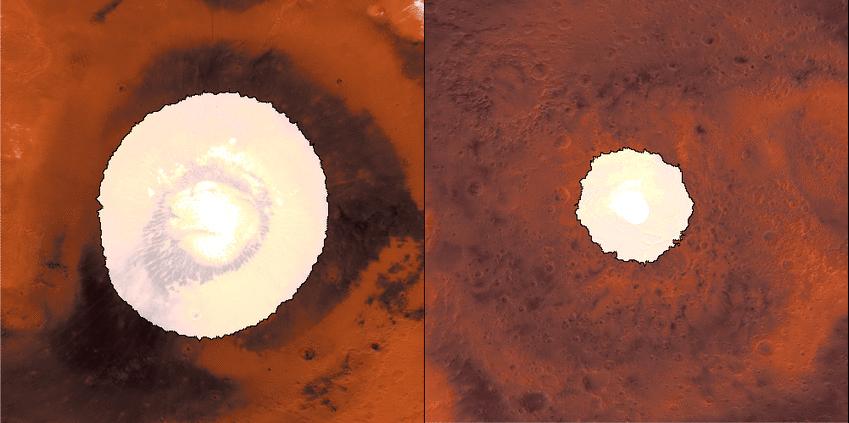
This animation shows a side-by-side comparison of CO2 ice at the north (left) and south (right) Martian poles over the course of a typical year (two Earth years). This simulation isn't based on photos; instead, the data used to create it ca…
Growth and Retreat of the CO2 Ice at the Martian Poles
VANDENBERG AIR FORCE BASE, Calif. --  Technicians guide the first stage of the Delta II rocket that will carry NASA's Aquarius satellite into low Earth orbit onto the launch pad at Vandenberg Air Force Base's Space Launch Complex-2 (SLC-2)…
KSC-2011-1968
VANDENBERG AIR FORCE BASE, Calif. -- As the sun rises over Vandenberg Air Force Base in California, the first stage of the United Launch Alliance Delta II rocket that will carry the Aquarius/SAC-D satellite into low Earth orbit is prepared…
KSC-2011-1960
VANDENBERG AIR FORCE BASE, Calif. -- The first stage of the Delta II rocket that will carry NASA's Aquarius satellite into low Earth orbit is raised onto the launch pad at Vandenberg Air Force Base's Space Launch Complex-2 (SLC-2) in Califo…
KSC-2011-1965
VANDENBERG AIR FORCE BASE, Calif.  -- With the Space Launch Complex-2 (SLC-2) service tower at Vandenberg Air Force Base in California back in place, United Space Alliance technicians lower the second stage of a Delta II rocket into positio…
KSC-2011-2454
The Gravity Recovery and Climate Experiment Follow-On (GRACE-FO) twin satellites, attached to turntable fixtures, at the Astrotech Space Operations processing facility at Vandenberg Air Force Base, California.  GRACE-FO will extend GRACE's…
GRACE-FO Satellites in a Clean Room at Vandenberg Air Force Base
Mars Climate Orbiter MARCI Approach Image
This figure shows the effect of the December 2004 great Sumatra earthquake on the Earth’s gravity field as observed by NASA GRACE.
Earthquake Signal Visible in GRACE Data
Cumulative total freshwater losses in the United States from 2002 to 2015 (in inches) observed by NASA's Gravity Recovery and Climate Experiment (GRACE) mission. Total water refers to all of the snow, surface water, soil water and groundwat…
Cumulative Total U.S. Freshwater Losses as Seen by NASA GRACE, 2002-15
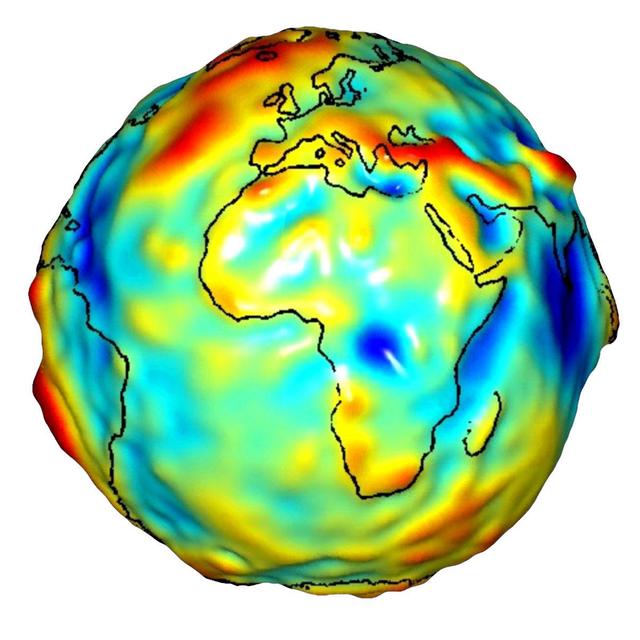
This visualization of a gravity model was created with data from NASA’s Gravity Recovery and Climate Experiment and shows variations in the gravity field across Africa and Europe.
Global Gravity: Africa and Europe
Cumulative total freshwater losses in South Asia from 2002 to 2015 (in inches) observed by NASA's Gravity Recovery and Climate Experiment (GRACE) mission. Total water refers to all of the snow, surface water, soil water and groundwater comb…
Cumulative Total India Freshwater Losses as Seen by NASA GRACE, 2002-15
This frame from an animation based on data from NASA Grace satellite shows dramatic changes in Greenland ice mass from 2003 through 2011 revealing how much ice has been lost and gained each year.
Ice Mass Loss on Greenland, 2003-2011
NASA climatologist Gary Jedlovec, a member of the Earth Science team in Marshall Space Flight Center’s Science and Technology Office, discusses the satellite technology and ground-based tools used to record and trend regional and global cli…
Gary Jedlovec Climate Change Presentation to Green Team
Groundwater storage trends for Earth's 37 largest aquifers from UCI-led study using NASA GRACE data (2003-2013). Of these, 21 have exceeded sustainability tipping points and are being depleted, with 13 considered significantly distressed, t…
Study: Third of Big Groundwater Basins in Distress
The greens and blues of the ocean color from NASA satellite data have provided new insights into how climate and ecosystem processes affect the growth cycles of phytoplankton—microscopic aquatic plants important for fish populations and Ear…
NASA Ocean Data Shows ‘Climate Dance’ of Plankton
VANDENBERG AIR FORCE BASE, Calif. --As the sun rises over Vandenberg Air Force Base in California, United Launch Alliance technicians prepare to raise one of three Delta II solid rocket motors on the pad at Space Launch Complex-2 West (SLC-…
KSC-2011-2189
VANDENBERG AIR FORCE BASE, Calif. -- United Space Alliance technicians hoist the second stage of a Delta II rocket into position in the Space Launch Complex-2 (SLC-2) service tower at Vandenberg Air Force Base in California. The rocket is b…
KSC-2011-2452
VANDENBERG AIR FORCE BASE, Calif. -- The Aquarius/SAC-D spacecraft arrives at Vandenberg Air Force Base in California from Campos, Brazil, aboard a U.S. Air Force C-17 transport plane. Following final tests, the spacecraft will be integrate…
KSC-2011-2623
VANDENBERG AIR FORCE BASE, Calif. --At Vandenberg Air Force Base in California, a crane raises one of three United Launch Alliance Delta II solid rocket motors on the pad at Space Launch Complex-2 West (SLC-2W). A second motor was installed…
KSC-2011-2197
VANDENBERG AIR FORCE BASE, Calif. -- The first stage of the Delta II rocket that will carry NASA's Aquarius satellite into low Earth orbit is raised onto the launch pad at Vandenberg Air Force Base's Space Launch Complex-2 (SLC-2) in Califo…
KSC-2011-1970
The Gravity Recovery and Climate Experiment Follow-On (GRACE-FO) twin satellites, attached to turntable fixtures, at the Astrotech Space Operations processing facility at Vandenberg Air Force Base, California.  GRACE-FO will extend GRACE's…
GRACE-FO Satellites in a Clean Room at Vandenberg Air Force Base
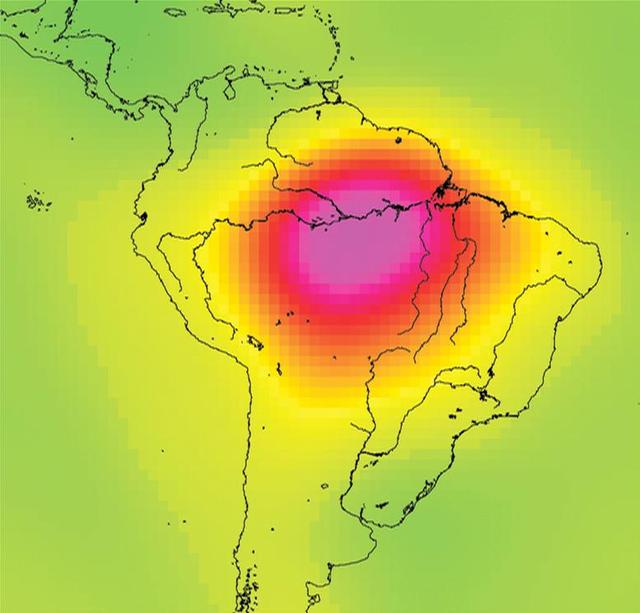
This image is from data taken by NASA Gravity Recovery and Climate Experiment showing the Amazon basin in South America. The amount of water stored in the Amazon basin varies from month to month. Animations are available at the Photojournal…
Measuring Water Storage in the Amazon
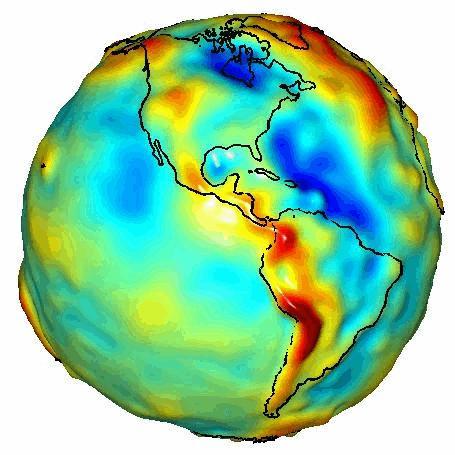
This visualization of a gravity model was created with data from NASA Gravity Recovery and Climate Experiment GRACE and shows variations in Earth’s gravity field.
GRACE Global Gravity Animation
This visualization of a gravity model was created with data from NASA Gravity Recovery and Climate Experiment and shows variations in the gravity field across the Americas.
Global Gravity: North and South America
Cumulative total freshwater losses in North Africa and the Middle East from 2002 to 2015 (in inches) observed by NASA's Gravity Recovery and Climate Experiment (GRACE) mission. Total water refers to all of the snow, surface water, soil wate…
Cumulative Total Middle East/North Africa Freshwater Losses as Seen by NASA GRACE, 2002-15
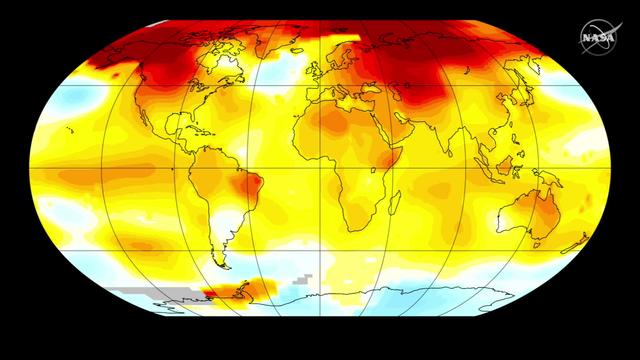
Two key climate change indicators -- global surface temperatures and Arctic sea ice extent -- have broken numerous records through the first half of 2016, according to NASA analyses of ground-based observations and satellite data.  Each of…
2016 Climate Trends Continue to Break Records
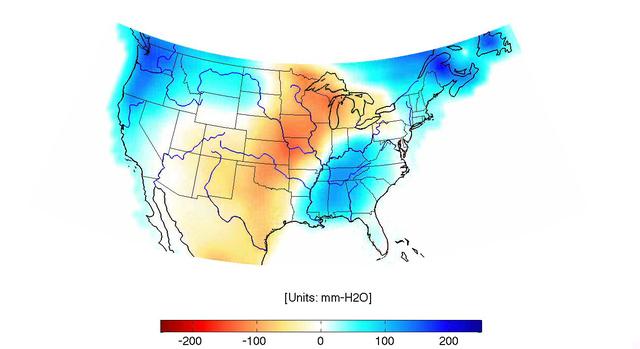
Groundwater storage trends around the United States as measured by the NASA/German Aerospace Center Gravity Recovery and Climate Experiment GRACE satellites between 2003 and 2012.
GRACE Measures Groundwater Changes Across the U.S.
This red plane is a DHC-3 Otter, the plane flown in NASA's Operation IceBridge-Alaska surveys of mountain glaciers in Alaska.  Credit: Chris Larsen, University of Alaska-Fairbanks  Over the past few decades, average global temperatures have…
NASA Airborne Campaigns Focus on Climate Impacts in the Arctic
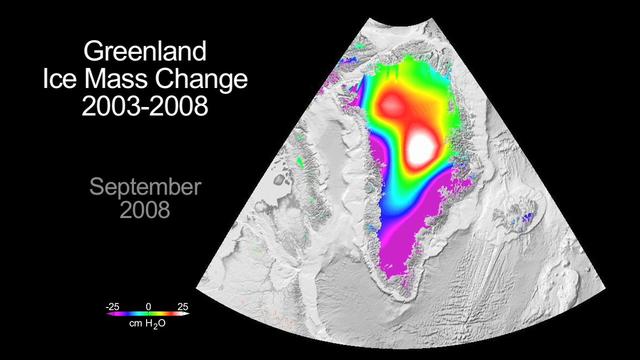
NASA GRACE mission has become a key source of knowledge about global ice mass changes. Studies of Greenland using GRACE and other data indicate that between 2000 and 2008 the Greenland ice sheet lost as much as 1,500 gigatons of mass.
Greenland Gains Some, Loses More
Senior Earth Scientist Dr. Compton Tucker talks about the new climate siumulation facility.  <a href="http://www.nasa.gov/topics/earth/features/climate-sim-center.html" rel="nofollow">www.nasa.gov/topics/earth/features/climate-sim-center.ht…
News Interviews: NASA Center for Climate Simulation Debutser
An artist’s concept of the transonic truss-braced wing aircraft configuration in flight over a forest of trees.
VANDENBERG AIR FORCE BASE, Calif. --As the sun rises over Vandenberg Air Force Base in California, a crane raises one of three United Launch Alliance Delta II solid rocket motors on the pad at Space Launch Complex-2 West (SLC-2W). Scheduled…
KSC-2011-2192
VANDENBERG AIR FORCE BASE, Calif. -- The Aquarius/SAC-D spacecraft is unpacked and unveiled in the Spaceport Systems International payload processing facility at Vandenberg Air Force Base in California. The container protected the spacecraf…
KSC-2011-2728
VANDENBERG AIR FORCE BASE, Calif. -- The first stage of the Delta II rocket that will carry NASA's Aquarius satellite into low Earth orbit is raised onto the launch pad at Vandenberg Air Force Base's Space Launch Complex-2 (SLC-2) in Califo…
KSC-2011-1964
VANDENBERG AIR FORCE BASE, Calif. -- The first stage of the Delta II rocket that will carry NASA's Aquarius satellite into low Earth orbit is raised onto the launch pad at Vandenberg Air Force Base's Space Launch Complex-2 (SLC-2) in Califo…
KSC-2011-1971
VANDENBERG AIR FORCE BASE, Calif. -- The Space Launch Complex-2 (SLC-2) service tower at Vandenberg Air Force Base in California is moved to allow United Launch Alliance technicians to hoist into position the second stage of the Delta II ro…
KSC-2011-2450