
Voyager 2 was the first spacecraft to observe the planet Neptune and its two satellites: Triton, the largest, and Nereid. The most obvious feature of the planet is its blue color, the result of methane in the atmosphere. Research continues…
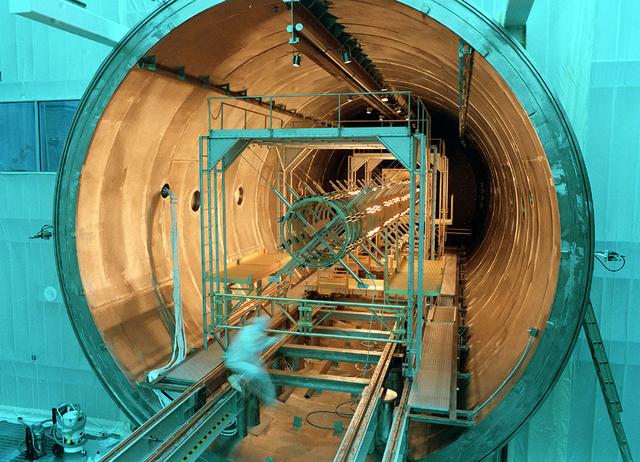
Marshall scientists testing a Lamp array at the X-Ray Calibration Facility (XRCF).
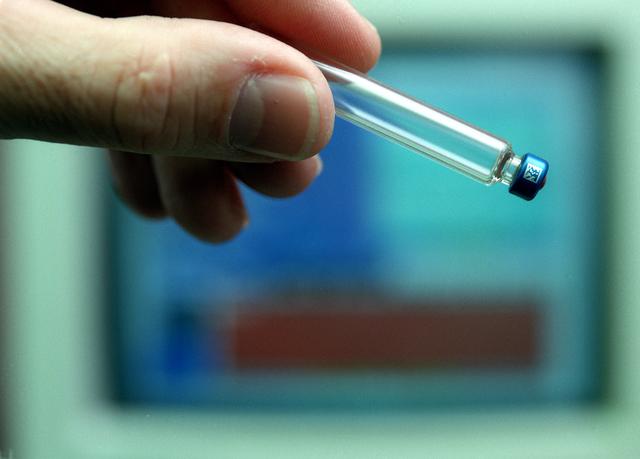
Digital data matrix, used to identify the millions of Space Shuttle parts, is being commercialized to make barcoding tamper resistant and invisible to the naked eye. These codes are applied directly to the product regardless of shape, size…
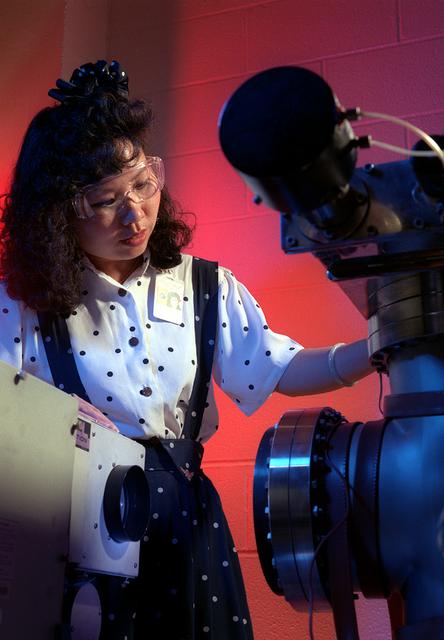
A pigment (phthalocyanine) is studied at the Marshall Materials and Processes Lab. The pigment has the ability to protect spacecraft against the harmful effects of the Sun's ultraviolet rays, and to increase the efficiency and life of solar…
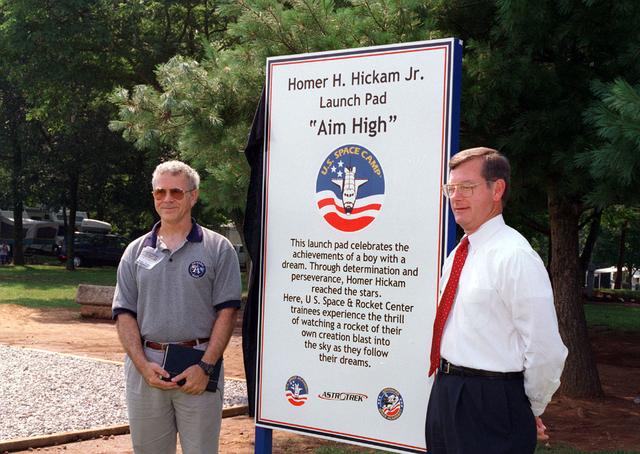
Noted author and previous Marshall Space Flight Center employee Mr. Homer Hickam Jr. poses in front of a placque commemorating his achievement in realizing his dreams of becoming a rocket scientist. The dedication site is located at the U.…
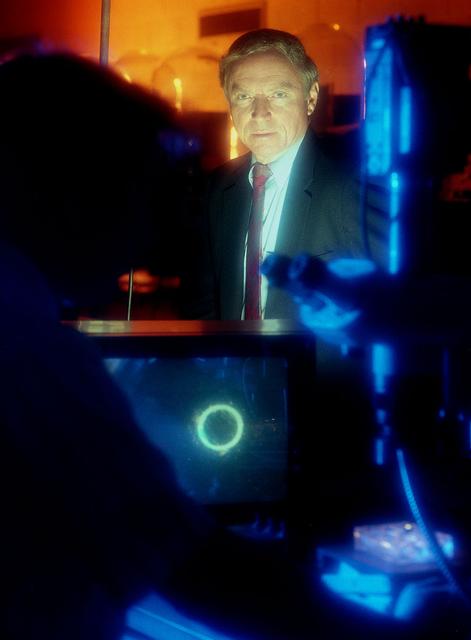
Test of bearing and seal materials in order to develop improved life bearing designs for operating in liquid turbomachinery.

The development of the electric space actuator represents an unusual case of space technology transfer wherein the product was commercialized before it was used for the intended space purpose. MOOG, which supplies the thrust vector control…
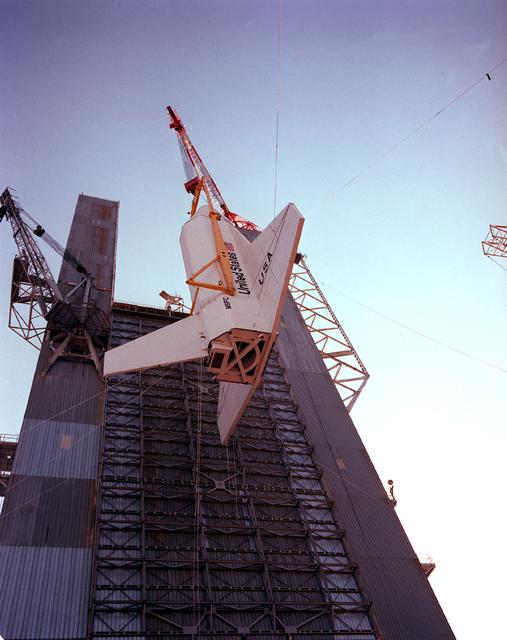
MSFC, Ala. -- The Space Shuttle Orbiter simulator is hoisted into the giant dynamics test stand at NASA's Marshall Space Flight Center, Huntsville, Ala. The simulator was built at the Marshall Center for use in pathfinder activities, such a…
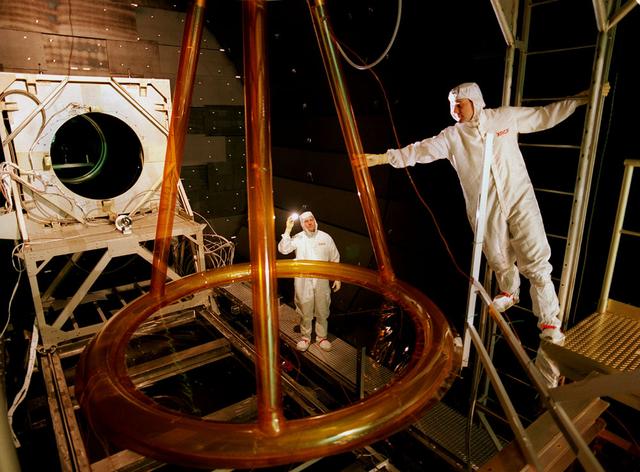
The Shooting Star Experiment (SSE) is designed to develop and demonstrate the technology required to focus the sun's energy and use the energy for inexpensive space Propulsion Research. Pictured is an engineering model (Pathfinder III) of t…
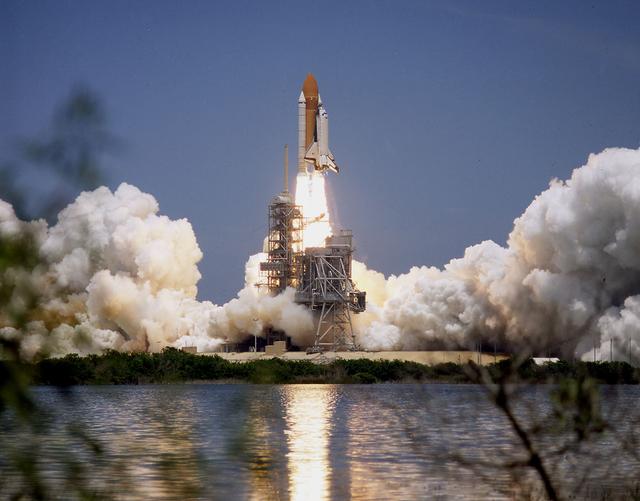
The Space Shuttle Columbia (STS-94) soared from Launch Pad 39A begirning its 16-day Microgravity Science Laboratory -1 (MSL-1) mission. The launch window was opened 47 minutes earlier than the originally scheduled time to improve the opport…
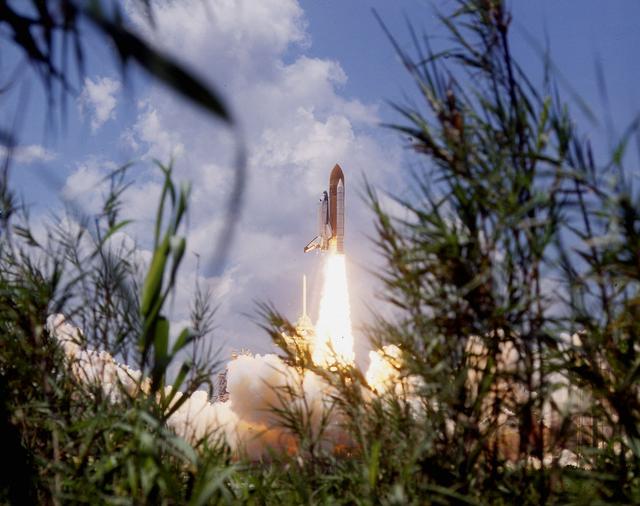
The Space Shuttle Columbia (STS-94) soared from Launch Pad 39A begirning its 16-day Microgravity Science Laboratory -1 (MSL-1) mission. The launch window was opened 47 minutes earlier than the originally scheduled time to improve the opport…
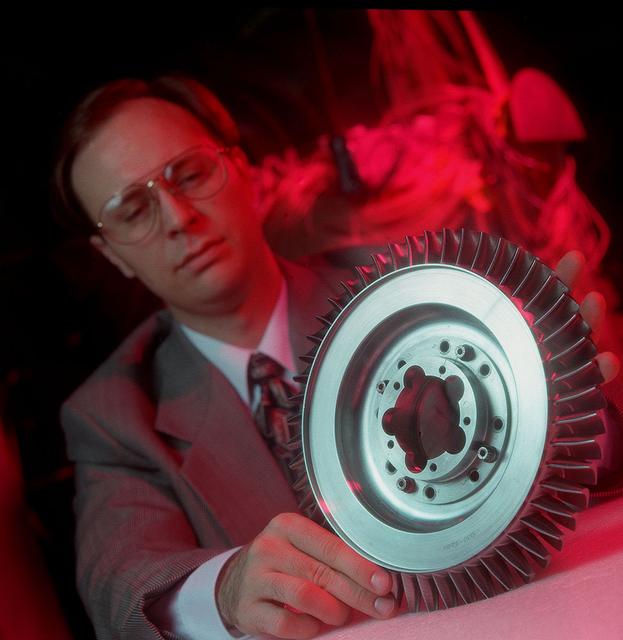
A NASA scientist displays Space Shuttle Main Engine (SSME) turbine component which underwent air flow tests at Marshall's Structures and Dynamics Lab. Such studies could improve efficiency of aircraft engines, and lower operational costs.
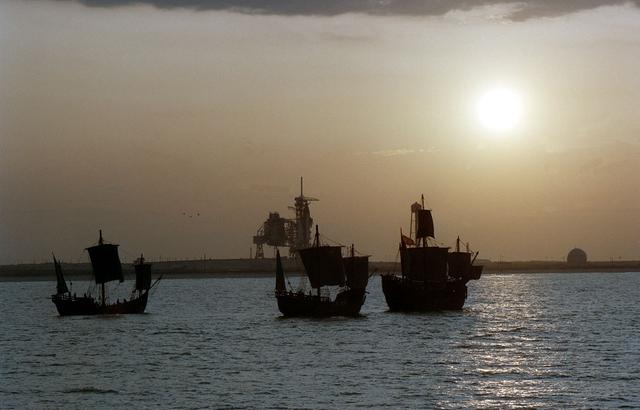
On the 500th arniversary of Christopher Columbus' discovery of the New World, replicas of his three ships sailed past the launch pad at the Kennedy Space Center (KSC) while the space shuttle Columbia sat poised for lift off.
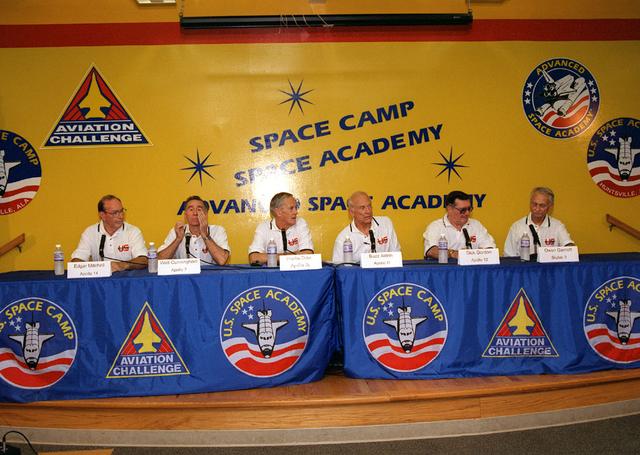
Marking the occasion of the Apollo 11 30th Anniversary, members of the Apollo and Saturn astronaut programs attended festivities at Marshall Space Flight Center in Huntsville, AL. A press conference was held at the U. S. Space and Rocket Ce…
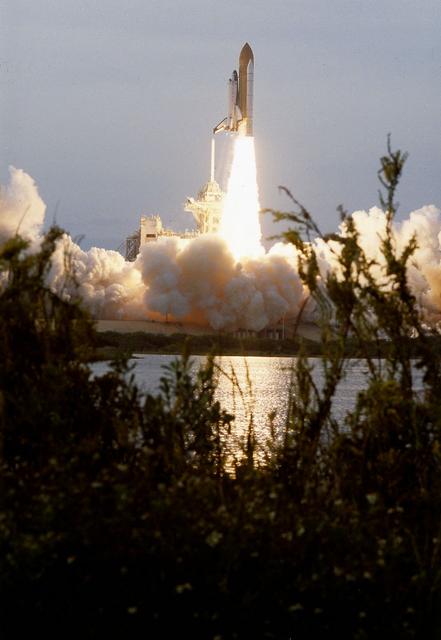
Like a rising sun lighting up the afternoon sky, the Space Shuttle Columbia (STS-87) soared from Launch Pad 39B on the fourth flight of the United States Microgravity Payload (USMP-4) and Spartan-201 satellite which were managed by scientis…
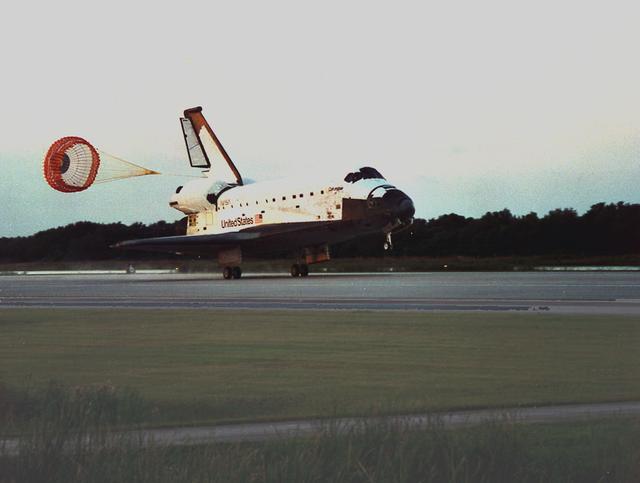
After completion of another United States Microgravity Laboratory (USML-2) mission, Space Shuttle Columbia (STS-73) and her seven member crew return to Earth on a clear November morning. Pictured is Columbia with her landing parachute deplo…

A replica of the Saturn V rocket that propelled man from the confines of Earth's gravity to the surface of the Moon was built on the grounds of the U. S. Space and Rocket Center in Huntsville, AL. in time for the 30th arniversary celebratio…
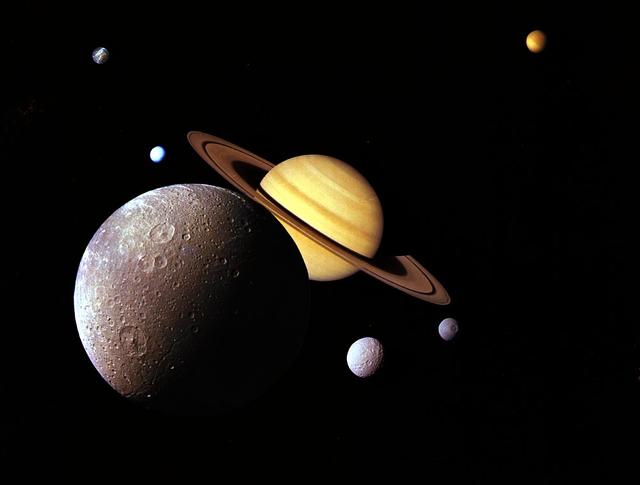
Voyager 1 passed the Saturnian system in November 1980; nine months later Voyager 2 passed through this same system. The ensuing scientific discoveries were unprecedented with regards to the rings around Saturn and its satellite's chemical…
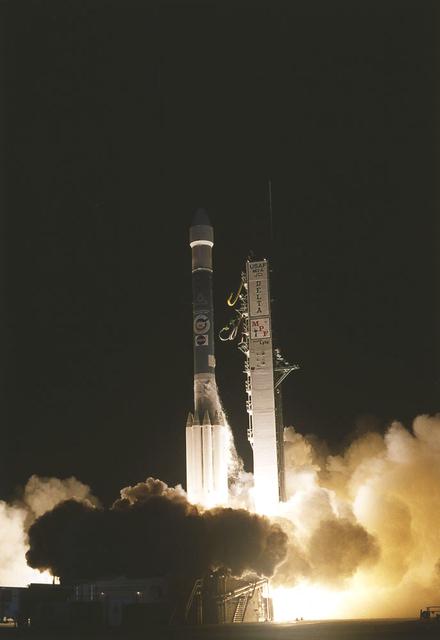
The Mars Pathfinder began the journey to Mars with liftoff atop a Delta II expendable launch vehicle from launch Complex 17B on Cape Canaveral Air Station. The Mars Pathfinder traveled on a direct trajectory to Mars, and arrived there in Ju…
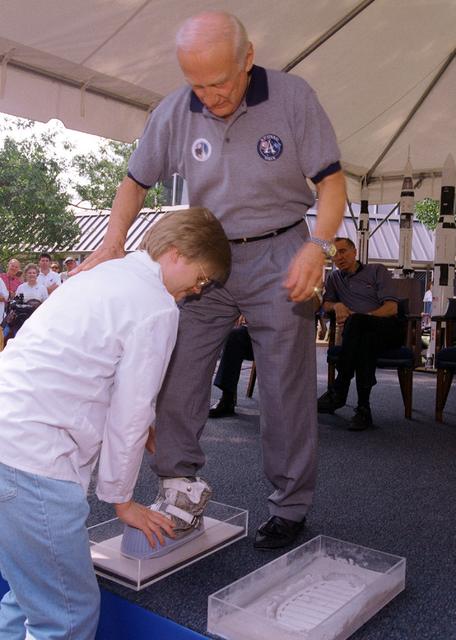
Apollo 11 Astronaut Buzz Aldrin has his footprints casted during the dedication ceremony of the rocket fountain at Building 4200 at Marshall Space Flight Center. The casts of Aldrin's footprints will be placed in the newly constructed Von B…
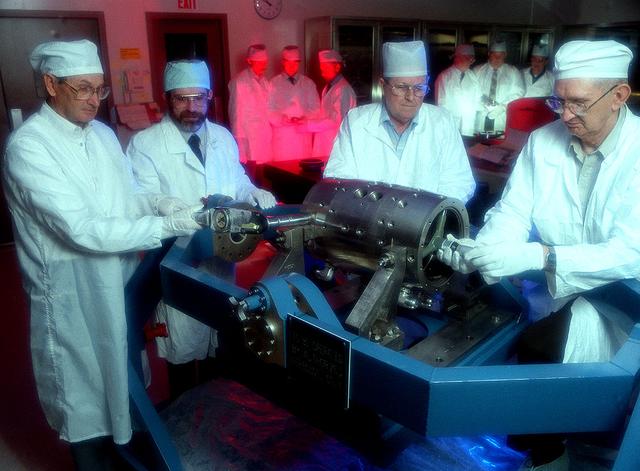
Test of bearing and seal materials in order to develop improved life bearing designs for operating in liquid turbomachinery.
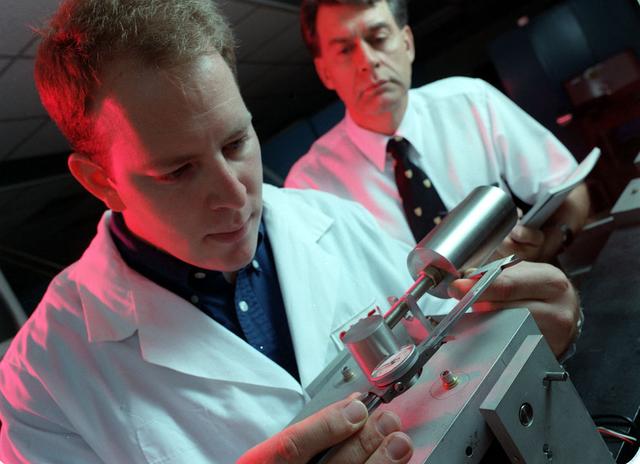
Marshall researchers, in the Astrionics lab, study rotating unbalanced mass devices. These require less power, and are lighter than current devices used for scanning images, a slice at a time. They have a wide range of space-based applicati…

Marshall Space Flight Center engineers helped North American Marine Jet (NAMJ), Inc. improve the proposed design of a new impeller for jet propulsion system. With a three-dimensional computer model of the new marine jet engine blades, engin…
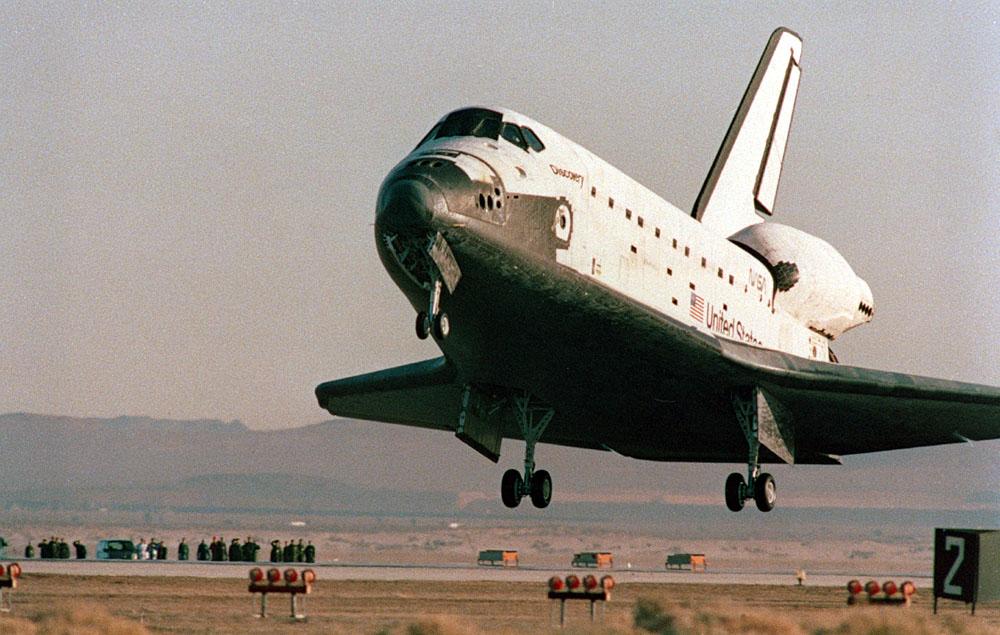
Space Shuttle Discovery STS-42) is just about to ease down its main gear on Runway 22 at Edwards Air Force Base in southern California. The successful landing completed an eight-day mission for five NASA astronauts and two payload specialis…
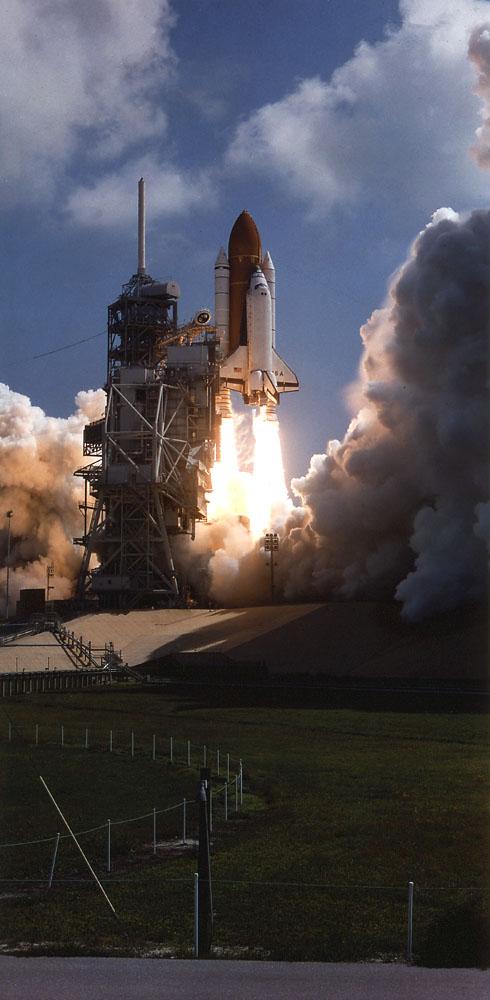
Midmorning proved the perfect time for a Space Shuttle launch as the thunderstorms that characteristically develop later in the day during hot Florida summers held off long enough to allow a flawless liftoff for the Space Shuttle Columbia (…
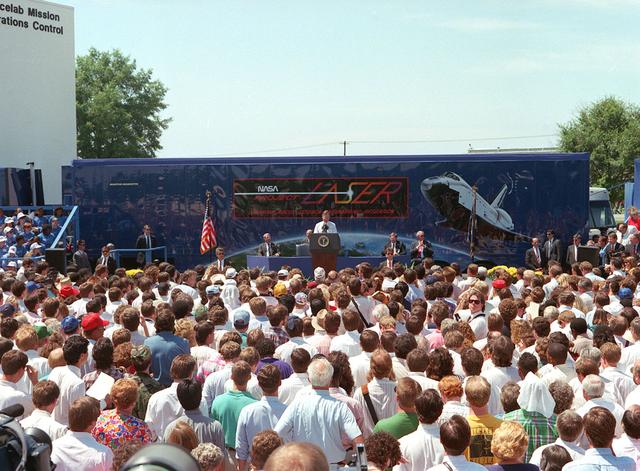
President George Bush delivers an address to Marshall Space Flight Center (MSFC) employees during his visit to the center. President Bush gave NASA employees an objective to send missions back to the moon to stay then continue on to Mars, r…
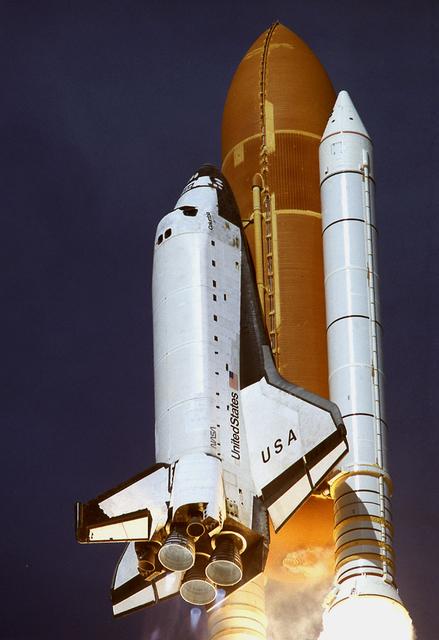
With a veteran crew aboard, the Space Shuttle Columbia (STS-62) roars off Launch Pad 39B to begin a 14-day extended duration stay in space. The two primary payloads for Columbia's 16th spaceflight are the US Microgravity Payload 2 (USMP-2)…

Radiation insulation technology from Apollo and subsequent spacecraft was used to develop superinsulators, used by makers of cold weather apparel, to make parkas, jackets, boots and outdoor gear such as sleeping bags. The radiant barrier te…

Marshall inventors Seth Lawson and Stanley Smeltzer display a pair of obstetrical forceps they designed. The forceps, made from composite space-age materials, measure the force applied during instrument-assisted delivery. The new forceps wi…
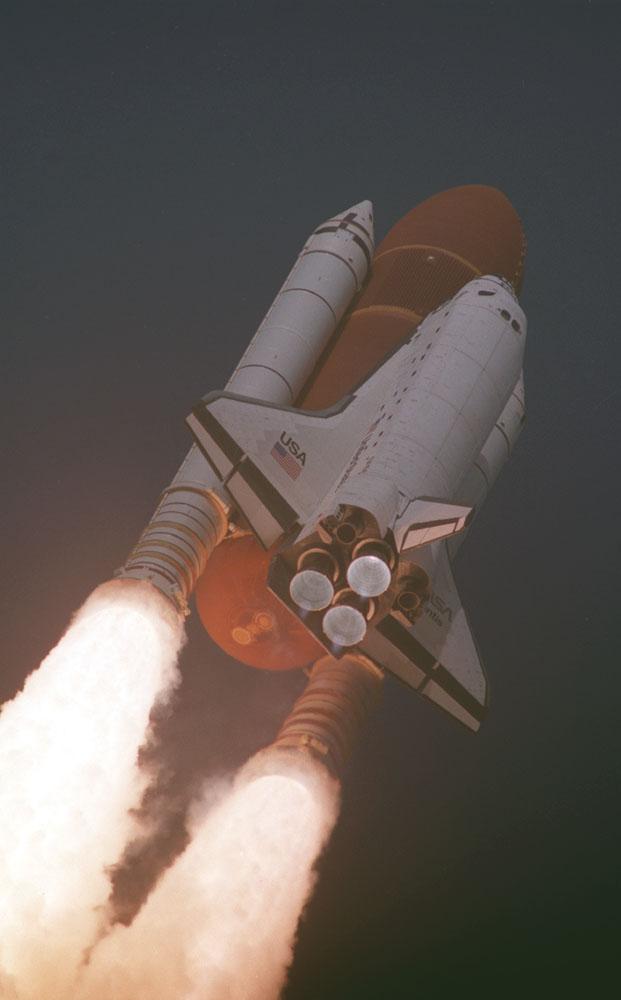
The Space Shuttle Atlantis (STS-45) roars into space in this photo showing a close-up of the Solid Rocket Boosters (SRBs) and the external tank. Atlantis' mission included experiments on the Atmospheric Lab for Applications and Sciences (AT…

A smooth countdown culminated in a picture-perfect launch as the Space Shuttle Endeavour (STS-47) climbed skyward atop a ladder of billowing smoke. Primary payload for the plarned seven-day flight was Spacelab-J science laboratory. The seco…
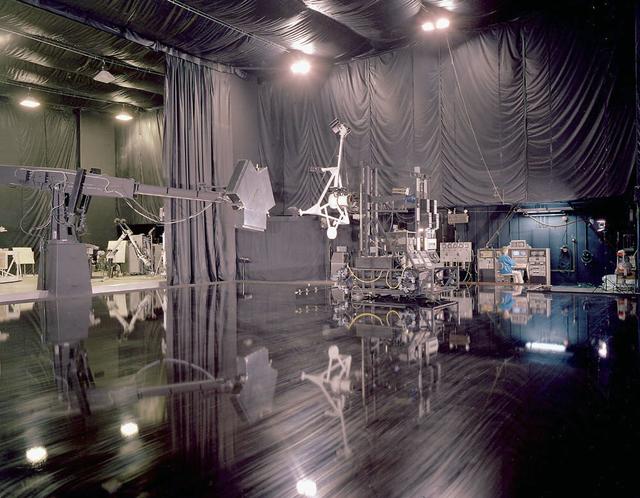
Marshall employees conduct tests on the simulated rendezvous docking mechanism (SRDM)as depicted in this photo of the flat floor area in building 4619.
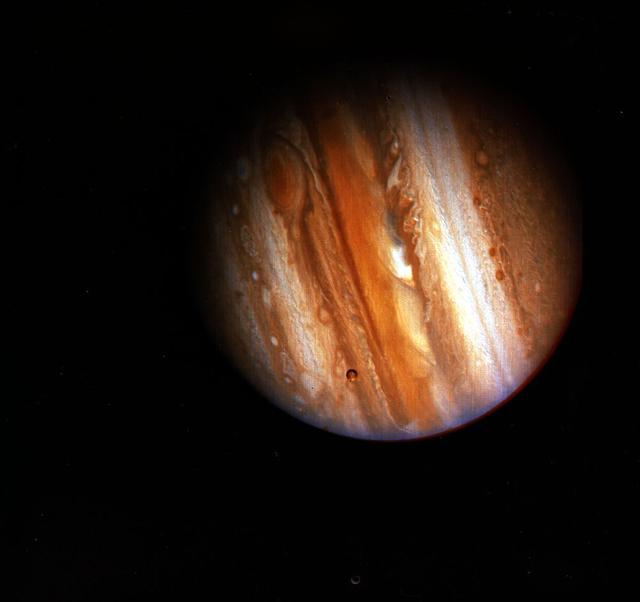
On February 5, 1979, Voyager 1 made its closest approach to Jupiter since early 1974 and 1975 when Pioneers 10 and 11 made their voyages to Jupiter and beyond. Voyager 1 completed its Jupiter encounter in early April, after taking almost 19…

Prior to the commencement of Apollo 11th's 30th arniversary festivities at Marshall Space Flight Center, visiting Saturn astronauts take a tour of the Center. Pictured are (L/R): Dick Gordon, Owen Garriott and Edgar Mitchell

Digital data matrix, used to identify the millions of Space Shuttle parts, is being commercialized to make barcoding tamper resistant and invisible to the naked eye. These codes are applied directly to the product regardless of shape, size…
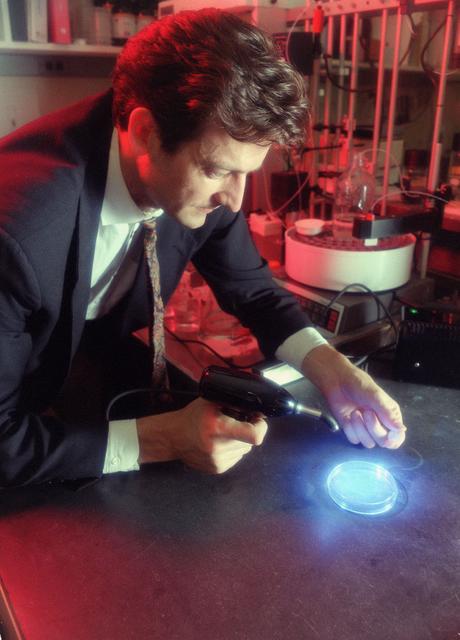
Scientists at MSFC have been studying the properties of Aerogel for several years. Aerogel, the lightest solid known to man, has displayed a high quality for insulation. Because of its smoky countenance it has yet to be used as an insulatio…
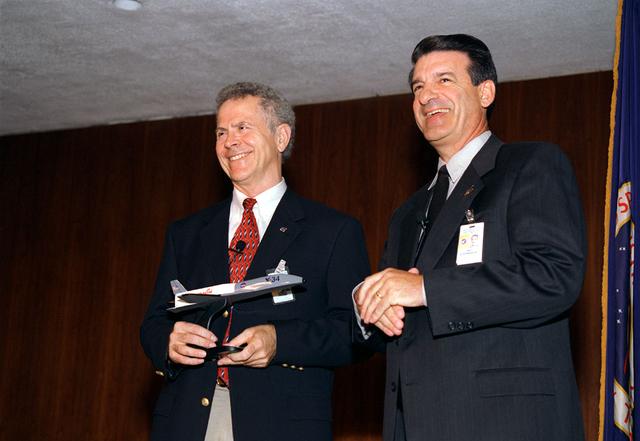
Author of Rocket Boys Homer Hickam, Jr. (left) and Marshall Space Flight Center Director Art Stephenson during a conference at Morris Auditorium. Homer Hickam worked at MSFC during the Apollo project years. As a young man, Mr. Hickam always…
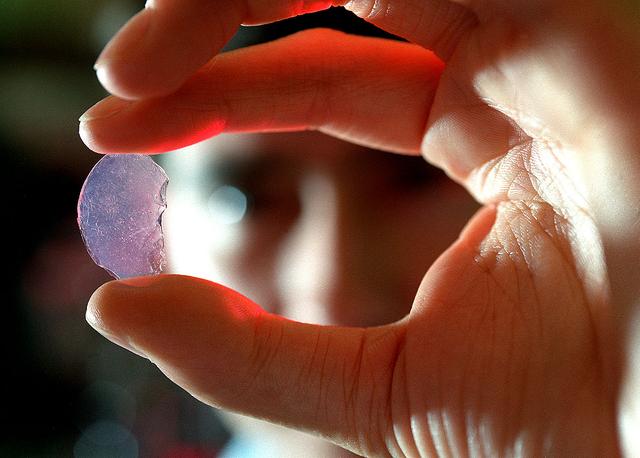
Sceintist at Marshall Space Flight Center have been studying the properties of Aerogel for several years. Aerogel, the lightest solid known to man, has displayed a high quality for insulation. Because of its smoky countenance, it has yet to…

Radiation insulation technology from Apollo and subsequent spacecraft was used to develop superinsulators, used by makers of cold weather apparel, to make parkas, jackets, boots and outdoor gear such as sleeping bags. The radiant barrier te…

The Space Shuttle Columbia (STS-75) cleared the tower following an on-time liftoff from Launch Pad 39B. Visible at lower left is the white room on the orbiter access arm through which the flight crew entered the orbiter earlier. Columbia's…

Marshall Space Flight Center used technology from astronauts' space suits to improve the safety of firefighter's attire. The new fire attire is lightweight, fire-resistant, and heat-protective.
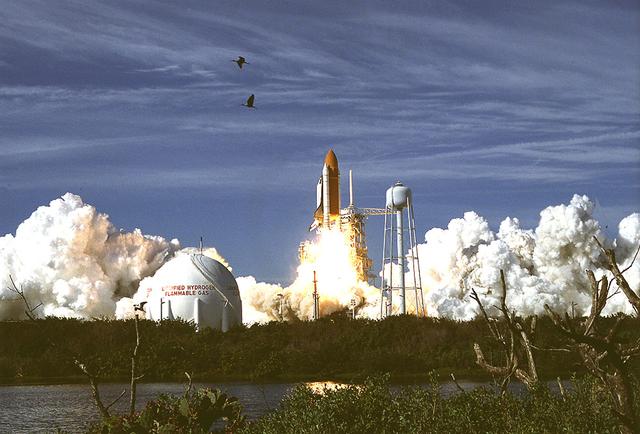
Clear skies, tranquil winds, and a brilliant morning sun mark the ontime liftoff of Space Shuttle Columbia (STS-62) from Launch Pad 39B. Columbia began the 61st Space Shuttle flight, which was a 14-day extended duration flight. On board, fi…
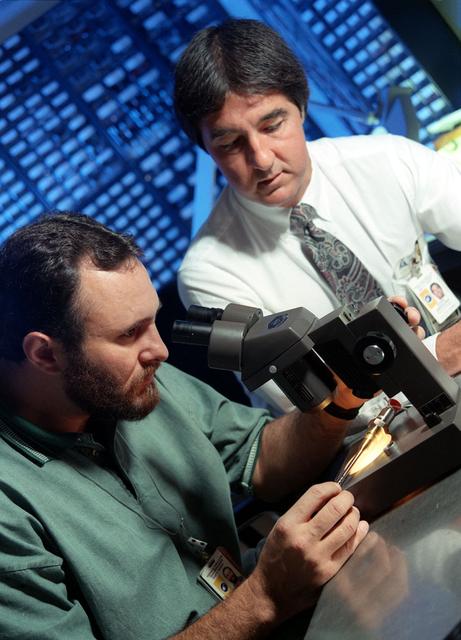
A rugged, highly accurate, low-temperature sensor is developed by NASA researchers. A new sensor allows accurate, quick low-temperature measurements in rugged environments. This is especially useful in piping with very cold liquids under hi…

Originally devised to observe Saturn stage separation during Apollo flights, Marshall Space Flight Center's Miniature Television Camera, measuring only 4 x 3 x 1 1/2 inches, quickly made its way to the commercial telecommunications market.
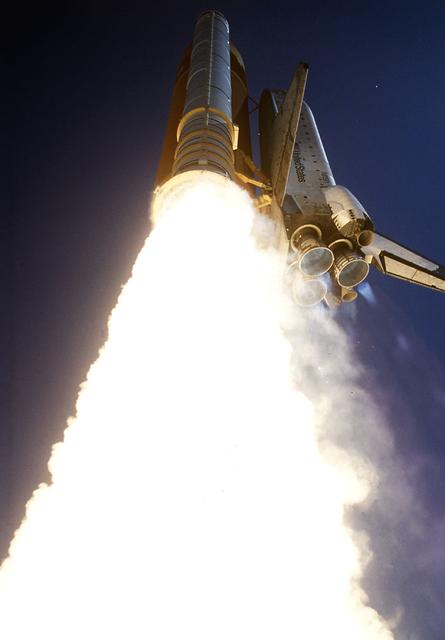
The Space Shuttle Columbia (STS-52) thunders off Launch Pad 39B, embarking on a 10-day flight and carrying a crew of six who will deploy the Laser Geodynamic Satellite II (LAGEOS). LAGEOS is a spherical passive satellite covered with reflec…

Frank Nola invented the Power Factor Controller (PFC) at Marshall Space Flight Center more than a decade ago. Nola came up with a way to curb power wastage in AC induction motors. The PFC matches voltage with the motor's actual need by cont…

A NASA official inspects the results of Convergent Spray Technology used to resurface a bridge on Interstate 65 near Lacon, Alabama. Originally developed by USBI to apply a heat resistant coating to the Space Shuttle's Solid Rocket Boosters…

The Waterblast Research Cell supports development of automated systems that remove thermal protection materials and coatings from space flight hardware. These systems remove expended coatings without harsh chemicals or damaging underlying m…