
This is the hardware that will contain the AVATAR chips during the Artemis II flight. The AVATAR (A Virtual Astronaut Tissue Analog Response) investigation will use organ-on-a-chip devices, or organ chips, to study a effects of increased ra…

The AVATAR (A Virtual Astronaut Tissue Analog Response) investigation will use organ-on-a-chip devices, or organ chips, to study a effects of increased radiation and microgravity on human health. Artemis II AVATAR is a small experiment flyi…

The AVATAR (A Virtual Astronaut Tissue Analog Response) investigation will use organ-on-a-chip devices, or organ chips, to study a effects of increased radiation and microgravity on human health. Artemis II AVATAR is a small experiment flyi…

The AVATAR (A Virtual Astronaut Tissue Analog Response) investigation will use organ-on-a-chip devices, or organ chips, to study a effects of increased radiation and microgravity on human health. Artemis II AVATAR is a small experiment flyi…

The AVATAR (A Virtual Astronaut Tissue Analog Response) investigation will use organ-on-a-chip devices, or organ chips, to study a effects of increased radiation and microgravity on human health. Artemis II AVATAR is a small experiment flyi…
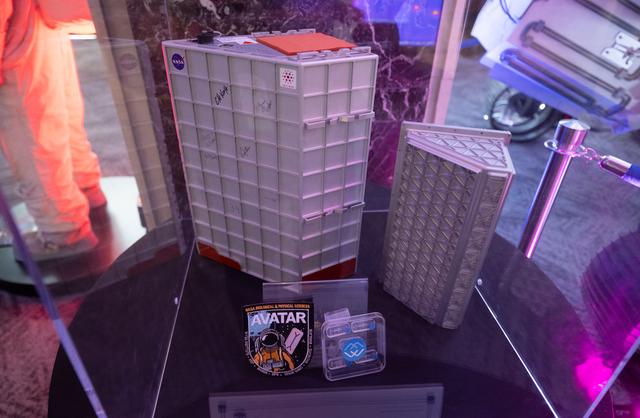
The AVATAR (A Virtual Astronaut Tissue Analog Response) payload the flew on the Artemis II mission is seen in the lobby of the Mary W. Jackson NASA Headquarters building in Washington, Wednesday, Sept. 16, 2026, following a Frontiers Forum…

The AVATAR (A Virtual Astronaut Tissue Analog Response) investigation will use organ-on-a-chip devices, or organ chips, to study a effects of increased radiation and microgravity on human health. Artemis II AVATAR is a small experiment flyi…

Organ chips are roughly the size of a USB drive and could be used to predict how an individual might respond to a variety of stressors, such as radiation or medical treatments, including pharmaceuticals. Made with human cells, the chips mim…