The Aura spacecraft is NASA atmospheric chemistry mission that is monitoring the Earth protective atmosphere.
NASA Aura Spacecraft Artist Concept
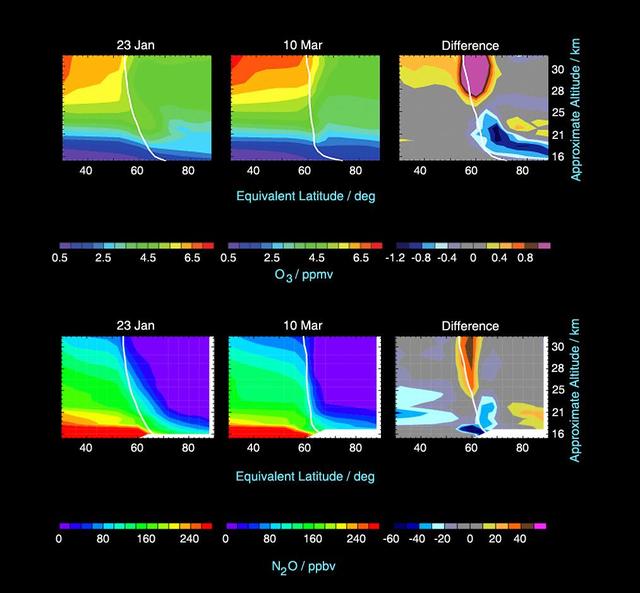
This image from the Microwave Limb Sounder instrument on NASA Aura spacecraft depicts the relationship between nitrous oxide levels and ozone loss, 2004-2005 Arctic winter.
Microwave Limb Sounder Measurements Depicting the Relationship Between Nitrous Oxide Levels and Ozone Loss, 2004-2005 Arctic Winter
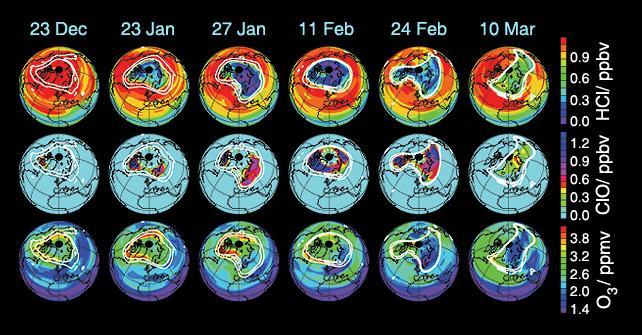
These data maps from the Microwave Limb Sounder on NASA Aura spacecraft depict levels of hydrogen chloride, chlorine monoxide, and ozone at an altitude of approximately 19 km 490,000 ft on selected days during the 2004-05 Arctic winter.
Aura Microwave Limb Sounder Estimates of Ozone Loss, 2004/2005 Arctic Winter
KENNEDY SPACE CENTER, FLA. - -   With rockets and main engine firing, the Boeing Delta II launch vehicle leaps off the pad at NASA’s Space Complex 2 on Vandenberg Air Force Base, Calif., carrying the Aura spacecraft.  Aura, a mission dedica…
KSC-04pd1475
Matt Mountain, president of AURA, speaks about the history of the Hubble Space Telescope’s partnerships during an event titled “Beyond the Deep Field: Hubble’s Legacy and the Future of Cosmic Observation,” Friday, June 5, 2026, at the Mary…
Beyond the Deep Field: Hubble’s Legacy and the Future of Cosmi
This vertical profile view from the Tropospheric Emission Spectrometer TES instrument on NASA Aura satellite depicts the distribution of water vapor molecules over Earth tropics across one transect of the satellite orbit on January 6, 2006.
A NASA Space Sleuth Hunts the Trail of Earth Water
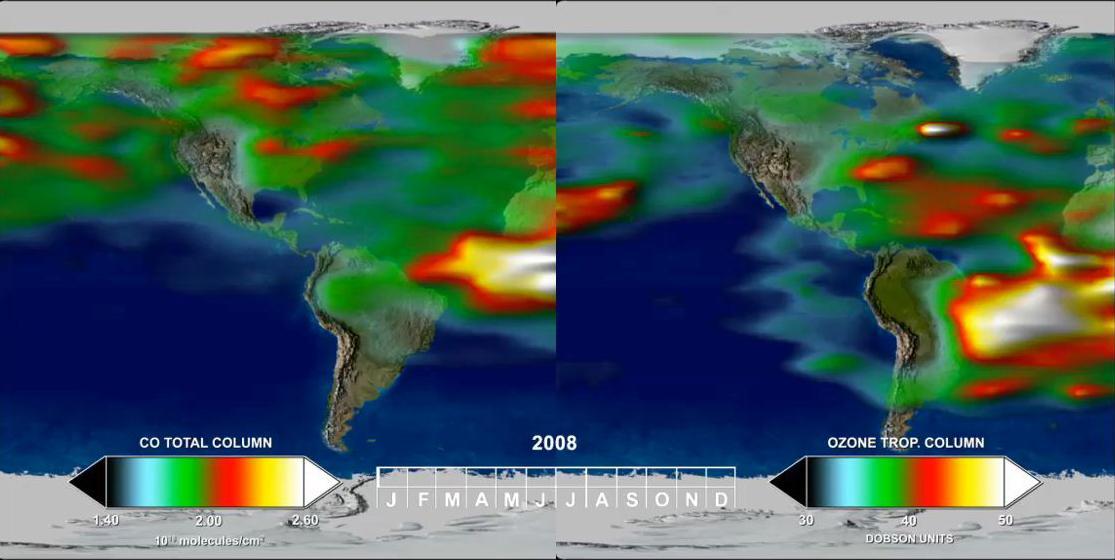
This frame from a time series, from one year of Tropospheric Emission Spectrometer TES measurements, shows how powerful the TES data are for understanding emissions, chemistry, and transport in the troposphere.
Annual Variation in Global CO and O3
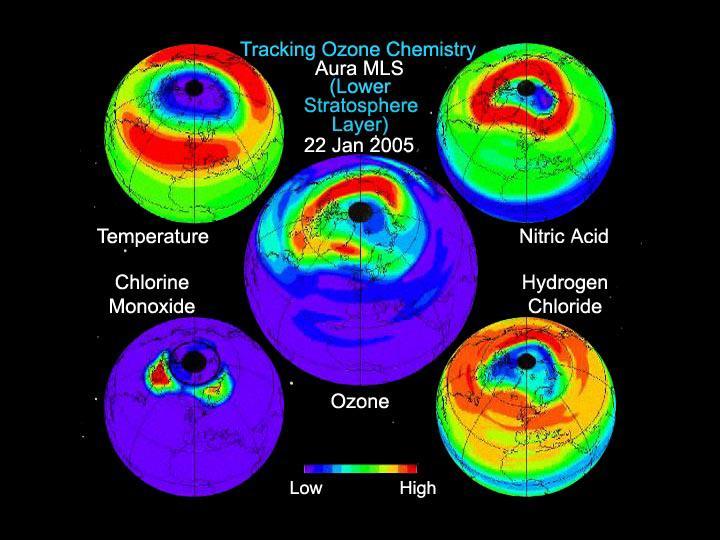
This still from an animation created from data from the Microwave Limb Sounder instrument on NASA Aura spacecraft depicts the complex interaction of chemicals involved in the destruction of ozone during the 2005 Arctic winter.
Aura Microwave Limb Sounder Animation Illustrating the Interaction Between Temperatures and Chemicals Involved in Ozone Destruction, 2004-2005 Arctic Winter
Images from the Ozone Monitoring Instrument onboard NASA Aura spacecraft shows the average total column ozone during the months of January and March, and the total column ozone on the single day of 11 March, 2005.
Selected Measurements of Total Arctic Column Ozone Amounts from Aura Ozone Monitoring Instrument, 2004-2005 Arctic Winter
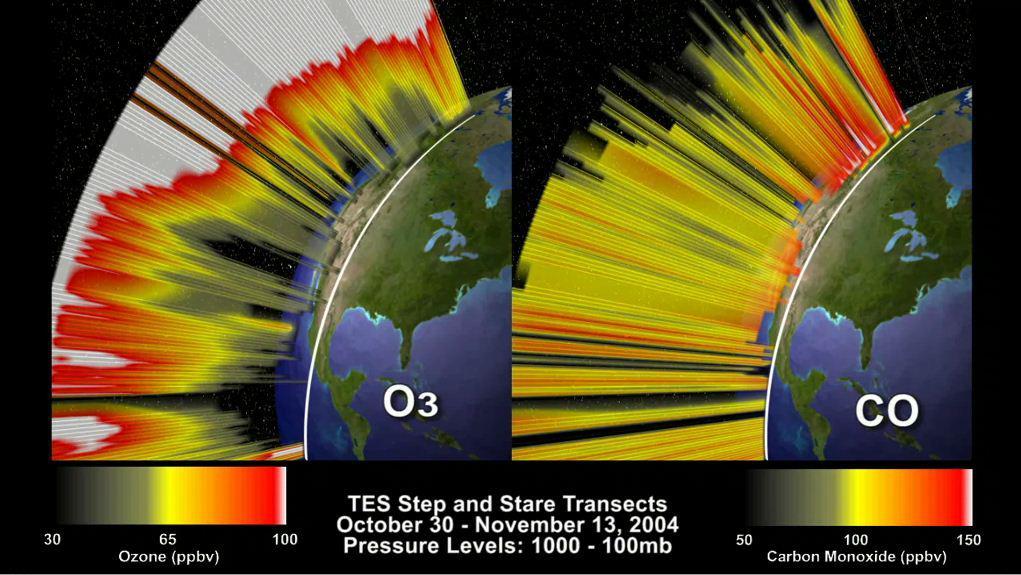
This frame from an animation depicts the distribution of O3 and CO in the atmosphere over North America. This visualization is based on data acquired by NASA Tropospheric Emission Spectrometer TES.
O3 and CO Transects over North America
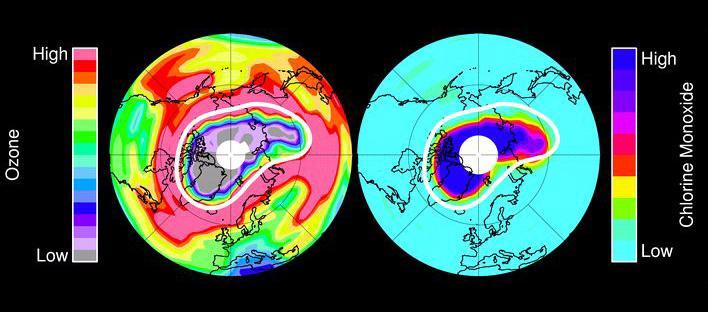
In mid-March 2011, NASA Aura spacecraft observed ozone in Earth stratosphere -- low ozone amounts are shown in purple and grey colors, large amounts of chlorine monoxide are shown in dark blue colors.
Unprecedented Arctic Ozone Loss in 2011
NASA Aura spacecraft sees El Niño effects on the atmosphere. An El Niño is characterized by an abnormal warming of sea surface temperatures in the equatorial central and eastern Pacific Ocean.
NASA Aura Sees El Niño Effects on the Atmosphere
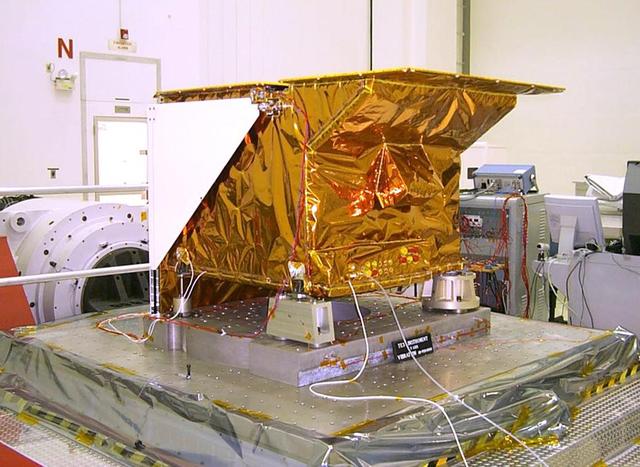
Technicians install NASA's Tropospheric Emission Spectrometer (TES) instrument on NASA's Aura spacecraft prior to launch. Launched in July 2004 and designed to fly for two years, the TES mission is currently in an extended operations phase.…
NASA Tropospheric Emission Spectrometer TES Instrument Onboard Aura
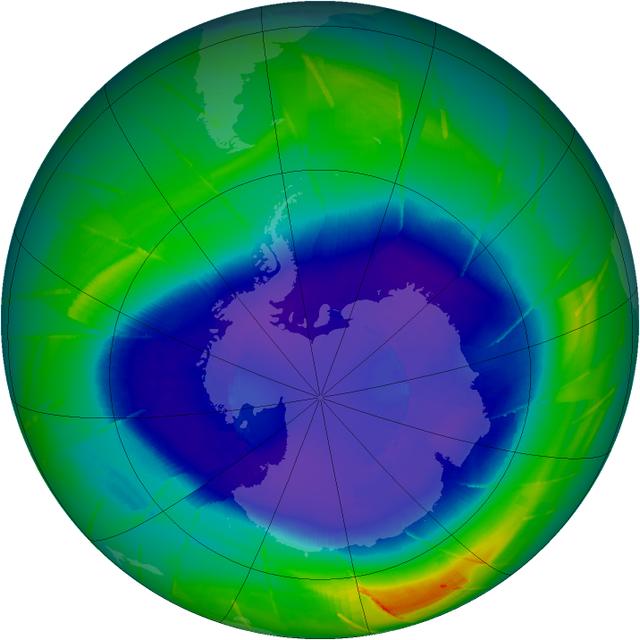
The annual ozone hole has started developing over the South Pole, and it appears that it will be comparable to ozone depletions over the past decade. This composite image from September 10 depicts ozone concentrations in Dobson units, with…
2009 Antarctic Ozone Hole
Matt Mountain, president of AURA, speaks about the history of the Hubble Space Telescope’s partnerships during an event titled “Beyond the Deep Field: Hubble’s Legacy and the Future of Cosmic Observation,” Friday, June 5, 2026, at the Mary…
Beyond the Deep Field: Hubble’s Legacy and the Future of Cosmi
No more images