The capsule ready to be installed in the nose cone of Jupiter, AM-18, for pre-flight test, May 18, 1959. The capsule carried monkeys, Baker and Able, as the payload of AM-18 mission
Early Rockets
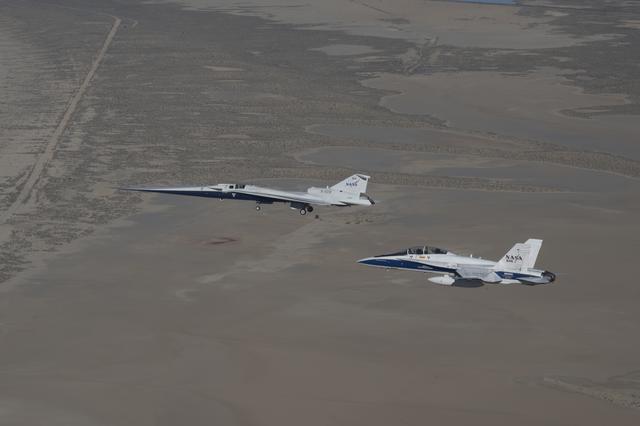
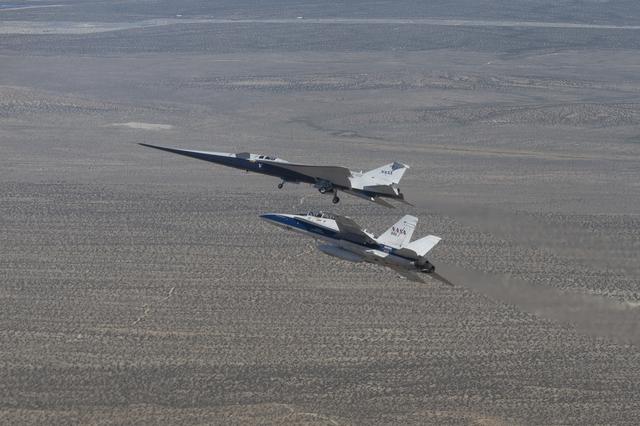
NASA’s X-59 quiet supersonic research aircraft flies above Palmdale and Edwards, California, during its first flight Tuesday, Oct. 28, 2025, accompanied by a NASA F/A-18 research aircraft. A NASA F-15 research aircraft (not pictured) captur…
NASA’s X-59 in Flight with F/A-18 Research Aircraft Monitoring
NASA’s X-59 lights up the night sky with its unique Mach diamonds, also known as shock diamonds, during maximum afterburner testing at Lockheed Martin Skunk Works in Palmdale, California. The test demonstrates the engine’s ability to genera…
NASA’s X-59 Displays Mach Diamonds at Maximum Afterburner
NASA’s X-59 lights up the night sky with its unique Mach diamonds, also known as shock diamonds, during maximum afterburner testing at Lockheed Martin Skunk Works in Palmdale, California. The test demonstrates the engine’s ability to genera…
Deck 2 Deck 3 Engine Run Round 2
NASA’s X-59 in Flight with F/A-18 Research Aircraft Monitoring
NASA’s X-59 lights up the night sky with its unique Mach diamonds, also known as shock diamonds, during maximum afterburner testing at Lockheed Martin Skunk Works in Palmdale, California. The test demonstrates the engine’s ability to genera…
Deck 2 Deck 3 Engine Run Round 2
This image shows a plastic 1/48-scale model of an F-18 aircraft inside the "Water Tunnel" more formally known as the NASA Dryden Flow Visualization Facility. Water is pumped through the tunnel in the direction of normal airflow over the air…
ECN-33298-03
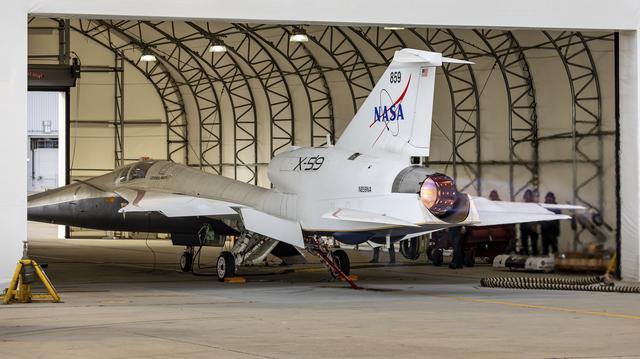
NASA’s X-59 quiet supersonic research aircraft sits inside its run stall in preparation for maximum afterburner testing at Lockheed Martin’s Skunk Works facility in Palmdale, California. Teams conduct final checks on the aircraft before its…
Deck 2 Deck 3 Engine Run Round 2
NASA’s X-59 in Flight with F/A-18 Research Aircraft Monitoring
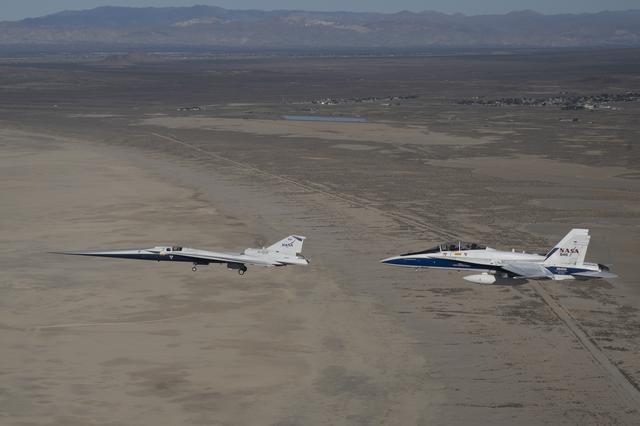
NASA’s X-59 quiet supersonic research aircraft flies above Palmdale and Edwards, California, during its first flight Tuesday, Oct. 28, 2025, accompanied by a NASA F/A-18 research aircraft. A NASA F-15 research aircraft (not pictured) captur…
NASA’s X-59 in Flight with F/A-18 Research Aircraft Monitoring
NASA’s X-59 lights up the night sky with its unique Mach diamonds, also known as shock diamonds, during maximum afterburner testing at Lockheed Martin Skunk Works in Palmdale, California. The test demonstrates the engine’s ability to genera…
Deck 2 Deck 3 Engine Run Round 2
NASA’s X-59 quiet supersonic research aircraft completed its first maximum afterburner test at Lockheed Martin’s Skunk Works facility in Palmdale, California. This full-power test, during which the engine generates additional thrust, valida…
NASA Runs X-59 Engine in Maximum Afterburner
NASA’s X-59 quiet supersonic research aircraft completed its first maximum afterburner test at Lockheed Martin’s Skunk Works facility in Palmdale, California. This full-power test, during which the engine generates additional thrust, valida…
NASA Runs X-59 Engine in Maximum Afterburner
The three thrust-vectoring aircraft at Edwards, California, each capable of flying at extreme angles of attack, cruise over the California desert in formation during flight in March 1994. They are, from left, NASA's F-18 High Alpha Research…
EC94-42513-3
NASA’s X-59 in Flight with F/A-18 Research Aircraft Monitoring
NASA’s X-59 lights up the night sky with its unique Mach diamonds, also known as shock diamonds, during maximum afterburner testing at Lockheed Martin Skunk Works in Palmdale, California. The test demonstrates the engine’s ability to genera…
NASA’s X-59 Displays Mach Diamonds at Maximum Afterburner
NASA’s X-59 lights up the night sky with its unique Mach diamonds, also known as shock diamonds, during maximum afterburner testing at Lockheed Martin Skunk Works in Palmdale, California. The test demonstrates the engine’s ability to genera…
Deck 2 Deck 3 Engine Run Round 2
NASA’s X-59 in Flight with F/A-18 Research Aircraft Monitoring
NASA’s X-59 quiet supersonic research aircraft sits inside its run stall following maximum afterburner testing at Lockheed Martin’s Skunk Works facility in Palmdale, California. The test demonstrates the engine’s ability to generate the thr…
Deck 2 Deck 3 Engine Run Round 2
NASA’s X-59 in Flight with F/A-18 Research Aircraft Monitoring
The three thrust-vectoring aircraft at Edwards, California, each capable of flying at extreme angles of attack, cruise over the California desert in formation during flight in March 1994. They are, from left, NASA's F-18 High Alpha Research…
EC94-42513-3
No more images